
Welfare
Penury to prosperity
The two decades long involvement of the WZO Trust to better the lot of Parsis in rural Gujarat has borne fruit
As our 14-seater minibus rumbled through the Gujarat countryside, the sights and sounds of a bustling Navsari quickly gave way to picturesque rural vignettes. Children ran full stride through grass fields littered with abandoned multi-colored kites from the recent Makar Sankranti festival. Herds of water buffalo took the right of way through a one-lane tunnel. Young women engrossed in conversation, and surrounded by untouched brown hills, sat alongside the Poorna River washing clothes under the early morning sun. The bus passed by a weathered nondescript road sign, which stated in Gujarati: Parsi Wad. "At one point there were around 300 Parsi homes in Tavdi,” said Dinshaw Tamboly, chairman of the World Zoroastrian Organisation (WZO) Trust, "now there is only one Parsi farmer.”
Tamboly recalls what he and his wife Bachi felt after their initial tour of the area: "It hit us very hard, the first time we saw the villages, the first time we saw Parsis living in huts. It was truly shocking. I remember Bachi didn’t want to go out and eat because she felt guilty.”
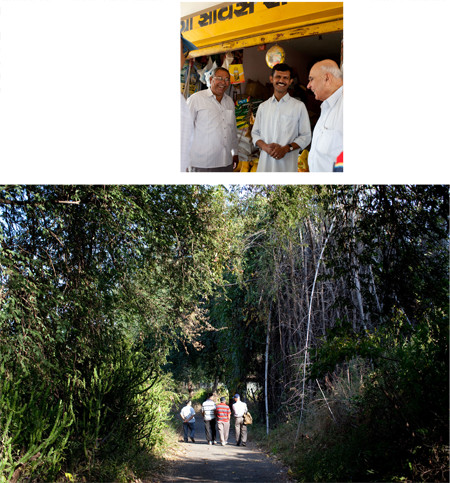
Above: Dinshaw Tam-boly (right) at Kaisad Kasad’s (center) agro-service center in Tankal; (below) walking through the forest to reach beneficiary Alice Tangri
Nearly 20 years after witnessing the plight of rural Parsis, Tamboly now hosts groups of curious community members on tours to visit the beneficiaries of the WZO Trust. "It is to create awareness,” said Tamboly. "After visiting the villages many people get moved and say they want to help. I don’t expect anyone staying in Bombay to come here for three weeks to work, but if you know about the issues then people speak to others and awareness grows.”
Our first stop of the day was the lone Tavdi Parsi farmer, Mehernosh Patel. He approached the minibus with a confident stride, a welcoming grin and a kind handshake. Patel has lived in Tavdi, a village just five km outside Navsari, all his life, and after schooling in Bombay, returned home to look after his family’s six-acre plot of land. Patel learned all he could about farming from his father, a small-time caterer in Navsari, but realized to create a viable business he required assistance beyond his reach. Tamboly remembers the first time Patel came to him with an application for support four years ago, "he had the look of a young man with an uncertain future.”
Patel’s transformation from an inexperienced farmer to local community leader did not happen overnight. Initially the WZO Trust offered Patel support with four water buffalos, encouraging him and other marginal landowners (those who have around five acres of land) to start dairy farming. The dairy farm’s success strengthened Patel’s relationship with the WZO Trust and soon he sought support to expand his agriculture business. He was provided a diesel engine, pipes, seeds and fertilizer in order to grow sugarcane and various vegetables.
Today Patel walks through his farm guiding and educating our tour on the nuances of sugarcane farming and the various medical needs of water buffalo. There is no sign of the young novice farmer. Patel now hires people from his local village and teaches farmers nearby how to best work their land. "He has become a leader in the community through sheer hard work and initiative,” said Tamboly.
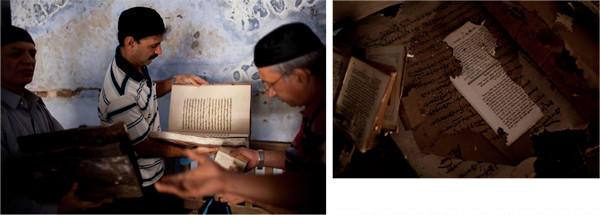
Kurush Dastoor (center) with a copy of the Vendidad and prayer books in disarray at the defunct Tavdi Agiary. There once recided 300 Parsi families in Tavdi
The WZO Trust began charitable work in rural Gujarat after Cashmera Bhaya published a sample survey in 1989, discovering 678 Parsi families in 209 villages, many of whom lived in impoverished conditions. The WZO Trust officially started helping farmers in 1991, with a budget of Rs 35,000. As word spread throughout the villages, applications came pouring in. The need was certainly there, but rural charity work did not come easy. "I was an absolute novice when we first started,” says Tamboly. The learning curve was steep, for Tamboly realized the best way to meet the needs of the farmers was not to just loan them money but to educate them on how to become self-sustaining businessmen. Tamboly hired a local agricultural expert and with his guidance began to understand how to best equip the farmers for a prosperous future. "We began with the basics. We started agricultural education classes. We taught farmers how to dig wells, sow seeds, and then market their products.” In essence, the WZO would adopt the family and remain a close ally throughout the process of growing, harvesting and distributing.
Tamboly worked equally hard for gaining credibility from donors as he did with the beneficiaries. "We used to inundate them with information about where the money is being used,” Tamboly reminisced of the early days. As the years passed, he was able to expand his charity work beyond the farmers’ rehabilitation program. Today he oversees a variety of lending applications including ones for new homes, micro-credit financing, health care and manages donations ranging from four to five crore rupees a year. Fifty percent of the donations come from India and 50 percent from overseas, including the US, UK, Hong Kong and Australia. Today, Tamboly does not have to solicit funds: "We receive donations never by asking but by creating awareness. If you ask it never comes in volume.” Tamboly estimates that the WZO Trust has helped approximately 300-400 families in various ways across 90 villages in Gujarat. After nearly 20 years of working in the area, the Tambolys smile at the thought of seeing an entire generation of children grow up before their eyes.
However, they are candid about the growing pains they experienced with this type of work. They refer to a farmer whom they extensively helped in producing a successful harvest. Once the farmer reaped the financial benefits of his hard work, he set up an appointment with the Tambolys. To their dismay, the farmer came asking for more money instead of creating a repayment plan for their initial investment. When asked what happened to his fruitful harvest, the farmer explained that he spent all the money on a party for his entire village saying it would have been disgraceful not to share his earnings with his village. In another instance, two brothers reaped the benefits of their hard work by producing a good crop, only to have their wives beaten and fields scorched by local Adivasis, jealous of their success. "We have learned many things through our experiences,” said Tamboly, "and these stories are few and far between but with each comes a valuable lesson.”
Our eight-hour tour meanders through the Gujarat villages as Tamboly narrates a litany of anecdotes along the way. He recites encyclopedic knowledge of the families we visit, intimate details that one would only know after spending hours together. The minibus hooks a sharp left as it makes its way up an inclined dirt road, dodging intimidating clusters of dried bamboo trees. Alice Tangri’s four-bedroom home sits in the middle of a densely forested jungle. She greets us with a kind handshake as she grips her grandson’s hand with her other arm. The entrance of her home bears a familiar marble plaque that adorns every home Tamboly helps to build. In this case, it states that the Dennis William Richards Trust donated the home.
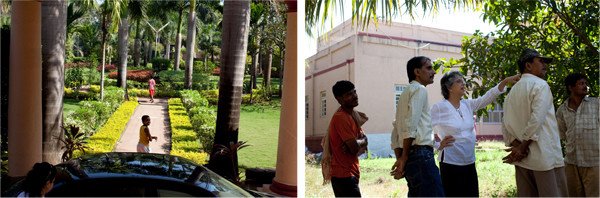
Left: Entrance to Parsi Sanatorium in Sanjan; (right) Bachi Tamboly (center) supervises estate
According to Tamboly, Richards was in his late 70s when he passed away. Never married and without kin, he left all his money to charity. Through word of mouth Alex Burns, the English solicitor handling Richards’ trust, contacted Tamboly. Soon thereafter, Tamboly was walking Burns through Tangri’s hut-like jungle habitation. Tangri lived there with her five children and mother-in-law, while her husband spent most of his time in Bombay working in the Cama Baug Agiary. Tamboly remembers witnessing the patience and care Tangri extended to her mother-in-law who had been immobile for years. "Every day she would lift her mother-in-law into the sunlight and then bring her back into the hut; she took very good care of her.” After gaining Burns’ confidence, Tamboly received the funding to build Tangri and her family a four-bedroom home; she became one of his earliest and most memorable beneficiaries.
Tangri offered us tea, as we sat on her porch in the midst of a lush green forest. She gave Tamboly an update on her children and now grandchildren. Her daughter-in-law kept shyly away from unfamiliar company. She kept busy hanging clean sudrehs on a clothesline, in the shadows behind their old home, a wooden low hanging hut. Any feelings of geographical isolation were blanketed by the thought of the Tangris’ generational devotion to their land. "It takes courage to live in a jungle like this, even in a nice home, let alone a hut,” Tamboly said to the group while we finished our tea on Alice’s pristine porch.
The Avari family from the Khambhla village is another one of Tamboly’s earliest beneficiaries. Since 1991, Tamboly has been working with the family in various ways. Initially he helped Adil Avari buy a refrigerator to sell cold drinks in the village. Later, Adil’s son-in-law came to Tamboly for a modest loan to level his fields and begin growing sugarcane. The success of that venture brought Pesi to his newest business, brick making. Avari and his wife proudly walked us around their fields; to the left sugarcane and to the right a group of local villagers neatly turning mud into bricks. It will take Avari’s employees about a month to make their first batch of 40,000-60,000 bricks, which they will sell for two rupees each. It is a calculated risk, one that Avari could not have made a decade earlier. "There are some that are quite lazy and we can give them everything but they won’t work,” said Tamboly, "but with Pesi I think the will to work is there… he’s got the entrepreneurial spirit.”
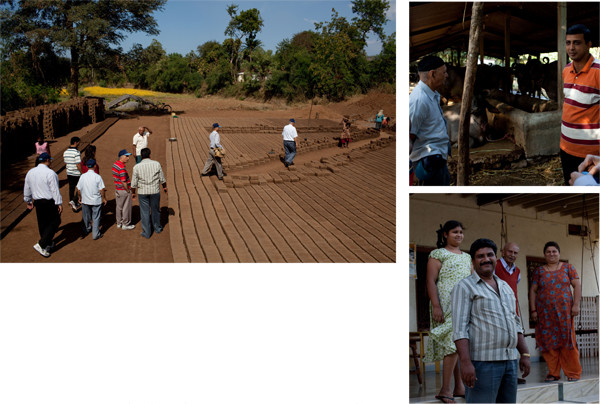
Pesi Avari with his family (right) and brick-making operation (above); Mehernosh Patel with his cattle in Tavdi (above right)
Amongst the success stories, lies a stack of applications on Tamboly’s desk waiting for assessment. Tamboly estimates that there are 10,000-11,000 Parsis living in rural areas who are below the poverty line (which amounts to Rs 32,000 rupees per annum). "We have a long waiting list. There must be at least 70-80 farmers who want our assistance. The requests range from wanting a tube well, assistance in transporting water into the field, leveling ground, the purchase of seeds and fertilizers, or whatever other help they need.”
It is hard to believe that Patel, the Tavdi farmer we first visited on the tour, was once a faceless application amongst many others. After proudly shepherding us through his fields, he asks if we would like to see the town’s abandoned agiary. Patel’s recent status as a town leader led the agiary trust to name him caretaker. Without hesitation, the four priests on the tour replied "yes” in near unison. We walked towards the Poorna River along a narrow street once entirely inhabited by Parsi families. Patel points to a humble home that used to be the residence of the head priest of Tavdi.
Our heads covered, we ascended inside a dark room as shafts of daylight slowly illuminated a very familiar floor plan. A long wooden bench resting against the far wall directly in front of us came into clear view. Darius Dastoor, who now resides in Dubai, ran over to the bench in sheer awe of what he found: a nearly pristine copy of the Vendidad, its edges tarnished but inside the manuscript was as legible as in the days it must have been read. Scattered around the Vendidad were other prayer books, either torn or crumpled after years of neglect. In the back room lay another item which further dismayed the priests. The afargan which once held the sacred fire of the Tavdi agiary, sat tarnished in the storage room. (The Tavdi agiary fire is now enthroned at the Shapoorji Fakirji Jokhi Agiary in Godrej Baug.)
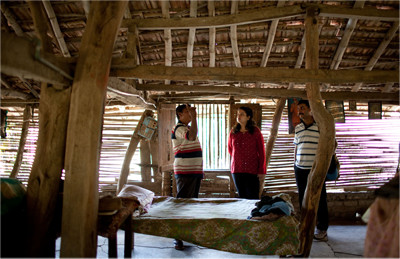
Former lodging of a WZO beneficiary
As our group made its way towards the bus, we thanked Patel for sharing his story and opening his home to us. Dastoor was the last to shake his hand. With genuine concern he looked into Patel’s eyes and pleaded, "You must take care of the afargan, Mehernosh, or it will be stolen.” Patel responded, "Now that the key is with me, if someone tries to steal it, I don’t mind hitting him.” The once uncertain farmer was now professing his confidence in preserving what is left of Tavdi’s Parsi heritage.
In 2011, the Tambolys will have been working in rural Gujarat for 20 years. It is undeniable that the couple, along with the WZO Trust, has improved the standard of living for many rural Parsi families. However, what was most revelatory after Tambolys’ tour was the commitment and time it takes to run a successful charitable venture. There will be mistakes, miscommunication, bad weather, and unimaginable disappoints along the way, but armed with business savvy, dedication and compassion the work can be very fulfilling. "We are happy, very happy. The WZO has changed our lives. The work has given us more exposure to other people and other ways of life and we’ve learned so much along the way.” At 65, Tamboly says he will continue to work as long as he is active and healthy, "or until somebody better and more dynamic comes along… every generation is smarter than the one before.”
◆ ◆ ◆
From the archive