
Law
“The battle of the ban”
The Bombay Parsi Punchayet was granted a two-week extension till March 2 by the Bombay High Court to file their written reply in the legal battle pertaining to the banning of two priests
Stating that the case was "a very important matter” for the Bombay Parsi Punchayet (BPP), counsel Percy Ghandy pleaded with Bombay High Court Justice V. M. Kanade for a further four-week extension to file the trust’s written reply. He noted there was "a lot of religious material” to be studied. But after strenuous objections from opposing counsel Iqbal Chagla on February 15, 2010, Kanade granted only a two-week extension till March 2, 2010.
"We believe the matter is important,” stated Chagla but all that the trustees had to disclose was their "source of power” in banning two Parsi priests from performing religious ceremonies at Doongerwadi and two fire temples. A further extension was "just an excuse to delay matters… (one has) only to go to the trust deed” to ascertain the source of authority. Religious "text books are not relevant.”
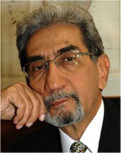
Iqbal Chagla: fighting pro bono
The judge had already granted a five-week extension on January 7 when BPP counsel Rafique Dada asked for time. Chagla said on account of the delay he would reiterate his plea for interim relief to be granted to the petitioners, former BPP trustee Jamsheed Kanga and Tata director Homi Khusrokhan. The duo had moved an originating summons (OS) in the court stating they wanted Ervads Framroze Mirza and Khushroo Madon to perform religious ceremonies for them at Doongerwadi, and/or the Godavra Agiary in the Fort area and/or the Fakirji Jokhi Agiary at Godrej Baug.
Referring to a newspaper report (The Times of India, January 8, 2010) which stated that Kanade had declined to grant interim relief at the earlier hearing, the judge clarified "that interim relief was not refused.” He had stated that instead of hearing the petition for interim relief he would hear the matter in its entirety on February 15, 2010.
In granting the two-week extension Kanade observed that if the BPP did not file the written reply by then "the plaintiffs would be entitled to apply for interim relief.” Chagla requested the copy of the BPP reply be handed over to him four days prior to the hearing so he would have time to study the statement. Ghandy replied that he could give it only a day earlier.
In the meanwhile the WAPIZ (World Alliance of Parsi Irani Zarthoshtis) Page in The Free Press Journal of January 22, 2010 launched an attack on Chagla asking him for "a public apology for his belittling of our religious leaders.”
The orthodox body was miffed that Chagla alleged "all priests were the same and that there were no high priests and low priests in the community.” (What Chagla had stated is: "There is no such nomenclature as high priests in the ecclesiastical hierarchy. There is no such thing as a high priest and a low priest. They are all ordained priests.” It is out of respect that some priests are given the prefix "high.” — editors)
Ervad Rooyintan Peer noted on the WAPIZ Page: "The concept of the ‘High Priest’ is prevalent almost amongst all the prominent religions of the world. Amongst the Parsis, the tradition of having such ‘Dasturs’ is to be found since ancient times during the Zoroastrian empires in Iran. After coming to India also, this practice has continued up to the present times.”
The editors of The Parsee Voice were also quoted on the WAPIZ Page stating "the designation of Dastur has been there for many centuries among the Parsis… Mr Chagla is himself married to a Parsi and so is his daughter. So one finds it a little difficult to believe that he would be ignorant of this commonly known fact. It was, we believe, a clear case of attempting to mislead the Court on this issue.”
The fortnightly WAPIZ Page of February 19 carried signatures of those whose religious sentiments have been "hurt” and who demanded Chagla "apologize for his insensitive and false remarks.”
In his "Parsi Tari Arsi” column in The Bombay Samachar of February 7, 2010 community activist and noted solicitor Berjis Desai opined: "Litigation seldom succeeds in community matters… While we have rubbished, in no uncertain terms, the BPP ‘fatwa’ in banning these priests and explained as to how such a ban means nothing in practical terms, we do think that the case filed in the High Court to have this ban lifted, may not succeed. The concerned priests are service providers in a temple. They are not beneficiaries. Trustees are entitled to decide which service provider they want to permit in their fire temple. This does not amount to discrimination. The point is that the BPP ban may be banal and idiotic but it is not illegal.”
But in his earlier column of August 2, 2009 on the same subject Desai observed: "This act of the BPP is illegal, discriminatory, ludicrous and suicidal. Even though we know that an adjective is the enemy of the noun we cannot resist adding one more — idiotic…The BPP trustees have no legal right and authority to bar Madon and Mirza... We believe that the trustees will have to eat crow (in the absence of their favorite bird) in court... A lot of eminent Parsi lawyers are willing to fight free of cost for their (the priests) cause.” Incidentally, Chagla is fighting the case pro bono.
◆ ◆ ◆
From the archive