
Books
Tiffin meals guide
Tiffins, is the theme of Volume 2 of Aban Davar Sukhia’s Cook easy series. The first volume, published in 2008, contained 42 easy to cook recipes and was reviewed in this column earlier (see "Tasty treats,” Books, Parsiana, August 21, 2008).
Speaking with the voice of experience, having been in the meals supply business for three years, Sukhia advises in the introduction to her second book that it’s easy to start this home business as people are always looking for affordable wholesome food that is home delivered. "Target people who live alone, elderly aunties and uncles who need a variety of food (and)... have servant/cook problems,” not to mention students, paying guests and single office-goers as they make good clients, she advises. It would also help if they live close to you. Ordering a tiffin (dabba) meal would benefit them as they would be spared the hassle of shopping, fixing menus and the actual cooking. An added incentive would be to "inform them that you and your family also eat the same food that goes into the tiffin.”
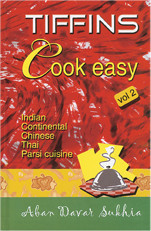
At a realistic price of about Rs 115 per head per day along with delivery charges, clients can be served a variety of dishes from Indian, Continental, Chinese, Thai or Parsi cuisine. This would be far more cost efficient than eating in restaurants which are expensive and often serve spicy, oily stuff. She advises the use of good quality rice and cooking oil, chicken/mutton pieces that are substantial and not just bone, and the use of fresh ingredients. The stress should be on quality, not quantity, though the food should be adequate for one person to eat at both lunch and dinner. Including a dessert would naturally be a plus point.
To this end, Sukhia provides a chart with 31 sample menus — one for each day of the month. To illustrate, one such menu comprises two aloo parathas, vegetable Chinese fried rice, chicken chilly, egg bhurji and gajar halva. Another suggestion is for two chappatis, white rice, tuvar dal, prawn patia, vegetable bake and bread pudding. "Feel free to mix and match the menus to suit your convenience,” she writes. She has included many recipes in this book other than those mentioned in the sample menus. For added variety, reference to her earlier book is suggested.
Sukhia has many practical tips for would-be entrepreneurs: "Put aside Rs 5,000 to start with. Keep accounts of everything from gas cylinder expenses to meat, dals, atta and vegetables. Buy in bulk and get the best rates. Invest in a new set of tiffins in different sizes as you may get a client who has never tried a tiffin before.” She also advises advertising in a local newspaper and printing flyers to announce the service.

Aban Davar Sukhia: cost efficient meals
Following the visually attractive style of her earlier book, preparation and cooking time are indicated on clock faces, the number of servings per recipe sit on the domed lids of covered serving dishes and ingredients listed in highlighted spaces, with the method of cooking following in easy, numbered steps. Greater care has been taken this time resulting in the welcome absence of proof-reading errors.
If you fancy trying your hand at cooking coriander rice, mustard meat curry, Jewish mutton curry, carrot almond chicken, mince stroganoff, mutton molee, cheesy baked fish, pork chops, stir fried vegetables, coconut burfi or chocolate chip cookies, which are some of the over 50 recipes provided, do refer to Sukhia’s hardbound 81-page volume, published by her in 2008 at No 8, Lt Col Tarapore Road, Camp, Poona 411001, India and priced at a reasonable Rs 139. You never know, this modest investment could become the seed of a small but lucrative home business.
SHERENE VAKIL
◆ ◆ ◆
From the archive