
Events & Personalities
Honoring our stalwarts
Homage was paid to the grand old man of India Dadabhai Naoroji by The Bombay Parsee Association (BPA) on his 184th birth anniversary on September 4, 2009 at the site of his statue at Flora Fountain. Vispi Dastur, BPA president garlanded the statue while floral tributes were also offered on behalf of the Iran League, Navsari Parsi Association, Rahnumae Mazdiyasni Sabha, Bombay Parsi Punchayet (BPP) and the Bombay Municipal Corporation, as per a write-up received by Parsiana from the BPA.
Dastur spoke of Naoroji’s life and work while BPP trustees Khojeste Mistree and Arnavaz Mistry paid tribute along with Cmde Aspi Marker, Godrej Dotivala and Marzban Giara. Also present were Mehli Colah, chief executive officer of the BPP and community activists Rustom Vakil, Gev Bhamgara, Aloo Shroff, Tehmina Peer, Rusi Bhamgara, Rustom Cooper, Adale Patel.
Two days later, on the morning of September 6, BPA members and prominent persons from the community met at the War Memorial at Khareghat Colony to acknowledge the contribution of members of the armed forces who had sacrificed their lives for the country during World War I and subsequent wars. A naval trumpeter sounded the Last Post and Reveille after which Dastur, BPP chairman Dinshaw Mehta and others placed wreaths at the memorial and commemorated the courageous members of the armed forces who had made the ultimate sacrifice.
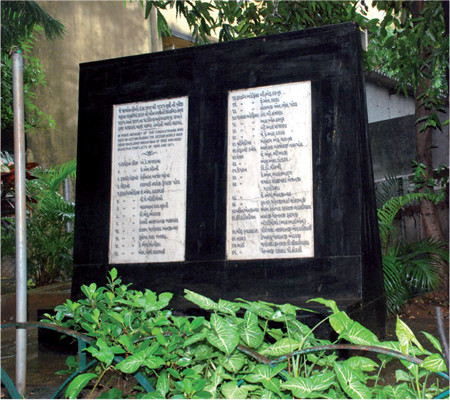
Names of martyred Parsi service personnel at the War Memorial
The gathering included many dignitaries and members of the Khareghat Colony Welfare Association, all of whom stood in silence for two minutes in memory of the departed souls. Prior to that, all present had participated in a humbandagi, the report reveals.
"Today we honor and remember not only Parsi soldiers but all soldiers who gave their tomorrow for our today,” stated Dastur.
Mistree said he would propose that the BPP arrange for the War Memorial to be lit at night so passersby and Khareghat Colony residents would notice the monument and be reminded of the armed forces personnel who died in battle.
Dastur: "That would be wonderful.”
BPP trustees Arnavaz Mistry and Armaity Tirandaz also spoke of the sacrifices made by the fighting forces and how Parsis today should emulate their spirit of sacrifice.
Marker, through whose efforts the trumpeter was arranged after a gap of several years, bemoaned the fact that the armed forces were remembered "only at the times of crises.” During times like natural calamities and civil unrest it is the military which "holds up the pants of the police and the civil authorities… but when the goodies are to be handed out we are nowhere in the picture,” he said referring to the poor remuneration offered to armed forces personnel. At Field Marshal Sam Manekshaw’s funeral there was "no political presence…when politicians die cabinet ministers cancel tours to... attend the funerals,” he lamented.
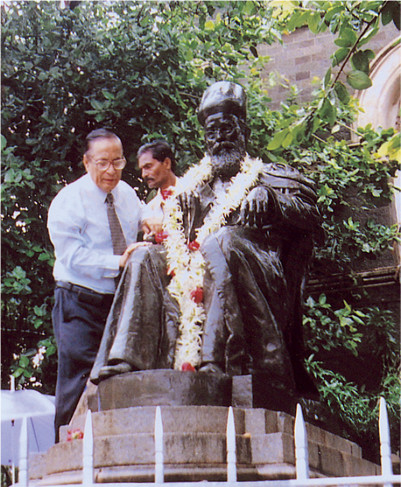
BPA president Vispi Dastur garlanding statue of Dadabhai Naoroji
Marker stated this year he had made an effort to contact the relatives of former servicemen who had died in action. Accordingly Kersi Dara Surti, brother of late Flying Officer Marzban Dara Surti attended the memorial service. "Next year participation of the next of kin will increase,” Marker promised. BPP public relations officer Godrej Dotivala noted his father, a colonel was severely wounded and won the military cross for his deeds. Navroze Daver of Nagpur spoke of his relatives who served in the armed forces.
Cmde Medioma Bhada noted that "young Zoroastrians are not joining the armed forces.” He termed the present numbers ‘a pathetic figure’ compared to the years gone by. "There is not a single Zoroastrian in the National Defence Academy in the last 10 years… we should talk to the parents, especially mothers, to convince them to send their offspring to the army, navy and air force.”
Rustom Jasoomoney, president of the Sir Ness Wadia Club said he "wished when I was young someone had inspired me to join. We did not have guidance.”
Dastur noted that many of the armed forces Parsi personnel came from places like Madhya Pradesh and Uttar Pradesh. "Parsis used to join the armed forces or the railways,” he noted. As the Parsi population declined in these places so did the enrolment in the two professions.
◆ ◆ ◆
From the archive