
Zoroastrians Abroad
National Academy scientist
Among the 72 new members elected to the National Academy of Sciences (NAS) of the USA in April 2009 "in recognition of their distinguished and continuous achievements in original research” was Dr Dinshaw J. Patel, chair in experimental therapeutics and member, structural biology program at the Memorial Sloan-Kettering Cancer Center (MSKCC), New York.
Established in 1863 by a congressional act of incorporation signed by Abraham Lincoln that calls on the Academy to work as an official adviser to the federal government, upon request, in any matter of science or technology, NAS is considered one of the most prestigious organizations for scientists in the US.
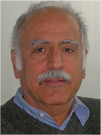
Dr Dinshaw Patel: original research
As head of the MSKCC’s nucleic acid and protein structure laboratory, Patel leads a number of studies on the structure of DNA (deoxyribonucleic acid — the molecular basis of heredity) and how it binds with carcinogens and anti-tumor agents, and RNA (ribonucleic acid — associated with the control of cellular chemical activities)-binding proteins that are essential for the replication of HIV. Patel’s research is conducted using crystallographic x-ray and nuclear magnetic resonance techniques to study structure on a macromolecular level.
A graduate in chemistry from the Bombay University, on receiving the J. N. Tata Fellowship he completed his MS in chemistry from the California Institute of Technology. After studying for his doctorate in chemistry from the New York University he did his postdoctoral training at the New York University Medical School and later at the AT&T Bell Laboratories where he spent 14 years in the polymer chemistry department. For the next eight years he worked as professor of biochemistry and molecular biophysics at the College of Physicians and Surgeons, Columbia University before he began his association with the MSKCC. Associated with different scientific bodies, he lent his expertise on institutional committees — executive committees as also the committees on appointments and promotions. One of his noteworthy assignments involved working on a tri-institutional program for Sloan-Kettering, Rockefeller University, Cornell University and its medical school, mentions his life profile.
◆ ◆ ◆
From the archive