
Comment
‘Us’ and ‘them’
Differential attitudes, approaches and anxieties segregate the Parsis/Iranis of Bombay
Are the Parsis who eat dhansak every Sunday and visit the Aslaji Agiary on Meher roz nu parav and never fail to wear the sudreh and kusti and participate in the vegetarian gahanbar on Sanjan Day at Sanjan and who religiously read the Jamé, very different from the Parsis who never miss a western musical concert at the National Centre for the Performing Arts (NCPA) and who eat insipid mutton chops and who occasionally browse through Parsiana and who are mildly amused at the difficulty of their children in reciting prayers at their navjote and who have never been anywhere near Udvada or Navsari? The answer is an emphatic yes. Is this entirely a ‘class’ divide? Perhaps not. But the ‘us’ and ‘them’ is present in the Parsis of Mumbai (and the Parsis of Bombay) for all to see and notice. And both the sections feel the ‘us’ and ‘them’ factor.
Is this factor not present in other communities? Maybe, but certainly not with this degree of prominence. Is this factor merely a matter of sociological interest? Certainly not. This is the factor which is hastening the process of the extinction of the community. Here is how.
For ease of reference, let us call the first section as the Dhansak Parsis and the other as the NCPA Parsis. It is apparent that the latter are economically better off but then some of the former are also financially comfortable (though mostly nouveau riche and johnny-come-lately). While most residing in the baugs are indeed Dhansak Parsis, a large number residing outside the baugs also belong to this section. As a matter of fact, the recent elections somewhat surprisingly revealed that a larger number of Parsis in Bombay live outside the baugs.
From the traditionalist perspective, there is nothing better than living in baugs. It certainly preserves traditions, culture, the Parsi way of life, minimizes (though certainly not eliminates) interfaith marriages and generally makes one believe that he is a Parsi. Therefore, as and when some of the baugs are ‘redeveloped,’ that is, demolition of existing buildings and construction of new towers, it is bound to result in sale of flats to non-Parsis on a commercial basis and dilute the baug culture considerably. We believe that in the next 30 years most baugs will be redeveloped and non-Parsis will gain a backdoor entry into the properties and gradually overwhelm the Parsi culture of the locality. Perhaps, this is the single largest threat to the survival of the community, as it strikes against the most important section of the community, that is, those living in the baugs. With the ‘commercialization’ of the baugs, the last chance, of surviving against all odds, will be dealt a fatal blow.
The Dhansak Parsis living outside the baugs are continually facing the onslaught of cosmopolitanism (for want of a better term). Interfaith marriages are proliferating and generations are being lost to the community (greatly attributable to the mass suicide policies of the orthodox – further strengthened by this election, which we cannot deny, has given a mandate to the traditionalists, as pointed out by Khojeste Mistree). These Parsis are interested in community affairs. They care as to what happens to the community. They are fond of their identity as Parsis. However, they are worse positioned than the Baug Parsis to resist the overpowering forces of change which are rapidly obliterating their tiny communal identity.
If the Dhansak Parsis face such serious threats, what is one to say about the NCPA Parsis? The ‘Indifferents,’ as they have been called, are only vaguely conscious of their Parsi identity. It matters little to them that the community is hurtling away to doomsday. During the elections, it appeared that these NCPA Parsis had, for the first time, shown some interest in Parsi affairs and the future of the community. However, it was a false hope. After the results, many of these NCPA Parsis gave me a very condescending smile and told me how idiotic I was to waste precious time, energy and money on a ‘worthless cause.’ Some of the expressions used by them to describe the Dhansak Parsis are unprintable. This section appeared mildly interested when they saw the likes of HDFC’s Keki Mistry and Tata Memorial Hospital’s Dr Ketayun Dinshaw contesting the elections, but totally withdrew into their ivory towers when they realized what the community had finally chosen.
The children of the NCPA Parsis are even more oblivious of their Parsi identity and heritage. Believe it or not, but some of these children do not even know that they are a Parsi family. Recently, a highly accomplished girl of 16 who applied for a prestigious scholarship was quizzed about Zoroastrianism by the non-Parsi president of the interview panel, and while she was highly articulate and intelligent in all her replies, she just shrugged her shoulders and said that she knew nothing about the Parsis or their religion (and she is born of both Parsi parents).
The Dhansak Parsis believe that the NCPA Parsis are not fit to lead them as they will not empathize with their small problems, however big and mighty they may be. On the other hand, the NCPA Parsis find it almost embarrassing to ‘connect’ with the Dhansak Parsis. This divide was certainly one of the major factors behind the election results.
The frog is delighted being the king of his cesspool, little knowing that the gushing waters of the ocean are only miles away.
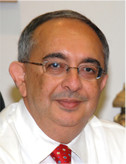
Berjis M. Desai is a leading solicitor and a weekly columnist for the Bombay Samachar.
◆ ◆ ◆
From the archive