
Books
Managing menopause
Modern Management of Menopause with Isoflavones by Dr Behram S. Anklesaria. Published in 2007 by Raptakos, Brett and Company Limited (www.raptakos.com). Pp: 34. Price: Not mentioned (meant for use by registered medical practitioners, hospitals and laboratories only).
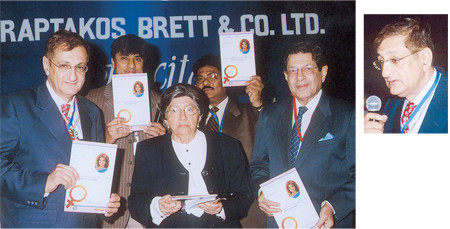
Ahmedabad based senior consultant obstetrician and gynecologist Dr Behram S. Anklesaria’s booklet, released in Bombay on June 10, 2007 by Dr Nergish Motashaw and Dr Rustom P. Soonawalla, endeavors to enlighten the medical fraternity and others on the scope of phytoestrogens (plant extracts that act like the hormone estrogen) in relieving the distressing symptoms experienced by women during menopause. Eminently qualified to write on the subject, Anklesaria reveals in the Foreward that the inspiration for the book came to him while he was serving as president of the Indian Menopause Society (IMS). During that year he met doctors from various specialities who were devoted to the service of the ‘mature’ Indian woman. However, many doctors regard phytoestrogens with suspicion, due to lack of scientific literature on the subject. This booklet, containing chapters written by three successive presidents of IMS — future president Dr Duru Shah, the incumbent Dr Sonia Malik, and Anklesaria, the immediate past president — should help remove that lacuna.
Menopause is the transition from normal ovarian function to ovarian failure. Many women reach menopause with little disruption of life, but others experience severe, even disabling symptoms such as hot flashes, mood disorders, osteoporosis, urinary tract problems, insomnia, discomfort and vaginal dryness due to estrogen deficiency. In 1997 Anklesaria published a medical paper defining a ‘staging system’ for menopause, the first ever to be documented. He recommends palliative treatment for Stage I (the first two years before menopause) but no treatment for Stage II A covering the next year. Stage II B (up to five years after menopause sets in) requires active treatment, but for Stage III (which lasts for the rest of a woman’s life) he advises preventive measures to avoid complications like cardiac conditions and Alzheimer’s disease. The Straw System of staging, which was introduced in the west four years later in 2001, focuses on infertility management.
Dr Behram S. Anklesaria, above, and left with Dr Mota-shaw and Dr Soonawalla at the book release
Earlier, gynecologists routinely prescribed hormone replacement therapy (HRT). This made women both feel and look younger. But the trend was reversed when prolonged use of HRT resulted in an alarming increase in cases of breast cancer and coronary disease. Hormones, being of chemical or animal origin, should be restricted for very specific use, Anklesaria informed Parsiana. Phytoestrogens, which are of plant origin, are safe. Isoflavones, a type of phytoestrogen similar in structure to estrogen, have an extensive range of biological action. They are now available in the form of neutraceuticals (food supplements), the best known source of isoflavones so far being soya. But recent research conducted in India and included by Anklesaria in his booklet reveals that a number of foods and herbs commonly used in this country are rich sources of isoflavones. Legumes from the gram family (Bengal, green, black and red varieties) contain far greater amounts of isoflavones than soya beans. Other sources are turmeric, cumin, fenugreek, cardamom, ginger and many other foods which are found in any Indian kitchen. To this list can be added a host of herbs used in traditional Indian medicine like arjuna, ashwagandha, brahmi, eranda, hibiscus and sandalwood.
Also quoted in the booklet is The North American Menopause Society’s opinion that the use of isoflavones significantly reduced the severity and frequency of hot flashes in women. The American College of Obstetrics and Gynecology recommends short-term intake of soya for treating symptoms and protecting against osteoporosis. The IMS feels that "herbs and phytoestrogens should not be set aside as quackery. These have been acting on human beings since times immemorial…. The time has come to validate the use of locally used herbs… according to modern science and medicine and only thereafter prescribe them rationally.”
When Parsiana enquired whether isoflavones would benefit ‘mature’ men as well (the ‘change of life’ in males is termed andropause), Anklesaria promptly turned to a section of his book which refers to a study showing that early stage prostrate cancer patients did benefit from the use of soya supplements. There is a need to explore further the use of such supplements to prevent or delay the onset of the disease.
Anklesaria has presented a wealth of information in this 34-page tract, collating data from a number of scientific studies, both Indian as well as international.
Anklesaria is also a trustee of the Ahmedabad Parsi Panchayat (APP). After his election earlier this year, the APP has set up a Medical Counselling Committee, which Anklesaria heads. Under this scheme any sick Parsi can approach him for medical or surgical treatment. If the person is from an economically weak segment, the treatment is provided from the APP’s funds. During the past month alone one Parsi gentleman underwent open heart surgery at no cost at all, due to Anklesaria’s contacts. Many cataract, cancer and diabetes cases have been treated. The Medical Committee also holds lectures and audio-visual presentations where the Parsis of Ahmedabad are educated on preventive medicine and given infertility advice. Anklesaria can be contacted at the Dr S. B. Anklesaria Hospital for Women, Laldarwaja, Ahmedabad 380001, tel: (9169) 25507550, (9179) 25506550, mobile: 91-9825011000 or on e-mail: behram_ anklesaria@yahoo.co.in
◆ ◆ ◆
From the archive