
Zoroastrians Abroad
‘Nature’s own pharmacy”
Neem expert Perin Fitter propagates the humble tree’s many virtues
"We have seen poverty,” says Perin Fitter, project director of the Kenya Neem Foundation located in Kisumu, Kenya. A former biology and chemistry teacher, she is now involved with the environment and social work through the propagation of neem – the humble wayside tree largely disdained in India. It is nature’s own pharmacy, according to Fitter who has been teaching the Kenyan grassroots, without recourse to employment as there is hardly any industry in the region to speak of, of the tree’s many virtues, encouraging them to benefit economically from its products. The Foundation believes it is "a tree for solving global problems.”
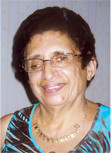
Perin Fitter: "My services are voluntary”
One leaf boiled in a cup of water taken once a week is an effective prophylactic against malaria. "Never wait for malaria to attack. Use neem for immunity,” she advises. She recommends the same concoction for indigestion. And neem oil is an effective antidote to fungal infection of the scalp, she adds. Half a teaspoon of neem oil shaken up in a liter of water with a touch of detergent, to allow the two to mix, can be sprayed on to de-tick your beloved pet. The emulsion does not kill the ticks but they fall off the animal. Hence it is best to spread a plastic sheet under the pet before spraying so that the scurrying ticks can be caught and killed, Fitter instructs us. "You can use the neem as fertilizer and pesticide. Its young red leaves are equivalent to quinine.” Indeed, she states that Kenya has successfully saved much of its foodgrains which used to be lost to pests, since the government began backing the environmental club’s movement for the use of this natural resource. In fact the Kenyan government uses Nimin and Athoot, two neem based pesticides manufactured by Godrej Agrovet, she tells us.
The neem’s scientific name, derived from Persian, is azadirachta indica meaning ‘tree of life.’ Its leaves grow in distinct pairs unlike those of its cousin, the melia azadirach which is toxic to kidneys if used as medicine, but whose wood is termite resistant, Fitter shares her expertise. The seeds of the neem tree, an invaluable resource generally swept away out of ignorance, yield more oil the older they get. However, they are only viable for tree propagation for three months after they are shed by the mother tree, we are told.
A part of an international environmental movement supported by the United Nations Environment Programme and Finland which have specifically set aside funds for neem propagation in Africa, Fitter has attended meets in various parts of the world, been recognized for her work by the UN. It has not changed her commitment to the poor. "In India people are averse to working with the grassroots. All your functions are held in five-star hotels!” She is not preaching. Just mentioning a fact with a touch of regret, sometimes with a trace of amusement. Dr Ramesh Saxena, neem coordinator in Kenya, had addressed the people in scientific language and the audience slept. She refers glowingly to Prof C. M. Ketkar’s Neem Mission in Poona: "He came to Kenya, taught us and the people how to hold practical demonstrations…Now everybody wants his own little tree!” On a trip to India in mid-March when Parsiana had the occasion to meet her, Fitter had thanked him publicly at an event at Poona’s Nowrojee Wadia College, her alma mater. Her work also took her to Madras and Bangalore where she was sponsored by EID Parry (India) Limited.
Fitter is both impressed with and grateful for the support of Godrej Agrovet Industries and particularly its chairman Nadir Godrej. Her first contact with them had been through their scientist Dr B. N. Vyas at the World Neem Conference in Australia in 1996. Today the Godrej presence in Kenya is substantial, she avers, exporting as they do, oil, soaps and other products. A few weeks earlier she had been to Nasik where Godrej spokespersons had addressed the local people in Hindi on the virtues of neem. The situation is all the more pathetic, she avers, as neem had been part of Indian pharmacopia for thousands of years.
It was in Australia that she had also met Prof Dr H. Schmutterer, a world expert on neem from Germany. "They were very happy with our introduction of Kenyans to neem,” she exults. Now the Secunderabad based Fortune Biotech Limited is also exporting neem oil to Kenya, she adds.
Some of the finest neem seeds come from Kenya now, according to Fitter. In a juvenile reform program at Kenya’s Shimo-la Tewa Prison Fitter says they set the youngsters to collect seeds from the trees in the neighborhood. A frequent face on Kenyan television, she says she is hailed as "Mama Neem” by poor Kenyans.
There are only 60 Parsis left in Kenya now, notes Fitter. "The Africans feel we are different from other Indians because most Indians revolve around money!” Working as she does with the poor who are "struggling for a drop of water,” she maintains, "We can’t say we need this or that. They have so little — all skin and bones.” So when she is touring the country she spends the night in a local temple, leaves a "donation for God.” The Akamba Bus Company values her work. They allow her to stay overnight in their offices. "I like to minimize people’s expenses, don’t like to be seen as a burden. Even in India, I travel second class. I make it very clear, my services are voluntary.”
Fitter was happily planning to fly to Mauritius later in the year to coincide her visit with the centenary of scouting there. And also, because "Mauritius is full of neem trees.” But her major preoccupation is to "start the greening of India, beginning with Wadia College.” Unfortunately, "In India no one believes in replying. In Kenya people politely say ‘don’t come.’”
Born in Eldoret, Kenya, where her parents set up home in 1931, Perin is the daughter of Nargesh and the late Shavaksha Rustomji Fitter, chief clerk for the Law Courts under the British. The five children, all girls, lost their father at an early age. Accepting family responsibility, Roshan, the eldest, became a teacher, continuing with the profession in Kenya for 24 years. Then, when Lesotho became independent, she was part of the team that initiated an international school within the University of Lesotho where three of her students acquired their PhD, says Fitter. After her contract with Lesotho came to an end, Roshan joined her sister Zarine, a retired nurse, in the UK. The third sister Mehroo, a gold medalist in French from the Nowrojee Wadia College, taught English and French in Kenya for 16 years before moving to the UK. There she took a librarian’s course and worked in that profession in Coventry for 26 years, receiving the Millennium Award for librarianship input in the West Midlands and later, in 2004, an MBE followed by the Glory of India Award from the Indian High Commission in UK, Perin delights in recounting her sisters’ achievements. Their youngest sister Shenu is a pharmacist in London and Coventry. All five sisters have remained unmarried. Their mother, now all of 92 years, lives with them in the UK.
Equally dedicated, though in a different field of activity, Perin Fitter spares herself a vacation in summer which she spends with her family. In Kenya their place is taken by a cousin – Dr Ruby Sokwala and her family. In Bombay another cousin Nargesh Govekar and her family is a tower of strength and support, a base from where she can operate in India. "I am loaded with blessings,” smiles Perin warmly.
◆ ◆ ◆
From the archive