
Events & Personalities
Valuing vultures
The Hyderabad based Centre for Cellular and Molecular Biology (CCMB) — acting on a directive from the Central Zoo Authority and the Ministry of Environment to make a detailed study on the causes for the decline in vulture population and remedial measures that could be adopted — has recommended the breeding of vultures on a priority basis, according to a report prepared by Jehangir Bisney, trustee of the Parsi Zoroastrian Anjuman of Secunderabad and Hyderabad (PZASH).
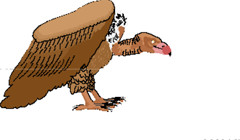
After taking over a year to learn how to distinguish the female from the male vultures, the next challenge for the scientists was collection of semen samples for testing and possible insemination. To find out whether a vulture is fertile was another difficult task. Finally after more than six months they were able to collect a semen sample of 0.1 to 0.2 ml containing millions of sperms. This sample has to be stored at temperatures less than –20o C. That the breeding period for vultures is restricted from November to early February was another revelation for them. Vultures being an endangered and protected species, until permission is obtained from the Central Zoo Authority and the Ministry of Environment, scientists cannot proceed with the insemination. At least five female and three male vultures would be required to continue research on assisted reproduction, each vulture requiring three to four people to handle it.

Jehangir Bisney: scientific approach required
"The unconventional and invasive methods adopted by scientists are in stark contrast to the conventional methods adopted by the conservationists. However, when the problem of vulture survival is so acute, conventional methods would not work,” Bisney has learnt. Apparently at the Vulture Conservation Breeding Centre at Pinjore, Haryana which houses 62 vultures of four species, no vultures have been known to breed there in the last three years.
The Zoroastrian community needs to fully back the efforts of scientists who are trying to save the vultures from extinction, impresses Bisney, adding, the Federation of Parsi Zoroastrian Anjumans of India requires "to take this matter up seriously with the Ministry of Environment, Central Zoo Authority and other government organizations to give a free hand to the scientists to carry out their research in a manner they deem fit. We at PZASH are ready to offer our assistance to coordinate with CCMB.”
Vultures in the open skies have not been sighted in Hyderabad for the last several years. If they were to return it would mean good news for the community which has two dakhmas located at Bhoiguda and Parsigutta, according to a write up in The Times of India of September 18, 2006. "We might be a progressive community, but we cannot disown our rituals. A majority of us would still like to be left at the Towers of Silence after death,” PZASH president Gulbanoo Chenoy was quoted in the Times report.
◆ ◆ ◆
From the archive