
Religion
“Give and get respect”
Treat the priests well and managing the fire temple will not be a problem, says Dastur (Dr) Firoze Kotwal
"I’m an optimist,” is how Dastur (Dr) Firoze Kotwal counters the oft voiced anxiety of people in regard to the future of the community’s fire temples.
"Treat them (the priests) well,” says the former high priest of the Seth Hormasji Bomanji Wadia Atas Bahram on Bombay’s Princess Street. "Be reasonable… give and get respect,” he adds.
If trusts and trustees function in this manner, procuring mobeds and chasniwallas (assistants) for the fire temple would not be a problem, says Kotwal. He cites the example of panthakies Dinyar Vajifdar (Ervad Adarji Kharshedji Panthaki Agiary, Bandra) and Aspandiyar Dadachanji (Modi Sorabji Vatchha Gandhi Agiary, Hughes Road) who successfully run their fire temples "saari rité (in a good way). They have no problem,” finding priests and chasniwallas.
Noting the high cost of living, Kotwal says priests are not paid commensurately. Even a salary of Rs 10,000 is not sufficient for a family to live. Plus there is no gratuity or provident fund for a priest employed in a fire temple. He points out his two sons migrated to Australia and New Zealand and have done exceedingly well financially. "Dharam dil ni cheej chè, vèpar nathi (religion is a matter of the heart, not a business),” he notes.
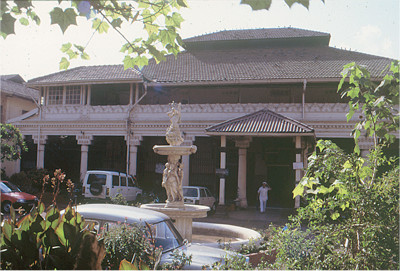
Seth Hormasji Bomanji Wadia Atas Bahram
The priest’s job is a "sakkhat dhando (tough job),” cautions Kotwal. They have to get up early and work all the days in the week. The religious ceremonies (kriya) are in two parts. One are the routine prayers such as afargan, farokshi and satum while the others are ceremonies performed in the sacred precincts of the fire temple and involve alats (sacred implements). Fully qualified priests are required for the higher liturgical ceremonies. Athornans who come from other professions into the priesthood do not know all the prayers and rituals. A high priest or dastur who is not fully conversant with the ceremonies and the functioning of an atash behram can be fooled by the mobeds, notes Kotwal. If disputes occur between the priests, the issue is settled by the dastur.
Lay people and priests seek guidance from the high priests. Kotwal would sit in the hall of the Atas Bahram between 8 and 10 a.m. every morning so as to be accessible to anyone who wished to approach him. If a person was commuting from the distant suburbs, he would wait even longer in case the person was delayed.
"I never refuse to meet anyone,” he notes.
The relationship between the priests and the fire temple trustees should be "cordial.” When asked about the recent controversy at the Seth Dadabhoy and Seth Mancherji Pestonji Wadia Agiary at Parel where the trustees dismissed the panthaky whose family had been serving the fire temple for five generations, Kotwal commented that both the trustees and the priest should respect each other. The priest had allegedly opposed the trustees’ plans to construct a high-rise building in the agiary compound. These and other points of contention reportedly led to his ouster. While priests should be respectful in their dealing with the trustees, the trustees also should honor religious sentiments, says the high priest.
Kotwal himself resigned from the ‘gadi’ (seat of authority) of the Wadia Atas Bahram because of disagreement with the trustees on the management of the fire temple.
The remuneration given to the high priests varies from fire temple to fire temple. In the Wadia Atas Bahram the panthakies used to give a percentage of their earnings to the dastur. But his predecessor, Dastur Khurshed Dabu stopped this practice as he was paid a sizable honorarium by the trust. Thus when Kotwal joined, the additional income from the panthakies had ceased. But he never approached the trustees for an increase in the salary which remained static for most of his tenure.
As regards the difficulty of finding Parsi handymen to carry out repairs, Kotwal pooh-poohed the complaint. He believes Parsi volunteers are always there and can be called upon to assist. He is against moving any of the fires from one fire temple to another.
The chasniwalla’s responsibility is to keep the fire temple clean, deliver the chasni (consecrated food) and do "any work the panthaky gives,” says Kotwal. Most of the chasniwallas
◆ ◆ ◆
From the archive