
Zoroastrians Abroad
An Olympian in the making
Riyad Gandhy is striving for an equestrian title for India at the Beijing Olympics
A 28-year-old youth is seeking to pioneer a new milestone in the history of Parsi achievements. On his radar screen is the Beijing Olympics 2008; his chosen vehicle, a horse. It is an expensive venture: he needs to raise US $ 685,000 in the course of these three years to realize his ambition to represent India on the Chinese turf and beyond. "It’s quite an uphill task,” admits Riyad Gandhy, adding, "That motivates me even further.”
When the community bemoans the loss of courage and sense of adventure among the youth, branding the males "mamas’ boys,” Gandhy is a reassuring phenomenon. "People don’t know about equestrian sports, don’t understand it. They only know racing,” he defines his first road block. So he has been doggedly educating the top brass at Tatas, Godrej, Hutch, the Laxmi Mittal Foundation et al about the benefits they can hope to reap by corporate sponsorship of an equestrian entrant who, in the course of the journey to Beijing would be participating in various international events in Europe, North America, the Middle East in a sport known as "Eventing.”
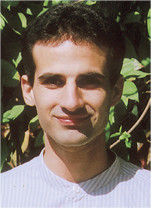
Gandhy: horses can be addictive
Describing it as an equestrian tri-athlon, he says eventing is a test for a horse and rider pair over three consecutive days comprising "dressage,” cross-country and stadium jumping. Dressage, on the first day, tests the gait, suppleness, fluency of movement and obedience of the horse, emphasizing the harmony of the rider and his steed as they perform prescribed movements. Gandhy compares it to figure skating. In the cross-country test the following day the horses are "galloping at speed over massive solid obstacles, virtually flying over ditches, leaping up and down banks, running through water…. over a few miles and 30 solid obstacles that don’t move.” It measures the trust between man and animal as much as their speed, stamina, boldness and jumping ability, notes Gandhy. On the final day the horse must clear the hurdles in the arena, sedately, without touching or dropping them, demonstrating the understanding between them.
According to Gandhy, "A single rail knocked down can make the difference between winning and finishing farther down in the placings.”
The corporate sponsor also stands to gain, says Gandhy. The horse can be named after the sponsoring corporation with Gandhy participating in advertising campaigns, promotional events and trade shows. Saddle pads, banners, trailer logo, etc make for product endorsement and publicity. Drawing an analogy with India’s tennis star Sania Mirza, Gandhy asks, "Where else in the world would a billion people know the name and follow closely the pursuits of a woman tennis player barely ranked in the top 50?”
Gandhy hopes to compete approximately 25 weekends per year, primarily in the Eastern US where 80 percent of eventing activity is centered, expects to travel tens of thousands of miles a year in the US alone, competing in front of over 10,000 competitors, watched by approximately 150,000 spectators apart from press coverage in specialized and regular publications, according to the brochure prepared for his sponsors. The total cost includes the purchase of two horses to allow for the event of an injury, a truck and trailer and the cost of maintaining the horses, coaching, travel, etc.
"The way I have structured the sponsorship package (is to provide for the) need to do the task properly, not just get it done. We have to go for a winning horse, not an average horse that’ll get to the Olympics but not have a chance. In all equestrian races, you are only as good as the horse you ride. It is very difficult to find a horse that is good at dressage, cross-country jumping and show jumping,” Gandhy told Parsiana in Bombay on January 24, 2006. He said he had identified the horse, a nine-year-old male winning at the top level in these kinds of competitions in New Zealand. The second horse, the back-up, would be younger, targeted for London in 2012 or perhaps New Delhi in 2016, he notes optimistically.
You also need a horse doctor – an expensive proposition — to get the horse to stay well, Gandhy notes. "He needs preventive therapy, is babied with electro-magnetic blankets and massage therapy. The horse that does dressage and cross-country jumping will only do it if he enjoys the job. Only then will he go into top level performance.” However, 95 percent of injuries to a horse require only a week’s rest: "As an equestrian you know how to keep your horse sound.”
The House of Godrej has agreed to provide a quarter of the amount he needs to buy a horse, said Gandhy. Manisha Malhotra, administrator of the Mittal Foundation had agreed to present his case to her board but had counseled him that it would be easier for the Foundation to provide competition and coaching expenses than to buy a horse for him and this is exactly what the Foundation later agreed to do. While Hutch has provided a nominal sum, other corporates he had met were yet to respond to his plea at the time of the interview.
Gandhy is open to individual sponsorship also, and has worked out a string of rewards for them depending on the level of their contribution such as discounted riding lessons, clinics and horse training, behind the scenes access and hospitality at events, competition news and photos, etc. So far he has one Gold Sponsor being a contributor of US $ 5,000 or more, two Silver Sponsors who have contributed $ 2,000 - $ 4,999; six Bronze Sponsors ($ 500-1,999); and seven "Good Luck” Sponsors ($ 25 – 499).
The son of Annaita and Adil Gandhy who runs the Chemould Frames establishment at Bombay’s Princess Street — Riyad is the grandson of Kekoo and Khorshed Gandhy of the Chemould Art Gallery – says he is lucky that his parents support him. He was inducted by his rider father into regular horse riding at an early age in the Amateur Riders’ Club. "My father understands how addictive horses can be,” says Riyad adding that during the four years he spent at the Kodaikanal International School where there was no provision for horse riding he missed it so much, he knew he wanted horses to be a part of his everyday life. So, after school in 1995, he searched the web for a college which provided equestrian studies and found a long list of such institutions. "I asked my uncle who is a professor at Dartmouth to shortlist the good ones and I chose the best of all — the Otterbein College in Westerville, Ohio.” In response to a usual Parsiana query Gandhy laughed: "I was the only Indian there, forget about Parsis!”
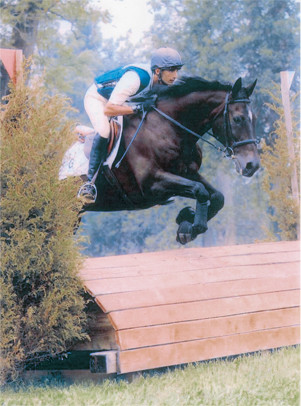
During a cross-country competition in Kentucky, 2004
Along with the four-year bachelor’s degree in equestrian studies which provided the academic background, Gandhy started his career in professional riding under the coaching of Otterbein head coach and trainer Lucy Cryan, specializing in dressage. In 2000 he began a three-year stint in Alabama with Jim Graham, a US equestrian team selector, judge and one of the top trainers in the country. There he rose from being groom and rider to assistant trainer. Currently freelancing part-time in Lexington, Kentucky, Gandhy says his work allows him to travel to shows, teach riding at people’s farms or coach them for horse shows.
"Riyad is an extremely talented rider (who) has done a fantastic job riding some very difficult horses. He has developed into a solid competitor, and will definitely play a big role in building a highly competitive Indian team in the future,” Graham is quoted in the brochure. "After 20 years of teaching, Riyad clearly stands out in my mind as a rider with the talent and drive to make it to the top,” adds Cryan.
"You usually start riding a horse at four years, beginning with flat riding,” Gandhy tells us. The induction to dressage comes before the introduction to jumping, depending on how the horse responds. "You listen and go according to the horse’s pace,” he notes.
Gandhy has never owned a horse but has had the opportunity to ride a variety of types. Some came from the farm where he worked; others were sent for training. "They are not completely wild, but some may never have been sat upon. Some may have gone into competitions but proved troublesome… Everything would be paid for. The horses gain experience at competitions. It increases their value. They go back to their owners who are riders themselves or they get sold. My job is to make the horse good enough for them,” says Gandhy.
Now Gandhy needs a horse to stick with to reach the top level of international competition. He says he has had offers from horse owners but the horses did not have the necessary talent. Hence he says he needs a sponsor to provide him his own horse. "The biggest road block in India is funding” because the sport, he says, is so little known. "People say, ‘First you qualify, then we’ll give the money.’ But how do you maintain a horse without support? If India wants to be competitive (in international sports) they need to support people as soon as they spot talent, give the infrastructure the sportsperson needs from the start.”
It was the army that sent equestrian competitors in the past, he notes, citing the example of Wing Commander Lamba who went to Alabama. Imtiaz Anees, a civilian and a friend who made it to the Sydney Olympics, is "a trail blazer. He has motivated me… Everybody else was army related,” he reiterates.
As Gandhy holds dual citizenship (US and Indian) we ask why he has chosen to represent India and not the US. "It is way more difficult to get into the US Olympic team,” he concedes, informing us that there 50 to 60 riders compete for the five equestrian slots on the team. "India does not have enough riders at that level to make an Olympic team,” he adds.
Gandhy likes being in Bombay but has only been able to make two trips in five years. "When I’m here I hope to stay longer. Once there, I’m so busy there is no time to think of home.” Though he enjoys tennis and football, swimming, hiking and all outdoor activities, his energy is now focused on horses. A practicing Zoroastrian, Gandhy dons the sudreh-kusti but does not believe in praying from the Avesta: "I don’t think reading things without understanding is necessarily praying. Instead, if you pray from your heart, your prayer will be heard, whether at an agiary or at home.”
◆ ◆ ◆
From the archive