
Comment
Pardiwala’s philantrophy
Philantrophist Jehangir Pardiwala started as a restaurant clerk and built a fortune selling tea and manufacturing aerated drinks
Jehangirji Pestonji Pardiwala firmly believed that those in affluent circumstances held the monies in trust for assisting the poor, the needy, the disadvantaged and the underprivileged persons. Convinced that charity begins at home, he was most liberal in silently helping not only all his deserving relatives from Pardi but all those who came from the adjoining areas — including small farmers, artisans, tribals — irrespective of caste or creed.
Despite his growing affluence and status in society, he continued to lead an extremely simple life, full of humility and the desire to assist all deserving people and causes. Always clad in a Parsi style black coat, white pant and a black velvet cap or pheta, Jehangirji was very religious and seldom, if ever, missed his daily trips to the fire-temple.
On his daily walks from the Turf Aerated Waters factory at Tardeo to Haji Ali at Worli every mendicant on the promenade leading to the Haji Ali shrine received some small help from him every day. On Id days, all Muslim brethren passing the Turf Aerated Waters factory were treated to free drinks. On his untimely death at the age of 56 in 1945 at the hands of an assassin — whose sole motive was robbing the daily cash collections at Turf Aerated Waters — these mendicants demonstrated their great grief and sorrow in large numbers.
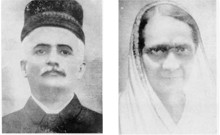
Jehangirji and Ratanbai: humanita-rian outlook
It wasn’t unusual for the Tardeo Parsi population to get crates of soft drinks on festive occasions, birthdays, etc free of cost. Jehangirji left all his personal wealth to a cosmopolitan Jehangir Pestonji Pardiwala Charity Trust which greatly benefits the poor and the needy. Pardi, Umbergaon, Dharampur and the adjoining villages were then predominantly Adivasi areas. They were backward socially, economically, educationally. The Pardi Education Society, Pardi has, with liberal financial assistance from the above Trust, started innumerable schools which benefit thousands of poor and middle class students in these areas (see "The pride of Pardi,” Parsiana, August 2004). The Jehangirji Pestonji Pardiwala Arts and Commerce College, the first ever Arts and Commerce College in Pardi was established with an initial donation of five lakh rupees from the trustees of the Jehangir Pestonji Pardiwala Charity Trust. This College, affiliated to the South Gujarat University at Surat, has an exceptional record of success at University examinations.
The objectives of the late Jehangirji to bring education to the doorsteps of the students has been admirably achieved by the middle and higher secondary schools and the College at Pardi so very efficiently administered by the Pardi Education Society.
What made this simple, unassuming and humble person so very much loved and respected? Jehangirji lost his father Pestonji when he was a child. His beloved mother Aadarmai — an extremely gentle and sweet natured lady — and his loving maternal grandparents Khurshedbai and Rustomji Panchlaiwala brought him up. Later, this mantle fell on Edulji and Rattubai Panchlaiwala, his maternal uncle and aunt.
As there was no high school in Pardi, young Jehangir was sent to the Bai Avanbai Petit High School at Bulsar from where he matriculated. Since he had no relatives with whom he could stay at Bulsar, he stayed with the Maneksha family. Till his death, the friendship with Dr Jamshed Maneksha — an eminent general practitioner of his times — and father of the reputed plastic surgeon Dr Rustom Maneksha (see "Pioneering plastic surgeon,” In Memoriam, Parsiana, January 2005) grew and blossomed into great esteem and affection for each other.
In those days Pardi village had no avenues for employment. The enterprising young Jehangir decided to try his luck in Bombay. Not many would believe that this noble and generous soul — who gave so very liberally in his lifetime and left lakhs to charity — started for Bombay with barely ten rupees in his pocket. On arrival, he contacted Hirji Billimoria, proprietor of the then reputed Majestic Hotel who was good enough to start him as a clerk on a salary of Rs 15 per month. By dint of his hard work, transparent sincerity, honesty and integrity of the highest order, Jehangir was soon promoted as an accountant-cum-cashier at this leading Hotel of the years gone by.
While staying in a chummry at Chira Bazar, Thakurdwar, Jehangir met Ratanbai Khan, then a teacher in a municipal school. Ratanbai greatly admired the noble qualities of this youth and the two were soon married and enjoyed matrimonial bliss till death parted them.
While working with the Majestic Hotel, he started on a small scale, a wholesale business in tea. With Ratanbai’s help and personal supervision, the business greatly expanded and Jehangir was successful in soon securing the sole agency — for the whole of the then undivided India — of the reputed T. Stanes and Company Limited of Coimbatore.
Jehangir was greatly respected by senior members of the Stanes family. They made it a point to visit him whenever in Bombay. His integrity won over the hearts of the tea dealers from Quetta to Kanyakumari. In particular, the Zoroastrian Iranis — who ran almost all the tea shops in Bombay — looked upon Jehangirji as their friend, philosopher and guide and always called on him for assistance and guidance, even in domestic and family matters, and personal problems. Many were assisted with finances and loans.
Jehangirji was soon out of the woods and able to help his deserving relatives and the poor — especially from Pardi — who came to him for jobs or loans or other assistance.
In 1934, Jehangirji bought the Turf Aerated Waters — then located at Arthur Road — a sick unit — which was not faring too well in the face of keen competition from several reputed firms. He leased a plot of low-lying land at Tardeo, filled it up to the road level and constructed a modern factory thereon. Again, by his honesty and integrity, he not only won over the business community and the clients but he secured large and remunerative contracts from the Government departments — particularly the contracts for supplying aerated waters to the military barracks and canteens in and around Bombay. This business very rapidly expanded during the Second World War — 1938-1945 — and brought Jehangirji in personal contact with the highest army and government officials. He soon won over their confidence and respect.
He liberally donated to the various war funds. In appreciation of his war efforts, the then British Government conferred upon him the prestigious title of Khan Bahadur in 1943.
Ratanbai also left all her personal wealth to constitute a charity trust for promoting education, giving medical relief and assisting the poor and the needy in the Parsi community. From the Ratanbai and Jehangir Pardiwala Charity Trust financial help for medical treatment is given to some 50 Zoroastrian widows and women in distress. The Trust also helps to promote the education of Parsi youth, including those who go to foreign countries, for higher studies.
This writer was privileged to know the couple intimately. Their qualities of head and heart, their humanitarian outlook, their humility and their generosity have left an indelible impression on him.
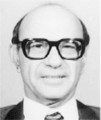
Capt Hormazdiar Desai retired from the Indian Administrative Service as joint secretary, finance, Maharashtra state. Thereafter he served many charitable causes, working as honorary secretary of the National Association for the Blind and as founder member of the National Society for Equal Opportunities for the Handicapped. He was joint honorary secretary and trustee of the K. R. Cama Oriental Institute and has been associated with religious institutions like the Anjuman Atash Behram and Sorabji Ranji Agiary as governing council member/trustee. He is also the managing trustee of the Ratanbai and Jehangir Pardiwala Charity Trust.
◆ ◆ ◆
From the archive