
Books
Reporter's reminiscences
An Umpire Remembers: An Autobiography of Piloo Reporter compiled by Devendra Prabhudesai. Published in 2004 by Rupa and Company, 7/16, Ansari Road, Daryaganj, New Delhi 110002. Pp: xii + 187. Price: Rs 295.
Nowhere are cricket’s gentlemanly traditions more apparent and visible than the respect accorded to the decisions made by the umpire. No dissent is encouraged by either the batsman or the fielding side; even in pressure cooker like situations, decorum is maintained as a result of conditioning and harsh penalties for any infarction. It is also to the credit of umpires that, by and large, no bias is exhibited by them and mistakes made are honest and human. True, technology in the form of slow motion replays has made their jobs both easy and difficult. Quite a few decisions are referred to third umpires who have the benefit of television replays yet at the same time an umpire’s errors are magnified by the same replays when certain decisions cannot be referred to his colleague in the comfortable confines of an air-conditioned box.
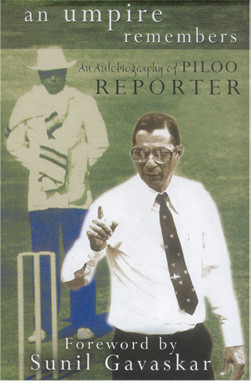
Piloo Reporter’s autobiographical reminiscences of his days out in the middle make for interesting reading even for those who have a peripheral interest in the game. Simply and competently written without great flourish, the book provides insights to the difficult job out in the middle, lasting five days before the advent of one-day internationals, made more difficult by the heat generated both by the climate and by the passion of both players and spectators.
As notes the foreword by Sunil Gavaskar, former Indian captain, "Piloo Reporter has tried to bring his experience to the reader and this is one of the rare attempts by an umpire to narrate what he experienced, the hardships he had to undergo and the pleasures and pains of officiating in Tests and internationals. Piloo was popular not only with the players, but also with the spectators for his unique way of signalling a boundary. He was one of the characters of the game and an extremely hardworking umpire.
"His memoirs would make interesting reading for those who want to know what it entails to be out there in all kinds of weather and with the best players in the world.”
Reporter’s tenure was all the more interesting as it was on the cusp of some startling developments in the century-old game. He stood only in 14 test matches in a nine-year period from 1984 to 1993 — a period which increasingly witnessed the growth of one day internationals, the introduction of the third umpire and also of neutral umpires. In fact, Reporter and his colleague V. K. Ramaswami were the first neutral umpires in the modern age, having been invited to officiate in Pakistan in 1986 in a series between Imran Khan’s team and the West Indians led by Vivian Richards.
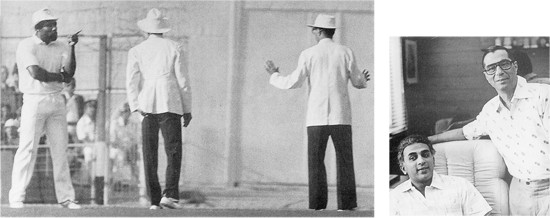
Reporter (with outstretched arms) has a face-off with Viv Richards; and (alongside) with "Little Master” Gavaskar
Underlying Reporter’s story is a patina of pathos. His career was short as the Board of Control for Cricket in India (BCCI) had stipulated the retirement age for umpires at 55 whereas in England it was 65 (this has subsequently been relaxed in India). The number of test matches he officiated in nine years, he laments, is what an umpire on the international panel officiates in a year. And the remuneration was just not commensurate with the hardships associated with the job, both on the field and off it. At times, the umpires had but a closet to change between themselves and even basic supplements like tea and lunch were poor or denied to them.
Reporter took to umpiring as his cricketing talents admittedly were limited. This was the only way he could be a part of the sport he was fanatical about and for him it was a satisfying innings. However, what would have been equally satisfying for the reader would have been some personal insights. A man is always a product of his environment and circumstances. There is no mention of a childhood or family, apart from passing references to them dropping him and receiving him at airports. This is not out of any prurient interest; rather it puts events and things in perspective and explains a lot about men. For instance, Reporter is a religious man, repeatedly ascribing his good fortune to divinity. What is the fount of this religiosity?
Apart from this minor flaw, if it may be called that, the book is notable for its felicity and a must read for cricket aficionados. If anything, picking up this hardcover book would be an acknowledgement of a simple man’s great passion for a game to which he gave so much of his life, fully aware of the few highs and the many lows it could bring him.
Maneck Davar
◆ ◆ ◆
From the archive