
Events & Personalities
Channelizing talent
The pioneer of contemporary dance in India, Astad Deboo was one of the two choreographers selected by the Deaf Olympics Committee to create a special item for the inaugural event at the 20th Annual Deaf Olympics in Melbourne, Australia in January 2005. During the following nine days at the Deaf Olympics, Deboo and his troupe of 12 young hearing impaired dancers who hail from the Clarke School of Deaf in Madras were to perform eight shows of Contraposition, a marriage between the various traditions of Indian classical dance forms and nine emotions that are depicted through them, reported the Sunday Mid Day of December 12, 2004. About 3,000 deaf athletes from nearly 80 countries were expected to participate in the Deaflympic Games organized by the Comité International des Sports des Sourds, CISS (The International Committee of Sports for the Deaf).

Masani: music with a mission
Viewing his troupe as "professional” Deboo insists he does not want the audiences to overlook any mistakes these dancers make simply because they are deaf. His dancers being unable to recognize auditory stimulus, he teaches them to respond to vibrations and a special eight-count gesture system. Since they normally dance on a wooden floor, a thump on the planks of a floor or a change in lighting serve as cues during performances. More challenging than working with the deaf is the raising of resources to sponsor dance tours, realizes Deboo.
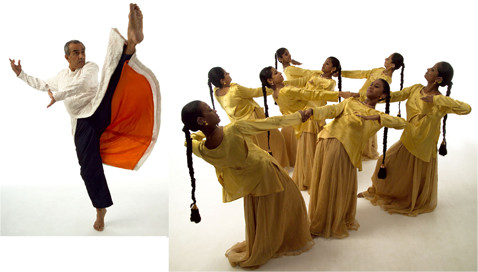
Deboo (left) with his talented troupe
Just as Deboo is committed to nurturing cultural talent among the deaf in India for the last 16 years, ghazal princess Penaz Masani has taken upon herself the role of creating awareness against female foeticide through her concert tours. "If you hear the song called Beti, written by Nida Fazli, it simply touches your soul. It tells you the worth of having a girl child,” Masani told the Afternoon Despatch and Courier of December 1, 2004, recounting how she had to perform it continuously for two hours. The earthy tunes were specially created by Shantanu Moitra. "It was great music for a great cause,” emphasized Masani who enjoyed travelling across moffusil villages in Ludhiana, Salem, Bokaro, Vizag and interacting with the people.
From singing serious Urdu ghazals to rendering glamorous numbers with Planet, an energetic dance troupe, Masani has enjoyed an extensive music repertoire which she is now channeling to meet social goals.
◆ ◆ ◆
From the archive