
Law
Tithal trust's triumph
After an 18-year legal battle, the Tithal sanatorium land reverts to the community
"In the best interests of the (Tithal Sanatorium) Trust and its objects, we feel it appropriate that (its trustees) should explore the further possibility of having agreements with better terms. The objects of the Trust should be accomplished in the best of its interests. Leasing out the major portion of the land for other purposes may not be in the best interest of the Trust. The Charity Commissioner (CC) while granting permission under Section 36 of the Bombay Public Trust Act could have explored these possibilities. Therefore we are constrained to remit the matter to the Charity Commissioner to take a fresh decision in the matter...”
The joint decision of Justices S. Rajendra Babu and K. G. Balkrishnan of the Supreme Court of India (SC) as dictated by the latter on May 10, 2001 sent the chief protagonists in the drama back to the CC with letters of support and promise of help from other Zoroastrian anjumans/organizations. The Trust’s only surviving trustee, the octogenarian ophthalmologist Dr Rustom Patel, sought withdrawal of the original request to alienate the property by way of a 99-year lease to developer Vipul Shah for an annual lease rent of approximately Rs 1,50,000 which had been filed in 1986 and granted in 1988. His plea in pursuit of the SC order was granted by the CC in the teeth of opposition by Shah. "When the (present) trustees have decided to withdraw the main application on the basis of fresh proposals received, I find no reason for compelling them to prosecute the application. In view of these reasons, the application stands allowed. The applicant trustee is permitted to withdraw the main application,” ruled joint charity commissioner T. G. Kolhe on March 12, 2004.
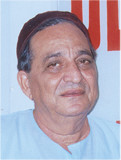
Irani: no reason to alienate property Photo: Arnavaz S. Mama
Shah then filed a high prerogative writ petition in the Bombay High Court (HC), continuing to assert his rights under the original lease agreement of 1988 on the ground that the SC’s order had further stated, "There could be fresh advertisements inviting fresh proposals and the proposal of (Shah) could also be considered. The CC may himself formulate and impose just and proper conditions so that it may serve the best interests of the Trust.”
Arguing that "there are no better offers (and that) the property is already alienated in my favor,” Shah’s advocate contended in the court that "the property has not been utilized for the purpose of the Trust for the last 40-50 years.” But the appeal bench comprising Chief Justice Dalveer Bhandari and Justice Dhananjay Chandrachud disagreed, disallowing Shah’s appeal on September 29, 2004. "There can be no compulsion on the Trust to alienate its property,” noted Chandrachud. When the lawyer persisted that it is up to the CC to decide, the Chief Justice said, "No. It has to be decided by the Trust.”
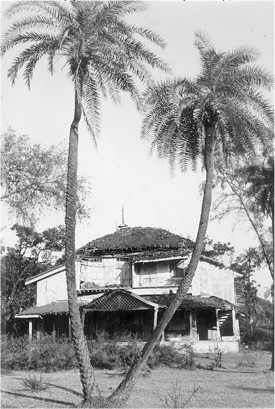
Through this 18-year haul the property has been conserved for the community by the gritty Irani businessman Merwan Irani (elected president of the Iranian Zoroastrian Anjuman on November 3, 2004) and his wife Binafshay. In their thankless and often reviled capacity as intervenors, they were long considered a thorn in the flesh by the octogenarian trustees Jahangir Bamji and Shireen Narielwala (both now deceased) and the younger (then septuagenarian) Dr Rustom Patel who seemed to want nothing more than to complete the deal with Shah which former community titan, the late B. K. Bomanbehram, had initiated in his capacity as chairman of the Trust. Today, a more knowledgeable Patel has revised his opinion. The Iranis themselves are loath to accept praise which they feel is better due to a battery of Parsi advocates and solicitors who have supported them throughout this protracted battle. Without charging a sou in professional fees and spending from their own pockets for legal charges and court fees — costs which the Iranis say had not even occurred to them. Beginning with K. N. Dastoor and ending (so far) with Rumi Mirza, the impressive roll call includes Tehmtan Andhyarujina, Nadir Modi, Bomi Zaiwala, Aspy Chinoy, Behram Vakil and Ryan Karanjawala. Behind them all looms the quiet Sohrab Morris, the solicitor whose work for the benefit of the community includes the preservation of the Dadar Parsi Colony in Bombay and the protection of its tenants free of the onrush of builders through a series of legal actions since the 1970s.
Although the final legal pronouncements have gone in favor of the community, the status on the ground is far from comfortable. As the trust deed stipulates five trustees, attempts were made to increase the number of trustees by inducting others, notably the late Aspi Irani, an architect of repute, trustees of the Bulsar Anjuman senior advocate Burjor Pardiwala and Hormuzd Pardiwala and businessman Perzon Zend. These attempts were strenuously opposed by Shah. Fortunately Patel, the sole surviving trustee, got convinced of the bona fides of the Iranis’ concern to induct new trustees on the board of the trust and rightly declined to support Shah in his wrongful opposition to their appointment. Shah’s opposition by all manner and means includes the filing of criminal cases against the Iranis and Patel in the Girgaum Magistrate’s Court.
Shah’s claims that he has spent over three lakh rupees on behalf of the Trust have not been accepted by the CC.
Mirza explains Shah’s involvement and opposition in the induction of new trustees as stemming from the CC’s decision to involve all those on record since the inception of the case. Shah, as the original lessee, was involved believes the CC. When there is only a single trustee and if he were to die in harness, the CC would be required to appoint an administrator, Mirza noted in answer to Parsiana’s query.
"We need Rs 30,000 to 40,000 annually for the security of the land to prevent Shah from creating third party rights,” says Irani. Initially a private trust in Hongkong had offered the Bulsar Anjuman about Rs 75 lakhs for development of the property but due to the prolonged litigation it became time barred and the money had to be returned to Honkong, says Irani. Also, land revenue amounting to Rs 25,461 as on August 1, 2003 remained unpaid according to the Tithal Gram Panchayat Talati cum Mantri. The order dated May 11, 2004 notes, "You are hereby asked to pay the dues within four days failing which legal notice fee and penalty charges would be recovered by auctioning of the property.”
According to Mirza, a point of law which the High Court verdict settled, was whether the CC was necessarily required to take a decision under section 36 of the BPTA or could he permit the withdrawal of the original application to lease the land when the case reverted to him under the order of the SC. The High Court upheld his decision allowing withdrawal.
In Mirza’s words, "The property has been salvaged for the community. The community should now make an all out effort to put it to good use so that the fight was not in vain.”
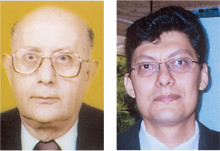
Morris (left) and Mirza : public spirited lawyers Photo: Arnavaz S. Mama
History
When the original five philanthropic Parsis created the Tithal Sanatorium Trust to provide a convalescent home with nominal charges for the poor and middle class members of the community they collected some money and formed a committee in 1907 to carry out the objects of the Trust. Initially they acquired two and a half acres of land with some buildings on it. Thereafter further donations were collected and more properties purchased, so that eventually the Trust owned 11 pieces of land totalling 13 acres. On July 10, 1911 a declaration of trust was made providing rules and regulations for the administration of the Trust. One of the clauses included a provision for the surviving trustees to appoint new trustees, notes the SC judgment. The Trust was registered as a public trust on October 15, 1952.
There was no income from these properties. The movable properties consisting of furniture and utensils were valued at Rs 10,000. Rs 8,485 lay in bonds and fixed deposits. Wanting to generate an income as well as to maintain the property, the then trustees plumped for the offer made by Vipin Shah, the promoter of an association called Mahavideh. Accordingly the Trust property was leased to Shah in 1988 with the proviso that he would build eight blocks of 450 sq ft each on one acre of the property at a cost of Rs 7,75,000 which would form the sanatorium, the remaining area being his to use without any stipulation of purpose. This cost of construction and that of the surrounding fence together with interest was to be defrayed by the Trust in instalments of 50 percent of the annual lease rent.
When the CC advised the trustees to give more publicity to the intended transaction, they gave advertisements in the Ahmedabad edition of The Indian Express and a Gujarat newspaper Dainik Lok Satta. The advertisements netted two responses including that of Shah whose offer was accepted by the then trustees. When a fresh application was made to the CC for alienation of the property under section 36 of the BPTA, Merwan and Binafshay Irani intervened in the proceedings, challenging the trustees’ power to execute such a long-term lease of community property inconsistent with the objects of the Trust. They alleged that the object of the Trust would be defeated if Shah is allowed to make use of the property for any other purpose; that there was no compelling reason for the trustees to lease out the property to Shah; and that there would be better proposals from other parties. Nonetheless, the CC agreed to the lease. When the Iranis went in appeal to the HC, the HC held that the leasing of the property would enable the trustees to carry out the object(s) of the trust which they were otherwise unable to do. The HC further held that there was no substance to their claim that better proposals were possible.
With the support of the public spirited lawyers the Iranis appealed to the SC where Andhyarujina’s argument that 12 acres of the Tithal property was being leased to Shah with no covenants as to its use, while only one acre was being reserved for the sanatorium — the object of the Trust — made eminent sense to the judges who then modified the orders of the HC in favor of the petitioners and charged the CC to "take a fresh decision in the matter.” Accordingly the matter reverted to the CC’s court where Patel successfully withdrew the earlier application of 1986/88 for alienation of property despite Shah’s strenuous objections. The HC, by refusing to accept Shah’s appeal, confirmed the CC’s order.
Simultaneously with this struggle to save the land on the Tithal shore was the protracted effort to appoint new, younger trustees on the board of the Trust. Since the Trust deed gives the right to appoint new trustees to existing trustees, Patel’s acceptance was vital. In his affidavit filed in response to the writ petition of 2004 filed by Shah in the HC challenging the order of the CC Patel admits to his ambivalence in the appointment of
new trustees. He had accepted and rejected them before the CC, the HC and the SC. Attributing the whimsicality to "the vested interest of the petitioner” who took advantage of his advanced age and the fact that he remained the sole trustee, he notes that he was "induced to file affidavits and letters seeking withdrawal of my application... of 1998 for appointment of new trustees...In view of my affidavit and letter which I was induced and misrepresented to sign” the deputy CC, vide his order dated May 19, 1999, allowed the withdrawal of the change report.
B. Pardiwala, H. Pardiwala and Zend filed a review application in 2001 against this order. In his affidavit Patel further notes, "Thereafter I came to know of certain facts about the petitioner after which I realized how he had cheated me and the Trust of our property and taken undue advantage of the faith I had reposed in him.” Patel goes on to cite the letter addressed by the legal firm of M/s Nanavati Tijoriwala and Company to Shah on behalf of Narielwala dated February 27, 1988 seeking return of the wealth of fixed deposits, shares, bank accounts, etc he had deprived her of, as also an affidavit by Narielwala dated March 17, 1989 accompanying her complaint under the Indian Penal Code. A case against Shah was said to have been filed by Narielwala’s adopted daughter. Patel notes, "It was then that I decided not to be misguided by the petitioner and blindly sign on any document he used to prepare in my name.”
Patel’s affidavit of May 20, 2002 "withdrawing the statement, contentions and allegations contained in my earlier affidavit (dated March 4/6, 1999)” notes that the matter has been remanded back for fresh inquiry, to be disposed of according to law. He adds in 2004, "once again the petitioner has been raising unnecessary objections to the adding of the new trustees.”
Along with the evidence against Shah, Morris’ personal integrity and consistent support for the Iranis is said to have eventually persuaded Patel to accept their bona fides and support their effort to induct more trustees onto the Tithal Trust board.
Much now depends upon the ability of community organizations who have shown interest to build upon the reprieve so painfully wrung by the arms of the law.
◆ ◆ ◆
From the archive