
Seminar
Singapore Flame of the faith
The Parsis of Singapore and Hongkong cohost a three-day celebration of 3,000 years of Zarathushtrian culture
Zoroastrians around the globe were enthusiastically responding to the UNESCO declaration of the year 2003 as the 3,000th anniversary of Zoroastrian culture. Events and celebrations to portray the community’s rich heritage, in all its facets — history, religion, art, culture and tradition, cuisine and much more, not only as a revival of the ‘Zoroastrian spirit’ within the community, but also to present it to the world — continued from mid-2003, overflowing into 2004. The Parzor Foundation started the ball rolling with an exhibition and food festival at the Ashoka Hotel, New Delhi, in July 2003, and then followed it with a more elaborate three-day program at the National Centre for the Performing Arts in Bombay in October last, and a two-day event in Calcutta in January 2004 (see "PARZOR: Cultural renaissance,” Parsiana, April 2004).
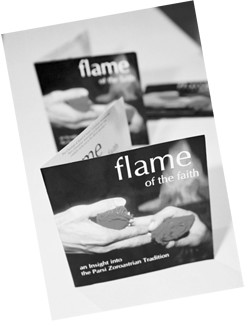
For the Parsi Zoroastrian Association of Singapore the occasion became a cause for a double celebration as the Association completed 50 years of its existence in 2004. As the president of the Association, Russi Ghadiali said, "The dovetailing of these two historic events provided a perfect opportunity to introduce many in Singapore, and indeed other parts of Asia, to our religion, culture and rich heritage.”
This small anjuman of around 200 Parsis coordinated its efforts with The Incorporated Trustees of the Zoroastrian Charity Funds of Hongkong, Canton and Macau (ITZCFHCM) and an organizing committee in India to stage a three-day celebration of Zoroastrian togetherness in South East Asia. Members from Malaysia, Hongkong, India and Australia attended. The Asian Civilization Museum was an appropriate venue for showcasing a civilization dating around 2,500 BC.
The inauguration
The Singapore celebration was entitled "Flame of the faith.” When the minuscule Parsi community is faced with a crisis of identity and the urgent need to rejuvenate itself, it is imperative that the flame of the Zoroastrian faith burns brightly to keep the flock together around the world to face effectively the challenges thrown up in the current socio-economic situation. As the guest of honor at the inauguration on May 28, Chan Soo Sen, minister of state, Ministry of Education and Ministry of Community Development and Sport in the Singapore Government opened the proceedings. There was the symbolic lighting of candles to mark the opening. A special party comprising Soo Sen, jurist Fali Nariman, the chief guest for the three days of the festival, environment and heritage activist Pheroza Godrej, Jal Shroff, ITZCFHCM president, Ghadiali and Lim Siam Kim, chairman of the Asian Civilization Museum were presented with candles which they individually lit from a larger candle and then set alight six floating lights in a container of water.
Soo Sen in his speech, acknowledged the significant and meaningful role played by the Parsi community, wherever they have lived in the midst of larger communities, and commented, "You have somehow internalized the notion that small is beautiful.” Referring to the theme of the exhibition, he said, "In a dark room, even a small flame lights the place up and helps us see. Despite the strong winds that always come, your flame of faith kept going generation after generation. Indeed you have brought the flame to many parts of the world, to continue to light up the dark nights of your communities.” He ended with a word of encouragement and hope to the Singapore Association’s desire to have a fire-temple. "If you need to communicate with the Government regulatory authorities, I will be happy to assist you.”
Nariman in his inimitable humorous style bemoaned the lack of a United Nations (UN) project to save the Parsis, the world’s most endangered species, alongside the tigers, and commented, "We must therefore fend for ourselves as best as we can. Hence the need for an exhibition like this to remind ourselves, and to better inform others, who we are and what we stand for.” A short narrative about the commencement of the great religion, the teachings of prophet Zarathushtra and the vicissitudes of history that brought Parsis to India ended with Nariman confidently asserting, "If we who have gathered here were to be born again, and were given a choice, and I say this confidently on behalf of all brethren present, we would opt to be born Parsi Zoroastrians” to affirmative applause from the audience.
A special commemorative souvenir was released by Soo Sen to declare the exhibition open. The creative talents of the authors of The Zoroastrian Tapestry, Pheroza Godrej and Firoza Puntha-key Mistree were visible in this artistically prepared volume, and their active role in organizing the Singapore celebrations was acknowledged by Ghadiali, who also appreciated the donations and advertisements given by members of the Singapore Association and well wishers which made it possible to bring out the commemorative volume and meet other expenses.
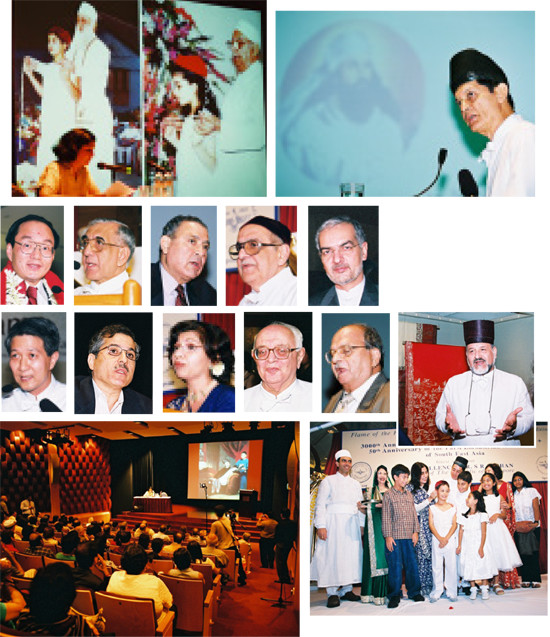
From left (First row): Punthakey Mistree and Dhalla; (Second row): Soo Sen, Ghadiali, J. Shroff, Nariman, M. M. Shabestari (Iranian ambassador); (Third row): Dr Jenson Quek (Asian Civilization Museum director), Wadia, Daisy Subaiah (commitee member), Dotivala,Lam, and K. Mistree ; Section of the audience and enactment of a navjote
Parsi culture on display
An exhibition providing glimpses of Parsi culture through the community’s traditions, beliefs and way of life displayed heritage items and treasured artifacts collected from the Alpaiwala Museum in Bombay and private collectors. It was curated by specialists from the Asian Civilization Museum in five showcases. Items used in Zoroastrian rituals and on ceremonial occasions, the afargan, chamach, ses, Achaemenian, Parthian and Sasanian coins, a copy of an early 18th century Vendidad in Avestan, a 19th century Khordeh Avesta encased in a silver cover, an original handwritten letter by Dadabhai Naoroji, old photographs and Indo-Chinese garments, the garo, kor, jhabla were the items displayed. The concept was minimalist. However the display was aesthetically arranged and evinced considerable interest from Zoroastrians and other local visitors. A jashan layout, on a raised platform block with the placement of the ritual items marked out in white, had two young trained priests from the Singapore community, sitting on opposite sides. It was a pleasant revelation to find that this small community boasts six young Parsis, trained as priests; the flame is not flickering in that respect, one is happy to note.
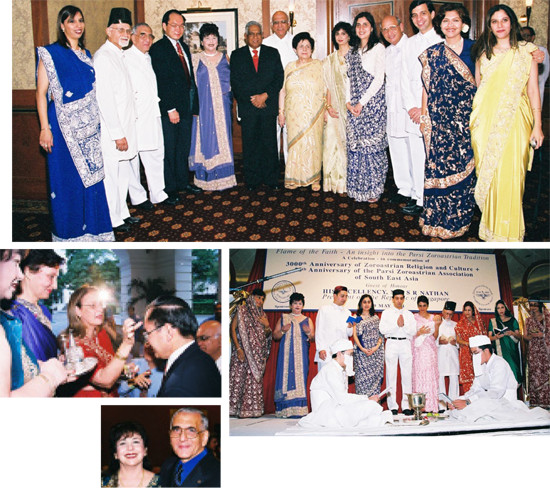
Top: Singapore Association committee members with Nathan; Above: Ervads Aarish Shroff and Zephyr Khambatta reciting prayers; Bottom left: Godrej with Putli Karkaria and Shirin Ghadiali welcoming Soo Sen; Right: The Ghadialis
History, customs, traditions...
The following two days, May 29 and 30 were devoted to some intellectual fare, commencing with Punthakey Mistree of Zoroastrian Studies (ZS) focusing on Parsi traditions and culture which she defined as "what you inherit by way of a legacy from your ancestors.” The Aryan tradition of wearing a sacred cord, along with the wearing of a sacred vest "was introduced, it is believed, by the Prophet himself.” Its message to the wearer to constantly stay on the right path by using the good mind for good thoughts, good words and above all good deeds was emphasized. Customs and traditions associated with marriage, birthdays and the three important celebrations of worship associated with water, fire and animals, whose birthdays were observed with rituals that gave due reverence and praise to these elements and creations of Ahura Mazda, so precious in Zoroastrianism were explained. The symbolism of the items used during some of these ceremonies showed that rice stood for fertility, flowers for fragrance, a coconut for the physical and spiritual worlds, an egg for immortality, unshelled almonds for virtue, a betel nut for strength, turmeric sticks for the rays of the sun and clothes, jewelry and moneys denoted wealth. That marriage, according to Zoroastrianism was a righteous act that "makes Ahura Mazda happy” needed to be reiterated at a time when such a large percentage of the community members choose to ignore this injunction.
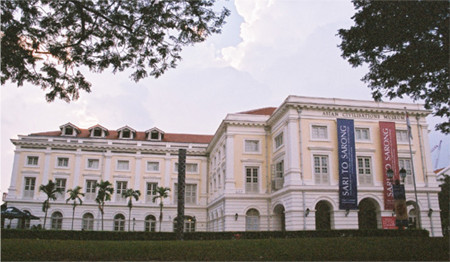
Asian Civilization Museum
Lesser traditions followed by Parsi and Irani Zoroastrians, such as the ritual of Muskil Aasan Behram Yazad and the pilgrimage to Udvada to pay reverence to Iranshah, and for the Zoroastrians of Iran, the annual "haj” when Zoroastrian families from all over Iran converge at Yazd to visit the six shrines dedicated to the family of Yazdegird III, in the gorges and valleys of the mountains surrounding Yazd were mentioned. In the day-to-day life of practicing Zoroastrians several customs stem from the fundamental Zoroastrian understanding of what is pure and what is impure: the former to be assiduously followed and the latter to be shunned. Never walking barefoot as dirt renders the body impure (as against the Hindu practice of leaving one’s footwear outside the door so as not to dirty the floor with the dirt on the soles of the footwear), prohibiting women in their menstrual cycle to touch anything holy, giving the first morsel of food to the family dog (kutra no bukh) before starting a meal, and the belief that disorder is created by evil spirits and any disorder, be it leaving shoes upside down, clothes left inside out was frowned upon. So many of the old reet rivaj (traditions) that have been left behind and forgotten in the community’s march towards modernization.
"Zoroastrianism is the world’s first ecologically conscious religion,” declared Dr Homi Dhalla, president of the World Zarathushti Cultural Foundation (WZCF), as he made a power point presentation on the Zoroastrian view of ecology, demonstrating the pivotal importance given to the preservation of the environment in the Zoroastrian faith which has earned it the above mentioned accolade. The slides showed how pollution had become a global issue, creating an environmental imbalance. Dhalla regretted that the scientific West was seeking mastery over nature rather than being partners with nature. To a Zoroastrian, nature is animate as it has the Fravashi, the transcendental divine essence in all living beings. He elaborated on the three concepts which signified the ecological principles of our religion. These are Nidhasnaithishem or non-violence towards nature; Asha, the divine plan or cosmic order according to which man has to preserve order and Hamazor or harmony which demands that man live in harmony with nature. In later Zoroastrian theology, each of the Amesha Spentas was related to a material creation and the presence of each of the creations represented in the rituals also emphasized how integral ecology was to the faith. There was also a film show on the Bahrot Caves and the Sanjan excavations initiated by the WZCF with the help of the Archaeological Society of India and the Sir Dorab Tata Trust. The excavations have brought out a number of artifacts which are being studied by specialists to throw light on the early history of the Parsis.
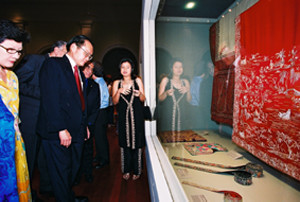
Soo Sen viewing the exhibits on display
Quoting western scholar Prof Mary Boyce who acknowledged Prophet Zarathushtra as "a religious genius of the highest order (whose) teachings bear the imprint of a highly original mind which joined powerful logic to spiritual profundity,” ZS founder Khojeste Mistree gave a historical account of the three powerful Persian empires associated with Zoroastrianism — the Achaemenian, the Parthian and the Sasanian — showing their influence in molding the cultural, societal norms and ethos of the Iranians and the rich legacy they have left behind which the Parsis and even the present day Iranians are justly proud of. His presentation, accompanied by slides showing the achievements of and the glory that was once pre-Islamic Persia, was full of nuggets of interesting information: In architecture "they (the Parthians) were the first to design and build the free standing dome, an architectural feature which became the leitmotif of Byzantine, Christian and Islamic places of worship;” in the building of an effective network of roads and communication King Cyrus built the "royal road from Sardis to Susa which was covered by post stations spaced at intervals of a day’s ride;” for building of canals, King Darius was the first to link the Red Sea to the Mediterranean Sea by building a navigable canal connecting the two waters nearly 2,300 years before the modern Suez Canal was built; in the art of warfare "King Cyrus was the first to use camels in warfare;” in the establishment of trade links stretching all the way to China it was during the Parthian times that a new silk route was opened between China and Rome passing through Zoroastrian Iran, thereby providing huge revenues to the kingdom; in religious and poetic literature, the collection and codification of all available Zoroastrian Avestan scriptures and the writing of the Vendidad, the Zoroastrian law book was undertaken during the Parthian era; but above all the sense of justice and fair play, the hallmark of a great leader, as demonstrated in Cyrus’ edict of rights and special privileges which was granted to the Jews, inscribed on a clay cylinder, discovered in 1879 CE, which is acknowledged as the first Bill of Rights, giving all people the freedom to worship and the right to live freely.
Colonial trade and Parsi enterprise
Rusheed Wadia, a scholar from the Jawaharlal Nehru University, New Delhi, researching the history of Parsi enterprise in the 19th century gave an account of Parsi trade in the context of the political and social changes brought about with the establishment of British colonialism. Exploring the scholarly world’s perception of the history of the Parsis over the years, he mentioned that over 275 books and articles in European languages were brought out up to 1989. Special mention was made of the French missionary Jordanus, and English missionaries Terry and Lord; and then came A. H. Anquetil du Perron who, fascinated with a copy of the Vendidad manuscript in the Bodleian Library in England arrived in India to locate Zoroastrian manuscripts and made it his mission in life. While questioning the assumptions at the heart of these narratives, the author advocated the need to situate the 19th century history of the Parsis in the larger economic, political and cultural changes which accompanied the onset of British rule in western India. To quote from Wadia’s paper, "The history of the Parsis after the early 19th century coincides with colonialization of western India. The erection of new structures of power, reorganization of the economy and its fiscal structure had important consequences for Parsis and other business communities. Situating the Parsis firmly in this colonial social formation is likely to yield the organizing principles of new thinking relevant for studying the history of Parsi enterprise in the 19th century.”
Colonial rule played an important role in bringing Parsi merchants together. This was also true of the merchants of other communities in western India. Further, ties of community were reinforced by ties of kinship. Almost all the big Parsi merchant families of the period were related through a network of marital alliances. Wadia examines the role of this ‘Parsi Company’ in the community formation and the impact of the community in promoting business enterprise. He concluded with a plea for a new look at the business history of the Parsis by rejecting the view which sees Parsi enterprise in isolation from the complex history of western India in the 19th century. Insights gained from studying the histories of western merchants and of business communities like the Marwaris, the Khojas, the Bhatias, etc required to be integrated with the existing knowledge of Parsi entrepreneurial activity to gain a more positive and authentic understanding of Parsi enterprise.
South East Asian settlements
Zoroastrian meets in different regions present a fruitful opportunity to get acquainted with and understand the background and history of Parsi settlements in these different locales. Small though the Parsis in Singapore and Hongkong are, the former dating to 1829 when a Muncherjee arrived in Singapore and the latter dating back to 1756 when the first pioneer trader Heerjibhoy Jivanji Readymoney sailed from Bombay to China, it is the spirit of adventure and entrepreneurial zeal which enabled Parsis to venture the high seas "on a sail and a prayer” to engage in risky ventures which paid rich dividends as they prospered in trading silk, tea, cotton, spices and opium. While trading in opium was a blot on the otherwise unblemished moral fibre and value system of the Parsis, it was noted that by 1860, Parsis were out of the opium trade, though the trade continued until the early 20th century. From the 1860s, the Parsis of Hongkong and Canton were successful in new spheres of commercial activity such as banking, insurance, transportation, hotels, trading on the shares, bullion and commodities, mainly yarn markets.
Presenting an overview of the Parsi settlement in Hongkong, Shroff commented, "Nearly all the large Parsi business houses and charitable institutions in India owe their great wealth to business relations with China.” The China connection goes deep indeed, much beyond the tangible possession of beautiful garas and Chinese porcelain that adorn Parsi homes. The great wealth the Parsi ‘tai-pans’ accumulated in China enabled these generous individuals and their families to undertake philanthropic projects for the betterment of their brethren in India. Furthermore the contributions made in the form of benevolent endowments and the setting up of charitable and public service institutions, hospitals, libraries, etc in the city of Bombay could even justify a ‘China connection’ in the growth and development of the ‘city of gold.’
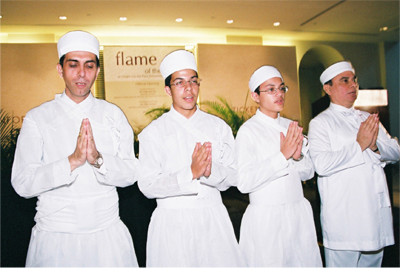
Ervads Percy Khambatta, Z. Khambatta, A. Shroff and Jimmy Sidhwa
Giving further details Shroff said that the beginnings of the present day ITZCFHCM started humbly in July 1874, but it was the redevelopment of the old Zoroastrian Building in the heart of the Hongkong business center and turning it into a 23-storey, centrally air-conditioned concrete and glass commercial tower in 1993, that the fortunes of the association changed dramatically and the income from renting the top 19 floors — the lower four being reserved for community use — became a financial boon. The early pioneers had contributed to the founding of the Hong Kong University in the 1890s (Sir Hor-musjee Nowrojee Mody was the major donor and principal founder), the first cross-harbor ferry service, now known as the Star Ferry which is a tourist must, was started by Dorabjee Nao-rojee Mithaiwala, and the building of the Ruttonjee Sanatorium which is now a hospital and the Granthamn Hospital were built from large donations by Jehangir Ruttonjee who acquired his wealth by founding the first brewery which was later sold to San Miguel, the well-known brand. The city has preserved the memory of these prominent Hongkong Parsis in Mody Road, Mody Square, Bisney Road, Kotewall Road and Parsi Road in Macao. The present Parsis have continued this charitable tradition and besides the well publicized donations to the B. D. Petit Parsee General Hospital and Malcolm Baug in Bombay, the trust gives an annual HK $ 3,000,000 for direct help to the sick, poor, needy and to small institutions and anjumans mainly in India, stated Shroff. A further HK $ 1,000,000 is disbursed as educational subsidies for studies abroad.
A similarly small community of around 200, the Parsis of Singapore have also done well for themselves. Interestingly the first Parsi, one Muncherjee, to arrive in Singapore fell seriously ill in 1829 and an Armenian named Aristarcus Sarkies persuaded Parsi traders in China to buy a burial place for Zoroastrians in Singapore which became the first investment in a plot of land for the Parsis of Singapore, reported Ghadiali. From that quiet beginning, Parsis continued to come to Singapore from the mid-19th century onwards, engaging in business ventures which included companies like Little Cursetjee and Company started by Cursetjee Sorabji and the Phoenix Aerated Waters Company started by Navroji Mistri, while others branched into shipping and timber. Singapore can boast of an English school set up by Byramji Cama, a children’s wing named Mistri Wing at the Singapore General Hospital and even a Chinese newspaper launched by Heerji Pestonji Kaka, an English scholar. As Singapore’s fortune took off in the 1960s and 70s, a fresh lot of Parsis arrived to work in accountancy, shipping and aviation as pilots and engineers. The more recent immigrants are in the computer and information technology sector. It was heartening to see that the young, mostly married couples, several with non-Zoroastrian spouses and their children, had formed a vibrant social group with close interaction.
Dadi Mistry, vice president of the Delhi Parsi Anjuman, who has been associated with two organizations which brings Zoroastrians worldwide together for cooperative action, namely the World Zoroastrian Organisation (WZO) and the World Zoroastrian Chamber of Commerce (WZCC), updated the members on the effectiveness of both. The WZCC, now in its fourth year was established to bring Zarathushti business and professionals together worldwide to network with each other and thus energize the Zarathushti entrepreneurial spirit. Mistry, while inviting Singapore and Hongkong to join said, "It is our vision to make this organization the economic engine for the prosperity and the well-being of our community worldwide.”
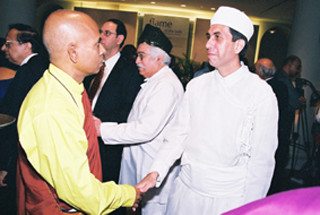
Dr R. Gunaratana with P. Khambatta
Zoroastrian history on stamps
Present day Iranians, mostly Muslims, still bask in the glory that was symbolized in the great Zoroastrian empires. Noshir Lam, with a hobby in philately, showed on slides his collection of 28 stamps issued by Iran showing the ruins of Persepolis and eight others issued by Iran during the Firdowsi Shahnama Conference in Tehran in 1990. The great Zoroastrian kings Cyrus, Darius, Shapur I and II, Ardeshir I and II were seen as they appeared in stone carvings in monuments in Iran. His paper entitled "History of Parsi Zoroastrians,” raised an intriguing question. How, he queried, did Spain which was brought under Islamic rule in 711 AD by the Moors under their commander Tariq ibn-Ziyad, and remained so until 1492, when the last Muslim stronghold in Granada surrendered to the armies of the United Christian Spain, a period of 781 years, continued to remain predominantly Christian, while in Iran, Zoroastrianism, a 3,000-year-old mighty state religion was overrun by Islam and all but a handful of Zoroastrians were converted to Islam?
The living Parsis
While the speeches on the first two days had dealt with our glorious past, traditions and culture and our archeological treasures both in Iran and India, on June 4, the evening was devoted to the ‘living Parsis.’ It dealt with some of the crucial issues troubling the community and the challenges thrown up for its members and leadership to tackle.
"It is a stark reality that for decades there has virtually been an overall increase in the number of deaths over births amongst Parsis in India,” began Godrej Dotivala, public relations officer of the Bombay Parsi Punchayet (BPP) in his power point presentation on the demographic trends among Parsis which told a dismal story — of a community where the percentage of the aged was far in excess of that required for a normal population and by contrast the percentage of the young was so meagre that both these trends put the Parsis in a highly regressive population category. Where annual deaths are high as is to be expected in an aging population, there just are not enough births to replace the numbers lost. Dotivala went into the various reasons for this situation and then talked about the measures taken by the BPP to try to arrest this trend which included support for higher education, third child support, meaningful programs to bring the youth together and the latest initiative to promote family welfare, marriage and fertility counselling free of charge to members to encourage young couples to attain healthy parenthood.
Taking up from where Dotivala left off, Delhi-based demographer Ava Khullar elaborated further the demographic and socioeconomic dilemma of the community by stating, "History has shown that excessive, almost total urbanization, modernization and westerni-zation demands a price, a price which the Parsis are paying today. It is called the predicament of progress. And what is the price? It is a life-style that encourages a small family norm and late or non-marriage to ensure a materially rich life for its members.” She commented that this is a common pattern among the economically developed nations of the West; the difference being that while these societies can withstand the declining demographic impact because of the strength of their existing numbers, the Parsis, unfortunately do not have this cushion to fall back on. Downward trends in educational and occupational levels reflecting lowering of aspirational levels among a growing segment of the youth were the most worrying visible signs for the health of the community, said Khullar, and this required to be understood from the youth perspective, as also firsthand the crisis facing the family and the burgeoning aged segment. Khullar talked about the research being currently undertaken by specialist researchers at the Tata Institute of Social Sciences, Bombay, at the behest of the Parzor Foundation, supported by the Sir Dorab Tata Trust and the BPP to understand these three segments of our population so that proactive measures could be initiated both at the level of the community organization and leadership as well as self-help measures by the subjects themselves once the real attitudinal and other issues were identified.
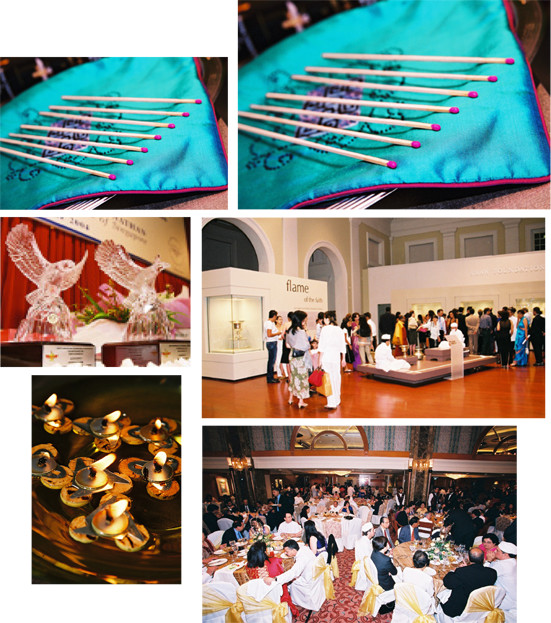
Visitors and participants at the celebration experience the Zoroastrian ethos
Bemoaning the community’s penchant for devoting its energies and vocal power on negative issues which were harming its very survival, she concluded by quoting Prof Kaikhosrov Irani of New York from his paper presented at the Fifth World Zoroastrian Congress in Bombay, "We, (the Parsis) should not confuse ritual practices with various social practices associated with them. Social practices are always a function of the social structure of the community. These must change appropriately with the environment. What does this mean? A practice is appropriate which in a particular historical period best implements the ideals articulated in the doctrine of the Prophet and effectuated at different times in different ways by Zoroastrians of the past. (Punishment of violators, purification rules, relations with non-Zoroastrians, etc are such practices.) They obviously change with time and place. It would be contrary to the spirit of Asha and Vohumana to ignore them. The residue of ancient pejorative distinctions between one’s own community and others cannot be maintained without a narrow and morally repugnant communalism. Undoubtedly appropriate changes will come and social practices will vary but that should cause us no worry for that is the right way the religion is to be lived. The law of human life is simple: adapt or perish. Thus the vision of the faith will remain the enduring truth. The rituals will be maintained the best they can with modifications. The social life of the community will evolve to promote and actualize in our present and future social environments the enduring values of the original vision.”
The practice followed for interaction with the audience in the Singapore festival was submission of written questions from the audience and a response from the speakers. However on this last day of talks, Prof Dhanjoo Ghista of Nanyang Technological University , Singapore, who said he was very much in tune with what the speakers had said regarding the problems of the Parsis requested repeatedly that there should be an open discussion for more detailed insight into the crisis facing the world-wide Parsi community. However the chair ruled against it.
The grand finale
The Singapore Association had arranged for dinners on June 28 and 29, but the highlight of the social event was the second day’s gala dinner at the Holiday Inn Park View Hotel which was graced by the President of the Republic of Singapore, S. R. Nathan. A special Parsi caterer flown in from Bombay served excellent lagan-nu-bhonu (wedding feast) and the ladies came attired in their best garas. The entertainment came in the form of a skit put up by the Singapore Parsis, young and old together, as they staged the delightful journey of a young Parsi couple through life’s stages from marriage to parenthood, the growing up, navjote and graduation of their little son, his marriage and then grandparenthood. It was not intended to be a professionally slick performance but was enthusiastically performed and was emotionally absorbing as Parsis sitting around the dining tables, especially members of small communities scattered away from the homeland became nostalgically part of the Parsi family saga. The President, very much at ease in this minority gathering, graciously walked from table to table to greet the guests, shake hands with most of them and wish them well.
The President’s gesture was in keeping with the spirit of conviviality and bonhomie throughout the celebrations. For the Singapore Association it was a defining moment, and as Ghadiali, looking ahead said, "The future of Zoroastrianism lies in our hands, especially in the hands of our youth. Within the hearts of each of us, there is a spark that keeps the flame of Zoroastrianism burning ever bright. We need now to fan it into a brilliant flame with minds that are open, hearts that are willing and hands that are warm.”
◆ ◆ ◆
From the archive