
Success in Singapore
The 300 Zoroastrians in the Republic of Singapore are well established in the city-state
"There is a street named Parsi Street in Singapore and another named Mistri Road,” mentioned Rustom (Russi) Ghadiali, a former president of the Parsi Zoroastrian Association of Singapore (PZAS), addressing a gathering of the World Zarathushti Chamber of Commerce (WZCC) delegates on January 4 this year at the Marina Mandarin Hotel in Singapore. The WZCC was holding its annual general meeting in the republic. The small South East Asian city-state with a population of over five million of whom Zoroastrians number around 300 also has a Parsi cemetery and since August 2010 boasts of a Zoroastrian House — a community center-cum-prayer hall thanks to the largesse of the present president of PZAS, Homiyar Vasania.
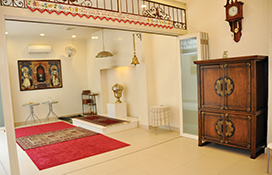 The ground plus two storey "shop house” as it is termed is appropriately located in the India town part of the city, one of the few sections that still maintains the old flavor of Singapore. "We were looking for a place for more than a year,” says Vasania. Brokers recommended a shop house. Such structures number around 4,000 and are classified as heritage buildings which have to be preserved as they are. When the question arose of financing the 3,000 sq ft premises (of which around 400 sq ft constitutes a terrace on the first floor), the 44-year-old fund manager decided, "better if I do it myself.”
He offered the premises to the PZAS on a three-year rolling lease contract at 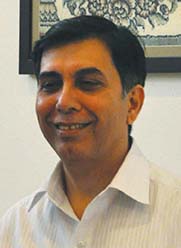 Singapore $1 (Rs 44) per month. He was concerned that after some time no one would use the premises, hence the lease. "But now we have enough momentum to maintain it for a long time,” he explains.
Religious implements such as an afargan, karasias, chamach were gifted to the center through the assistance of Ervad Asphandiar Dadachanji of the Vatchha Gandhi Agiary at Bombay’s Hughes Road who also offered "guidance,” says the Indian Institute of Technology (Powai) graduate. Dadachanji is Vasania’s maasaa (mother’s sister’s husband). The implements were polished by PZAS.
Every Sunday morning, prayers are recited by Ervad Percy Khambatta or his two sons, Ervads Zephyr and Zeus. "If they are not in town, other mobeds preside,” explained Vasania. There are around eight to 10 residents who can officiate as priests, having had their navar ceremony performed. On every Behram roz prayers are said in the evenings around 7 p.m. on a working day or earlier if the auspicious roz falls on a Saturday. E-mails announcing the prayers are sent to nearly 300 residents but around 25 to 30 Parsis attend, with the number increasing to 50 on occasions, says the president. Two jashans are held annually. Ervad (Dr) Ramiyar Karanjia, principal of the Dadar Athornan Institute in Bombay, came two years ago and gave talks over two days. A jashan was performed and lunch served. Prayer classes as well as PZAS committee meetings are held at the center. "Every month PZAS holds some function.” Events are held at the center one month and elsewhere the next month, Vasania states.
PZAS members are given an encoded plastic card which when swiped permits the holder entry at any time. Khambatta manages the Bombay Café restaurant on the street parallel to that of the center and is available if he is needed.
Non-Parsi spouses can attend the PZAS meets but cannot enter the portion of the premises demarcated for the prayers (carpeted area), explains Vasania. "My wife (Vidya) is a non-Parsi and does not go in even though she is part owner of the property.” The two met at the prestigious Indian Institute of Management (IIM) in Ahmedabad where they were batchmates. She worked as an event manager but when Homiyar left his job with Morgan Stanley to start his own fund management company around four months ago, she joined him.
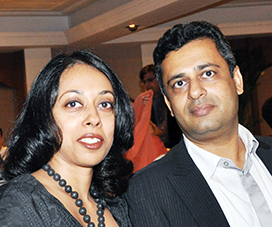 A photo of his late father, Dara, who hails from Billimora and in whose memory Homiyar bought the center, hangs on a wall. Mother Mehroo (née Buhariwala) is from Navsari. Homiyar grew up in Jamshedpur where his father worked with Tata Steel for 36 years. The navjotes of his two younger children, Maheen and Shavak, were performed in Navsari. The older Zaal was navjoted in Bombay in 2006.
Around 25 to 33 percent of the Parsis have married out of the community, estimates Vasania. The Parsi population varies as people come and go; sometimes parents visit their expatriate offspring. Around 250 people, including 53 children, are members of the Association, informs Ghadiali. The person has to be a Zoroastrian to qualify for membership. Initially the name of the association was Singapore Parsi Association. "Zoroastrian was added later,” notes Vasania.
Committee members of PZAS who assisted with the creation of the new center are Hanoze Contractor, Pesi Chacha, Freddy Bavadum, Hormuz Avari, Minaz Kanga, Ghadiali, Neville Dotivala and Cyrus Daruwala, notes Vasania.
A resting place
The first Parsi to arrive in Singapore — a Crown Colony founded by Sir Stamford Raffles in 1819 — was Muncherjee, a convict like many who came from India to the colony, states singaporeinfopedia. "When he fell seriously ill in 1829, an Armenian named Aristarcus Sarkies persuaded the Parsis in China to buy a burial place for Zoroastrians in Singapore,” stated Ghadiali in his presentation to the WZCC gathering. "Funds were raised by the Parsi traders to buy a plot of land in the most prestigious banking area of Shenton Way. (Subsequently) more land was bought adjacent to it to build a bungalow as a Parsi Lodge for Parsi traders from China to rest and to hold Zoroastrian religious ceremonies.
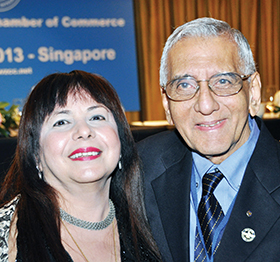 "In 1829, the property was named The Parsi Lodge Charity with Pestonjee and Muncherjee as the first two Parsi trustees to administer the Trust. The income from the trust was used for charity and upkeep of the burial ground. When the last two trustees — Nanabhoy Framjee and Dadabhoy Rustomjee — decided to leave Singapore and settle in India, the Government of Singapore transferred the trust to be managed by the Mohammedan and Hindu Endowment Board.
"More Parsis started settling down in Singapore by the middle of the 19th century. Among them was Fromurzee Sorabji whose son Cursetjee married an English lady and founded Little Cursetjee and Company which later became the well-known John Little and Company. Cursetjee was one of the trustees of the burial ground.
"Dunjibhoy Hormusji served on the Grand Jury in 1854 and Cama of Byramjee Hormusjee Cama and Company opened an English School in Tanjong Pagar Road, which he ran at his own expense giving free education to the local Chinese and others. Another prominent Parsi was Edaljee Khory, an advocate and solicitor, who came from London to Singapore via Rangoon, Burma having served there for nearly 10 years. He had the distinction of having a Masonic Lodge named after him viz. Edaljee Khory Lodge of Mark Masters Masons No 436 and was installed as a founder master in 1891. In 1898, Heerji Pestonji Kaka arrived and was the manager for a timber merchant. Though an English scholar, he had great interest in community work and started a Chinese newspaper.
"In 1906, Sorabji Kavasji became the editor of the Eastern Daily Mail which was taken over by the Straits Press Syndicate where he became the editor and sole manager. In 1903, Phirozshaw Manekji Framroz started Framroz Aerated Water Factory and in 1909, Navroji Mistri joined him as a partner. Later, they parted and Mistri started Phoenix Aerated Water Company as well as branched out into the real estate and restaurant business. Pesi Davar came in 1925 and joined his cousin Mistri. They courageously weathered difficult times through the Japanese occupation during World War II. After the War, Davar launched his own business with Minoo Warden and started Davar and Company. They branched out into shipping, paint and timber business that stretched across into Malaysia. Davar and Mistri remained bachelors.
"When Davar passed away on September 14, 1978, he donated Singapore $ 50,000 to The Parsi Association and left the rest of his entire estate in trust for charitable and educational purposes under the trusteeship of Hong Kong and Shanghai Bank and Nariman Bhaghat. Even today, up to Singapore $ 200,000 or more are disbursed annually for charitable and educational purposes. Unfortunately, the humble Parsi remained unrecognized even amongst the Parsi community.
"Mistri who died a millionaire in 1953 donated Singapore $ 1,000,000 to the Ministry of Health to build a Mistri Wing for children at the Singapore General Hospital. The road adjoining his factory was named Mistri Road and the one next to the Parsi burial ground was named Parsi Road.
"On May 29, 1954, The Parsi Association was formed with the encouragement of J. Namazie, a prominent Persian residing in Singapore. The Parsi Association took over the management of The Parsi Lodge Charity from the Mohammedan and Hindu Endowment Board. The burial ground on Parsi Road was acquired by the Government of Singapore in April 1969 and the money accrued from the requisition of the land (close to half a million Singapore dollars) was held in trust in The Parsi Lodge Charity. The burial ground was then moved to Tampinies behind the main Paya Lebar Airport. Later with further urban development, the Parsi cemetery was finally located at its present location at Choa Chu Kang Road. On May 27, 1969 the administration of The Parsi Lodge Charity was transferred to the Public Trustee Office.
"The income from the investment of The Parsi Lodge Charity is annually spent on the improvement and upkeep of the burial ground, religious ceremonies, providing scholarships not only to Parsi children of Singapore but also to other communities and for deserving charitable causes in Singapore.”
Preserving culture
The PZAS is also well connected. When the anjuman hosted a three-day celebration to mark 3,000 years of Zoroastrianism in co-ordination with The Incorporated Trustees of the Zoroastrian Charity Funds of Hong Kong, Canton and Macau in 2004, the guest of honor at the inauguration was Chan Soo Sen, Minister of State, Ministry of Education and Ministry of Community Development and Sport, while at the second day’s gala dinner the country’s President S. R. Nathan was the guest of honor. Nathan again graced the PZAS’ August 2011 New Year dinner.
In 2008 PZAS also participated in the Singapore Heritage fair "under the leadership of Daisy Irani Sulvaiah,” notes the then president Ghadiali. In the president’s report for the year Ghadiali mentioned: "We continue as an active member of Inter-Religious Organisation (IRO) being one of the nine religions in Singpore.”
Around five years ago Singapore in partnership with the Singapore Tourist Promotion Board made a bid to host the Tenth World Zoroastrian Congress to be held in 2013. The PZAS bid was "considered to be the best… but without any justification the new trustees of the BPP (Bombay Parsi Punchayet) decided to hold the Congress in India,” moaned Ghadiali in his annual report for 2008.
In the 1960s many Parsis came to Singapore, notes Ghadiali. But migration to the republic "is not as easy as it used to be,” says Vasania. "The foreign population grew too fast in too short a time. It will take time before it again accelerates.” But for the lucky few already there, the open economy and corruption free society, continues to be a haven.