
Events & Personalities
Fads or figures?
The Madras Parsi Zarthosti Anjuman’s (MPZA) efforts to find a consensus on the contentious issue of accepting children of Parsi women married out of the community took a new dimension when it roused the ire of the orthodox camp. "Matters of religion cannot be solved by referendums and questionnaires circulated among members of the laity,” wrote a "disturbed and disappointed” Dastur Nadirshah Unvalla to MPZA president Nariman Mogrelia. Commented The Parsee Voice (Volume 1, No 15 and 16), "After almost six years (the MPZA) has decided to reopen the can of worms: ‘admission’ of children of Parsi mothers and non-Parsi fathers into the Zoroastrian religion!”
The statistics and data cited by the census commissioner of India, J. K. Banthia at the executive council meeting of the Federation of Parsi Zoroastrian Anjumans of India (FPZAI) in November 2003 to show "that we are an aged and very fast dwindling community,” had convinced Mogrelia to initiate some action. Banthia had urged, "The writing is very clear on the wall. If you are unable to see, it is a real, real tragedy... unless anjumans adopt corrective measures...” "I felt it is time for our small community to face this problem instead of (shying) away from the same, even if there is criticism from the orthodox lobby,” was Mogrelia’s rationale to recirculate the questionnaire which had earlier been distributed to members of the MPZA and Madras Parsi Association in 1998. As Mogrelia had related at the meeting, a series of referendums over two years had shown that the Madras Zarthoshtis’opposition had declined from 50 percent to 30 percent and then to 10 whom they were now trying to convince.
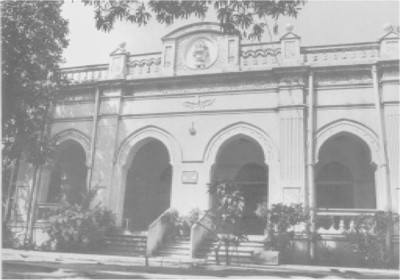
The Jal Phiroj Clubwala Dar-e-Meher in Madras
Urging Mogrelia "not to disturb the long-standing religious tradition and custom in this matter,” Unvalla noted, "Admission of children of Parsi mothers and non-Parsi fathers into the Parsi Zoroastrian faith and community is not recognized by the Parsi Zoroastrian community. This is an established fact backed by long-standing religious custom and usage... just as medical and scientific issues are best addressed by doctors and scientists, religious matters are also best addressed by the high priests and scholars who have the necessary qualifications and experience in matters of religion... I trust you will exercise restraint and not stir up a fresh and totally unnecessary controversy in this small and peaceful community.”
"Whose property is the Zoroastrian religion?” asked The Parsee Voice before proceeding, "Latter day Parsis who don’t know the basics of the religion and who rely only on their fads and fancies? Are religious practices and precepts to be changed according to the whims of some office-bearers or trustees who have to strictly abide by the letter and spirit of the trust deed?...When Banthia talked about adopting ‘corrective measures’ he never meant, as Mogrelia thinks, that you should chop your nose to spite your face! If Mogrelia wants hybrids and pariahs in his Anjuman, his is the easiest way of doing it! Instead Mogrelia and others should concentrate on stemming the exodus of Parsis to foreign lands; creating ways and means to ensure that Parsi boys and girls find their life-partners early in life; and encourage such young couples to have two children by providing them incentives and a shelter over their heads!”
"The children of Zoroastrian fathers have little or no knowledge of their religion but are permitted into the Zoroastrian faith, while the children of Zoroastrian mothers, with full knowledge and upbringing of Zoroastrianism, are denied entry into the faith. Is the community satisfied with this arrangement or do they want a just and fair deal for their girls?” asks Dali Gundevia who, on reading Unvalla’s publicized letter, penned his own views. Describing himself as "an unsophisticated, simple, old foggy in quest of truth and justice...only guided by God’s gift — common sense,” he points out, "Some petty-minded clergy/punchayets/anjumans, zealous to act as messiahs, have tried to intimidate the girls from marrying outside the community... It is not known if any girl has ever taken the threat seriously; but it is gathered that the unwarranted actions have pushed the girls away from the mainstream. It is known that due to the shrewdness and sensibility of many clergy/anjumans, the girls, though married outside the community, are treated with respect and are assets and sources of strength, as they contribute a lot to the community.”
◆ ◆ ◆
From the archive