
In Memoriam
Antia's acuity
Died: Dr Framroz Pirojshaw Antia, 87, father of gastroenterology in India who had developed this specialty and guided innumerable doctors, on October 19, 2003 in Bombay after suffering from Parkinson’s disease for several years.
"He had the most enviable, extensive experience in the field of gastroenterology with stalwarts in the UK and USA, and hence was one of the most well trained gastroenterologists in the world,” noted a tribute by Dr H. G. Desai in the Indian Journal of Gastroenterology, November-December 2003. "Antia was offered posts in several departments of gastroenterology in the US; instead he decided to return to develop the specialty in India. This became his life’s mission,” added Desai who as Antia’s junior had seen him create the first separate department of gastroenterology in Bombay at the B. Y. L. Nair Charitable Hospital on obtaining a donation of Rs 5,000 from the Pai family. To this same department at the T. N. Medical College and Nair Hospital which he headed for 20 years, he had bequeathed a sum of Rs 3,00,000 in his will. In recognition of his contribution the library at the Gastroenterology Department has been named after Antia.
"The philosophy of his life was extreme hard work to achieve excellence,” confirmed Desai who succeeded Antia as head of the department. He believed that his duties ended only when his students had learnt. The ‘lazy’ students would be summoned on Sundays to put in extra hours of work. His spot checks at unannounced hours ensured that they were there for the full four-hour duration!
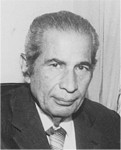
Antia: quest for excellence
Referring to Antia’s "quest for excellence,” Dr R. H. Kalro who was Antia’s student, later house physician, registrar, research fellow and eventually succeeded Desai as head of the gastroenterology department mentioned how Antia demanded 100 percent commitment. "He had respect for every human being, whether student or patient, but he did not like anyone who did not work hard. He came across as a tough person only because of his insistence on excellence.” Every student of Antia must have received a firing from the perfectionist but they understood it was in their own interests and to ensure that they never repeated the same mistake again. "He was not just an excellent teacher; he was a great teacher,” summed up Kalro.
The disciplinarian demanded that all prospective doctors be suitably attired in class. On one occasion he openly expressed his disapproval of a boy who had come to class wearing chappals. The rebuked student finally explained to Antia his financial inability to afford the comfort of shoes. Hearing this the professor promptly took out Rs 100 (this was nearly four decades ago) from his pocket, apologized profusely to the student in front of the whole class and asked him to buy himself a pair of shoes.
Many such instances of Antia’s generosity and kindness were cited at the condolence meeting convened at the Nair Hospital’s department of gastroenterology on October 22, 2003. Patients unable to afford medicines would often be helped with cash by the good doctor. A patient’s social and economic background did not matter to Antia. Whether it was a political dignitary or a taxi driver, according to him a sick person needed the best treatment. On one occasion a relative of a poor patient requested Antia to visit the patient at the hospital. On seeing the condition of the patient Antia paid not one visit but three visits a day for several days until the patient’s condition stabilized. In the meantime the relative was worried how he would be able to afford Antia’s fees. He need not have worried though. Antia had charged him only for the first visit saying the rest of the visits were of his own volition for which the patient was not required to pay. The gastroenterologist did however expect every patient to comply with the line of treatment specified by him and follow the diet prescribed. His daughter Leaela Antia remembers one of her college professors relating to her how he had once treated her like an errant student — asking her to stand in the corner of the room for not following his medical instructions!
"Although he was a gastroenterologist, his knowledge and practical approach in all fields of medicine was phenomenal,” attests his good friend and solicitor Hoshang Nanavati who had implicit faith and confidence in Antia’s treatment, having seen him work wonders with his daughter Roshan ever since she was diagnosed as a juvenile diabetic. "He also had a knack of understanding the psychology of each patient he was treating, handling him/her accordingly with a sprinkling of his unfailing humor,” adds Nanavati.
Detailed history-taking and meticulous record keeping of all his patients ensured that he was able to arrive at a correct diagnosis. The results of a blood, stool and urine test were sufficient pathological aids for his diagnosis; he recommended no other expensive scans, mentions his secretary of long-standing Marian D’Souza. One patient who dared to suggest that he get on with his diagnosis without the extensive questioning was told to visit the Sakerbai Petit Hospital at Parel (where animals are treated)!
"I had no time,” was an excuse he refused to accept from anyone, reveals D’Souza. He used his own time judiciously. He would be at the hospital by 6.30 a.m. realizing that patients who were required to fast through the night for medical reasons would be in discomfort. When attending conferences and seminars it was only the scientific deliberations and sessions that he would participate in, preferring to skip the dinners and banquets. Patients who were not punctual were expected to wait. For private consultations he gave appointments beginning two in the afternoon and considering that the lift in the building would only start at 2 p.m., he would make it a point to climb up the flight of steps despite his gout problem to ensure that he was in good time before his patients arrived. "Sleeping is not a waste of time,” he would impress upon his family, "but sitting and chatting is,” believed the "incorruptible” Antia, teaching his children "never to gossip about anybody, to always listen to both sides before forming judgments.” Respecting the confidentiality of his patients he would refuse to divulge the details even to his wife Pilloo, much to her embarrassment when sources other than him would relate that a particular patient had been under her husband’s treatment, recalls Leaela.
Despite his busy schedule Leaela does not recall her father once telling his children "‘I don’t have the time now to teach you.’ He would make the time. He always told us, ‘You can do anything under the sun if you set your mind to it. If you take up something, you’d better do your best’ and if you did your best it was good enough for him, grades then did not matter. He always encouraged us to read.” Well-read himself, he could quote with ease Shakespeare, Bacon, the Shahnameh in Persian as also Sanskrit slokas. His style of teaching motivated students "to question, to self-learn, to understand.”
Once he discovered that a man practising as a doctor was claiming fake degrees. Thereafter he cited this instance to each fresh batch of medical students adding, "any person can practice as a doctor with a little common sense.” Antia’s own foray into medicine was more by compulsion, than by choice. He would much rather have been an agriculturist but his mother Shirin slapped him when he dared to protest. Widowed at a young age with little money and a brood of eight sons and two daughters to bring up, she had no time to indulge any of her offspring. Her husband Pirojshaw was a priest at the agiary in Deolali and the children had to walk back and forth to school which was three miles away. After completing his science graduation from the Ismail College in Jogeshwari, Antia did his MBBS three years later and thereafter earned further qualifications in medicine: MD (Doctor of Medicine), MRCP (Member of the Royal College of Physicians), MS (Master of Surgeons), FRCS (Fellow of the Royal College of Surgeons), FAMS (Fellow of the Academy of Medical Surgery). In the West he earned experience at the Central Middlesex Hospital in London, the Harvard Medical College at Boston, University of Pennsylvania, as a US Government Research Fellow at the University of Illinois, at the University of Columbia and the Jefferson Medical College in USA.
Among the professional bodies of which he was founder member were the International Association for Study of Liver and the Bockus International Society of Gastroenterology. Besides being a founder member of the Indian Society of Gastroenterology, the Indian Association for Study of the Liver and the Society of Gastrointestinal Endoscopy of India, Antia had also served as president of these organizations at different times. As a gastroenterologist he has earned maximum recognition for his book Clinical Dietetics and Nutrition which according to the world famous gastroenterologist Sir Francis Avery-Jones is "a real contribution to world medicine,” and which the British Medical Journal rates as "deserv(ing) high praise.” Not only does this book, which has gone into four editions, serve as a primer for medical students, dieticians and physicians but it is written in simple language to educate the common man. Considered a masterpiece it helps as a reference book to even students in the West, attests Kalro who confirms that it is read all over the world, valued as it is for information on nutrition and diet.
He had about 150 publications to his credit, conveyed Desai. As editor of the Indian Journal of Gastroenterology during its first five formative years, he ensured that the Journal’s high standard and regular publication schedule saw it indexed in Excerpta Medica, Index Medicus and Medline.
His own dietary habits were such that he would always get up from the table while he was still hungry, advising his daughter that one should stop eating when there is an appetite for one more helping. "What you eat you should burn,” was his credo often expressing his concern when people were overweight. Leaela says her husband Noshir has still not been able to forget one of his birthdays when he was summoned by the father-in-law at nine in the morning. Noshir rushed there wondering what emergency could have prompted the call. On reaching there Antia only pointed to Noshir’s paunch and enquired, "When are you going to lose weight?” To this day Leaela is trying to convince Noshir that it was her father’s way of showing concern for his wellbeing!
Antia’s regimented lifestyle permitted him to indulge in two luxuries — an occasional game of bridge, and reading of one single comic strip before his five-minute afternoon nap every day. He was a good cook and in his younger days used to write poetry and plays. Prayers three times a day were also a part of his daily routine. "He had enormous faith in God and believed in personal cleanliness and the cleanliness of his soul. He always believed he was an instrument in God’s hand to cure others.” An advocate of free enterprise he was of the view that India was suffering because of licences and the corrupt politicians.
Towards Christmas time Antia believed in extending aid to different causes each year, be it leprosy or abandoned children or some national calamity where he preferred to be an anonymous donor. A trust of Rs 50 lakhs, named after him, has been created as per his wishes to render aid for educational and medical purposes to the needy of all communities, conveys Nanavati.
When Parkinson’s disease struck him in 1995 he opted to retire for although his mind was alert his body was not keeping pace. He was loathe to see family and friends visit him in this condition. Kalro who was among the privileged few to keep in touch with him during his last years regarded Antia as a "father figure” and gave him credit for shaping the career of upcoming gastroenterologists. As stated Desai, "Antia’s rich legacy of hard work, honesty, humor, helping others and hating hypocrisy will remain amongst us for a long, long time.”
The dedicated doctor is survived by his daughter Leaela Noshir Antia, son Dr Minoo and brother Yezdi.
◆ ◆ ◆
From the archive