
Food
Far Eastern cuisine - II
The famous fish sauce is a commonly used ingredient in the recipes of Vietnam, Korea, Philippines, Cambodia and Laos
The cuisines of China, Japan, Korea, Vietnam, Thailand, Malaysia, Cambodia, the Philippines and Indonesia have been clubbed together as Far Eastern cuisine. This could well be because they have certain ingredients in common, like Hoisin sauce, oyster sauce, light and dark soy sauce (the light one is used mainly in Japan), fish sauce — called nam pla in Thailand, prohok in Cambodia, nuoc mam in Vietnam and myol-chichor in Korea. As food tastes in the world are getting more adventurous, each individual cuisine is now getting its due importance.
The first instalment in this series of Far Eastern cuisine (see "Far Eastern cuisine - I,” Parsiana, August 2002) carried recipes from China, Japan and Thailand while this one carries recipes from Korea, Vietnam, Malaysia, Cambodia and Laos, Philippines and Indonesia.
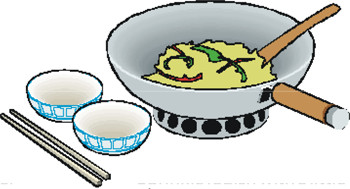
Vietnam
Vietnamese cuisine is rapidly becoming recognized as one of the unique cuisines of this region. Rice and noodles are the pillars of Vietnamese food and each plays a role in daily meals. Rice noodles are more popular than wheat ones and are thick and round or flat. Unlike the dry wheat noodles, those made of rice flour only require blanching in boiling water for a few minutes to cook.
Rice is also converted into flour and made into gossamer rice paper sheets called barq trahg. Difficult to manage by an amateur, but one can use the conventional spring roll sheets instead.
The northern part of the country has Chinese influence. The central part has the cuisine of Hue — the imperial seat from 1802-1945, and the cultural and religious center of the region — where once the most inspired creations and sophisticated Vietnamese cuisine were created by the imperial chefs. In the south, the cuisine shows the Indian influence with its coconuts and spices.
Then there is also the French influence, with some French restaurants and street sellers selling different pbtis, barguettes, etc.
The Vietnamese use plenty of fresh fish, fruits and vegetables, but at the heart of their food is their famous fish sauce which they claim is the most pungent of all the fish sauces of the region.
DO THUA (PICKLED
VEGETABLES)
White radish (1 — medium, finely sliced)
Shallots (Madras onions) (10 — finely sliced)
Carrot (1 — finely sliced)
Raw papaya (1 cup — finely sliced)
Fish sauce (500 ml)
Palm sugar (½ cup — you may use ordinary sugar if necessary)
Fresh red chillies (2-3 — seeded, if desired, and finely chopped)
Salt (1 tsp)
Pepper powder (2 tsp)
Garlic (2 cloves — finely chopped)
Sprinkle radish with a little extra salt and set aside for 30 minutes. Drain and dry with a towel. Wash and dry shallots with a towel. Place all vegetables in the sun for one day, or in a slow oven for about 3 hours to dry. Put into a sterilized glass jar. Place remaining ingredients in a pan and simmer until reduced by 1/3. Cool and pour into the jar, over the vegetables. Close jar and allow to marinate for a week before use.
CHAO TOM (SHRIMP MOUSSE ON SUGARCANE)
Serves 4
This is a recipe from the Imperial city of Hue.
Sugarcane (4” piece)
Shelled shrimps (300 g)
Salt (½ tsp)
Pepper (a pinch)
Sugar (1 tsp)
Oil (2 tbsp)
Coriander leaves (½ cup — chopped)
Fresh red chilli (1 — seeded and sliced)
Sweet and sour sauce (1 cup)
Peel sugarcane and cut into 8 round sticks about ½-inch in diameter. Grind or pound shrimps with salt, pepper and sugar to a paste. Oil your hands and divide shrimp paste into 8 equal parts. Form each portion into a kabab in the center of the sugarcane sticks as you would for seekh kababs, except that these should be rounder in shape, more like rissoles. Press tightly and grill over medium charcoal heat until crisp and brown. Garnish with coriander leaves and chillies and serve with sweet and sour sauce (see below).
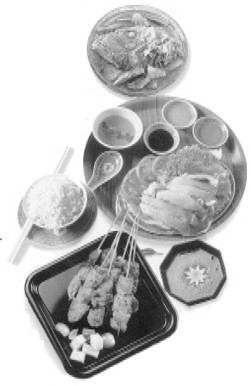
SWEET AND SOUR SAUCE
Garlic (3 cloves — finely chopped)
Oil (1 tbsp)
Shallots (2 tbsp — sliced)
Pickled shallots (2 — sliced)
Green capsicum (1 — diced)
Fresh red chilli (1 medium — diced)
Sugar (2 tbsp)
Salt and pepper to taste
Tomato sauce (1 tsp)
Brown vinegar (¼ cup)
Cornflour (1 tbsp — mixed with a little water to make a thick paste)
Sauté garlic in oil until slightly colored. Add remaining ingredients except tomato sauce, vinegar and cornflour paste and continue to sauté for a few minutes. Add tomato sauce and vinegar and bring to boil. Add cornflour paste and cook, stirring constantly, until thick. Use as required.
GOI BUOI (POMELO SALAD)
Pomelo (1 — peeled and segmented)
Crabmeat (½ cup)
Cooked chicken breast (½ cup — cubed)
Carrots (½ cup — julienned strips)
Cucumber (¼ cup — sliced)
Fish sauce dip (¼ cup) see below
Mint leaves (1 tbsp — finely chopped)
Coriander leaves (2 tbsp — finely chopped)
Shallots (1 tbsp — chopped, crisp-fried)
Peanuts (2 tbsp — coarsely ground)
Combine all ingredients except coriander, shallots and peanuts in a bowl. Toss lightly and serve slightly chilled, garnished with the coriander, shallots and peanuts.
NUOC MAM CHAM (FISH SAUCE DIP)
Fresh coconut water (¼ cup — or plain water)
Rice vinegar (1 tsp)
Sugar (1 tsp)
Red chilli (1 — seeded, finely chopped)
Lime juice (1 tbsp)
Fish sauce (2 tbsp)
Boil coconut water with vinegar and sugar. Cool. Combine chilli and lime juice, and add to coconut water. Stir in fish sauce. Use as required.
CANH BI HAM DUA (BRAISED PUMPKIN WITH COCONUT MILK)
Serves 4
A traditional Buddhist vegetarian dish.
Pumpkin (2 cups — peeled and cubed)
Sweet potato (2 cups — peeled and cubed)
Dried mushrooms (½ cup — soaked in water for 10 minutes, drained and chopped)
Thin coconut milk (2 cups)
Thick coconut cream or puréed fresh coconut (¼ cup)
Raw peanuts (½ cup — soaked in warm water for 1 hour)
Zucchini (½ — peeled and finely sliced)
Salt and pepper to taste
Sugar (1 tsp)
Coriander leaves for garnish
Place pumpkin, sweet potatoes, mushrooms and thin coconut milk in a sauté pan and bring to boil. Simmer until vegetables are nearly done. Add thick coconut cream, peanuts and zucchini and bring to boil. Remove from heat and add seasoning and sugar to taste. Serve garnished with coriander leaves.
BUN HO (BEEF WITH FINE RICE NOODLES)
Serves 4
This recipe from Saigon was sent to me by my nephew Hormuz Mehta.
Fine rice noodles (170 g)
Garlic (1 clove — crushed)
Onion (1 medium — sliced)
Lemon grass root (2” — finely sliced)
Salt (1 tsp)
Black pepper powder (1 tsp)
Sugar (a pinch)
Fish sauce (4 tbsp)
Beef fillet (½ kg — finely sliced)
Bean sprouts (90 g)
Fresh salad greens (100 — shredded)
Cucumber (3 tbsp — shredded)
Mint leaves (1 bunch — separated)
Oil (2 tbsp)
Peanuts (4 tbsp — chopped)
Blanch noodles in boiling water for 5 minutes. Drain and set aside. Combine garlic, onion, lemon grass, salt, pepper, sugar and half the fish sauce and marinade the beef slices in it for 30 minutes. Combine bean sprouts, salad greens, cucumber and mint leaves and divide into 4 deep bowls. Top with noodles. Heat oil and stir-fry beef to your taste. Divide into 4 portions and add a portion to each bowl. Sprinkle peanuts and remaining fish sauce, and serve.
Korea
The Korean peninsular is separated by the sea from its giant neighbor, China in the north and south and in the east from Japan. The seas surrounding Korea have a wealth of seafood, while a large variety of fruits and vegetables are grown in the plains.
Their basic cuisine is similar to the other Far Eastern cuisines, but with their own nuances. Chinese and Japanese influences are perhaps the strongest, but it has kept its own delicate character. Seasoning and spices are positive, but subtle.
One of their more famous dishes is kimchi, a fermented pickle, made of various vegetables, with fish and shellfish being included in them at times.
MIYOK OINAENGUK (COLD SEAWEED AND CUCUMBER SOUP)
Serves 4-6
Seaweed (½ strip — about 5½”x4½”)
Cucumber (100 g — unpeeled, sliced then julienned)
Water (1½ cups)
Sugar (1 tsp)
Vinegar (1 tsp)
Soy sauce (1 tsp)
Salt (2 tsp)
Spring onion (1 — finely sliced)
Fresh red chilli (1 — finely sliced in rounds)
Ajinomoto (a pinch, optional)
Wash seaweed and soak in water. Scald slightly and rinse in cold water, retaining the scalding water. Cool the water by adding ice cubes. Roll seaweed and cut into 1/3” slices. Pour scalding water into a bowl, add remaining ingredients with a little more ice and serve.
SUKCHUNAMAL (MOONG BEAN SPROUTS)
Serves 4-6
Moong bean sprouts (250 g)
Garlic (1 tbsp — chopped)
Sesame salt (1 tbsp)
Salt (2 tsp)
Sesame oil (2 tsp)
Ajinomoto (a pinch, optional)
Sesame seeds (2 tbsp — dry roasted)
Fresh red chilli (1 — finely chopped)
Scald bean sprouts and plunge into ice-cold water. Mix garlic, sesame salt, salt, oil and ajinomoto together, sprinkle over the bean sprouts and mix well. Chill and sprinkle sesame seeds and red chilli just before serving.
Note: To make sesame salt, crush 2 tsp dry roasted sesame seeds with ½ tsp salt and mix together.
CABBAGE KIMCHI
There are many versions of kimchi. This is one of them and it has been given to me by my nephew-in-law, Adam Trissel from San Francisco.
Chinese cabbage (3 kg)
Coarse salt (3 cups — use coarsely crushed sea or rock salt)
Chilli powder (1 cup)
Garlic (1 tbsp — chopped)
Ginger (1 tbsp — chopped)
Spring onions (3 tbsp — cut into ½” lengths)
Salted shrimps (1 cup — finely diced)
Sugar (3 tbsp)
Fish sauce (4 tbsp)
Cut cabbage into 2 sections, lengthwise. Mix 2 cups salt in 12 cups water and soak cabbage for about 15 minutes. Remove cabbage from water, drain and sprinkle remaining salt, in between the leaves, at the stem end. Allow to stand for 4-5 hours. From time to time, bring the top of the leaves down to the base, and rub in to spread the salt well over the leaves. If the cabbages are very big, you may have to let them marinate for 8 hours, until they are limp. Rinse thoroughly 3-4 times and drain thoroughly. Cut into ½-1” squares. Place cabbage in a large bowl and sprinkle in chilli powder to tint the cabbage. Then add remaining ingredients except fish sauce. Mix well and taste. If more salt is needed, add enough fish sauce according to your taste. Press down with a heavy weight until it ferments, then store in the refrigerator. Use as required.
Note: Vegetarians need not use the shrimps and fish sauce.
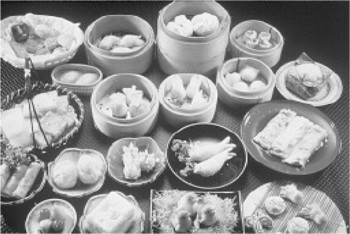
Dim Sum, Hong Kong's favorite breakfast or lunch
Photo courtesy: Hong Kong Tourist Association
Philippines
The food of these islands has been influenced by Indonesia, China, Malaysia, Arabia, and especially Spain and America. In spite of this and the fact that they were ruled by Spain for three centuries and then by America until the end of World War II, they have retained their traditional food, while adding ingredients from the other cuisines.
The favored meats are chicken and pork, with fish being part of the staple diet. Most of the Filipino dishes have beef or pork. In fact, lamb is hardly used in the Far East. Pork can, however, always be substituted with lamb — the taste, of course, will not be the same. There are also hardly any pure vegetarian dishes, as most of the dishes use fish sauce and most of the vegetarian dishes have pork or fish added to them. Those who do not want to use fish sauce may add extra salt to their dishes.
CHICKEN TINOLA
Serves 2-3
Fat (½ tbsp — oil, dalda or lard)
Ginger (1" piece — ground)
Garlic (2 cloves — crushed)
Onion (1 — sliced)
Chicken (1 — jointed)
Raw papaya (2 cups — cubed)
Fish sauce to taste
A few leaves of the capsicum or chilli plant (optional)
Heat fat in a pan and fry ginger, garlic and onion until onion is soft. Add chicken and sauté until brown. Add 1½ cups water and simmer until chicken is done. Add papaya and simmer until soft, but not mushy. Season with fish sauce and capsicum or chilli leaves and serve.

CHICKEN WITH RICE NOODLES
Serves 4-6
Chicken (1 — about 1 kg)
Fat (2 tbsp — dalda, lard or oil)
Onion (1 — sliced)
Garlic (2 cloves — crushed)
Fish sauce (1 tbsp)
Dried mushrooms (½ cup — diced and soaked in water for 15 minutes)
Rice noodles (250 g — soaked in water for 5 minutes)
Spring onions (4-5 — minced)
Salt and pepper to taste
Boil chicken until tender. Cool, debone and cut into small dice. Heat fat in a pan and sauté onion and garlic until brown. Add chicken, fish sauce and mushrooms and simmer for 2-3 minutes. Add noodles and continue to simmer for 2-3 minutes further, until mushrooms and noodles are cooked. Remove from heat, add spring onions, salt and pepper and serve.
CRABS IN COCONUT MILK
Serves 6
Crabs (6 medium-sized, ask the fishmonger to clean them and cut into halves)
Light coconut milk (4 cups)
Salt and pepper to taste
Leaves of the capsicum or chilli plant (¼ cup, optional)
Wash crabs and cook in coconut milk until done. Add seasoning and capsicum or chilli leaves. Cook for about 5-8 minutes more. Serve with rice.
PUMPKIN WITH COCONUT MILK
Serves 4
Oil (2-3 tbsp)
Garlic (6 cloves — crushed)
Shelled prawns (1½ cups)
Pumpkin (1 kg — peeled and cubed)
Prawn juice (1½ cups — crush prawn heads with water and strain)
Coconut milk (1½ cups)
Salt and pepper to taste
Heat oil in a large pan and brown garlic. Add prawns and sauté for 5-6 minutes. Add pumpkin and cook until almost done. Add prawn juice and coconut milk, mix well and simmer for 2-3 minutes. Season and remove from heat.
PASTILLES DE MANI
Peanuts (1 cup — ground)
Milk (3/4 cup)
Sugar (2/3 cup)
Extra sugar for rolling
Mix all ingredients together, except the extra sugar. Cook on medium heat until thick. Sprinkle extra sugar on a flat surface and roll out the mixture using a greased wooden rolling pin. Cut into pieces and bottle.
Indonesia
Consisting of about 15,000 islands, the cuisine here has been influenced by the Indians, Arabs and even the Dutch. While rice is a staple in a few islands, most of the people depend on sago and cassava. Because of the Muslim influence, pork is not eaten here, and while fish is part of the staple diet, chicken, duck and beef are popular.
DEBU DABU KENARI (PICKLED CUCUMBER AND BEAN SPROUTS)
Serves 4
Cucumbers (250 g — peeled and sliced)
Bean sprouts (1 cup — blanched)
Spring onions (6 — finely sliced)
Fresh red chillies (3 — seeded and finely sliced)
Very small bird’s eye chillies or Chinese chillies (4-5)
Basil sprigs (4-5 — chopped)
Almonds (50 g — coarsely grated or ground)
Lime juice (3 tbsp)
Sugar (½-1 tsp)
Dried shrimp paste (1 tsp — dry-roasted)
Salt to taste
Arrange the cucumbers on a platter and sprinkle bean sprouts. Scatter spring onions, chillies and basil on top. Make a paste of the remaining ingredients with a little warm water and mix well. Cool and sprinkle it over the vegetables and serve immediately.
SAMBAL KECAP (SWEET SOY SAUCE SAMBAL)
Fresh red chillies (10 — seeded and sliced)
Shallots (20 — peeled and sliced)
Sweet soy sauce (10-12 tbsp)
Mix all ingredients together and serve in a small bowl.
Note: If you can’t get sweet soy sauce, add a pinch of powdered sugar to the regular soy sauce.
GADO GADO (VERY FAMOUS COOKED VEGETABLE SALAD)
Serves 4-6
Cabbage (125 g — shredded)
French beans or long thin beans (250 g — trimmed and cut into ½” pieces)
Flowered carrots (125 g — make deep lengthwise scratches with a fork all around the carrot and then slice finely to get flowers)
Cauliflower (125 g — cut into florets)
Bean sprouts (125 g — rinsed)
Salt and pepper to taste
Garnish
Watercress (1 bunch — cut into sprigs)
Hard-boiled eggs (2-3 — peeled and quartered)
Cucumber (1 small — finely sliced and cut each slice into ½)
Potato (1 — boiled, peeled, cut into quarters, then sliced medium thick)
Onion slices (3-4 tbsp — crisp-fried, well drained)
Prawn wafers (4-6 — crisp-fried)
Blanch all vegetables individually. Drain well and season lightly with salt and pepper. Arrange vegetables on a flat platter and arrange the watercress around them, along the rim of the platter. Arrange remaining garnish ingredients artistically on top of vegetables and serve with peanut sauce (see below).
SAMBAL KACANG (PEANUT SAUCE)
Peanuts (375 g — fried, ground to a paste)
Soy sauce (2-3 tbsp)
Lime juice (1 tbsp)
Salt and freshly ground pepper to taste
Paste
Onion (1 small) or shallots (4 — chopped)
Garlic (4 cloves — chopped)
Fresh red chillies (4 large — seeded)
Ginger (1” piece — chopped)
Coriander powder (2 tsp)
Almonds (6 — blanched and chopped)
Chilli powder (½ tsp) or paprika powder (1 tsp)
Tamarind water (2 tbsp)
Oil (2 tbsp)
Lemon grass (2” piece — from the center of the stalk, chopped)
Put all ingredients for paste in a blender and blend until completely smooth. Place in a pan and bring to boil. Mix well and boil for 2-3 minutes without stirring. Add 1 litre water, bring to boil again, lower heat and simmer for about 10 minutes. Add ground peanuts, mix well and add remaining ingredients. Mix well and adjust seasoning. Pour into a bowl and serve with vegetables.
Note: The sauce should be thick yet have a pourable consistency.
REMPEREK KACANG (CRISP PEANUT WAFERS)
Raw peanuts (200 g — peeled)
Fine rice flour (150 g)
Plain flour (100 g)
A pinch of salt
Coconut milk (1 cup)
Oil for deep frying
Paste
Coriander powder (1 tsp)
Almonds (2 — blanched and peeled)
Garlic (2-3 cloves)
Turmeric powder (¼ tsp)
Salt (1 tsp)
Lime peel (1 tsp — grated)
Dry roast peanuts in a frying pan. Blend together all ingredients for paste and add rice and plain flour and salt. Mix well and add coconut milk to make a paste which is not too thin or too thick. Stir in the peanuts. Heat oil in a deep frying pan and drop in 1 tbsp of mixture at a time. Cook until golden brown, remove and drain well. Store in an airtight container.
NASI KEBULI (CHICKEN WITH RICE AND PINEAPPLE)
Serves 6-8
Oil (2 tbsp)
Chicken (500 g — skinned and deboned, cut into 1/2 ” dices)
Strong chicken stock (3 cups)
Salt (1 tsp)
Old basmati rice (2 cups — washed, soaked for 20 minutes and drained for 20 minutes)
Pineapple (3 cups — peeled and diced)
Onion (1) or shallots (4 — finely chopped, fried crisp, drained and set aside)
Seasoning
Garlic (8 cloves — finely chopped)
Ginger (1" piece — chopped)
Coriander seeds (1 tsp)
Cumin seeds (1 tsp)
White peppercorns (1 tsp)
Nutmeg (¼ tsp — coarsely crushed)
Cinnamon (1” stick)
Green cardamoms (4 — gently braised)
Cloves (2)
Bay leaves (2)
Star anise (1-2)
Salt to taste
Heat oil, add all seasoning ingredients and sauté lightly in a large, deep frying pan. Add chicken and sauté for 2-3 minutes. Add stock and salt and simmer until chicken is cooked. Strain stock, remove chicken and keep aside. Reheat stock in a large pan, add rice and cook until almost done and the liquid is absorbed. Add chicken and cook until rice is done. Spoon onto a flat platter, garnish with pineapples and sprinkle with fried onion or shallots.
Malaysia
Malayasia is home to people from many countries, and as these people merged their lives, so too did their cuisines. Today Malaysian cuisine has the flavors of Chinese, Indian, Sri Lankan, Indonesian and Thai cuisines that makes it unique in its own right.
When Chinese merchants and craftsmen settled along the Malay Peninsular, they married the local women who were then given the title of nonya or lady. The food produced by their combined tastes soon got to be known as Nonya cuisine, and today, it is famous all over the world.
Balchu, what we in India call balchow, sattay, and even the molee curry are traditionally Malaysian.
ICAN BERINTI (SPICED MACKEREL)
Serves 4
Mackerels (4 — about ½ kg each)
Salt (1 tsp)
Pepper (½ tsp)
Lime juice (2 tbsp)
Oil for shallow frying
Grind to a paste
Red chillies (3 — dried) or chilli powder (1 tsp)
Onion (1 — chopped)
Ginger (1” piece — chopped)
Garlic (3 — cloves)
Balchu (100 g)
Lemon grass (2 stalks — chopped)
Tomato (1 — chopped)
Soy sauce (1 tbsp)
Wash and clean fish, slit lengthwise and remove backbone. Make a few light slits on either side of the fish. Rub with salt, pepper and lime juice and set aside for 30 minutes. Fill fish with the ground spices and rub any leftover spices over them. Heat oil in a large frying pan and fry fish on both sides till cooked.
Note: This dish is very similar to the ones our Goan cooks used to make, without the lemon grass and using tamarind instead of tomato.
ICAN MASAK MOLEK (STEAMED RED SNAPPER WITH COCONUT SAUCE)
Serves 3-4
Red snappers (1 kg)
Salt and pepper as required
Lemon grass (2 stalks — cut into 1½” pieces)
Shallots (8-10) or onion (1 large — chopped)
Ginger (1” piece — chopped)
Fresh red chillies (2-3)
Dried lime rind (1 tsp — grated)
Coconut milk (250 ml)
Coriander or parsley (1 tsp — chopped)
Wash and clean red snappers. Rub with salt and pepper and lay them on a steamer. Place lemon grass on top of the fish and steam for 25 minutes. Grind together shallots or onion, ginger, chillies and lime rind. Mix in coconut milk and add salt and pepper to taste. Place in a pan and bring to a boil. Lower heat and simmer for 15 minutes. Discard lemon grass and place the fish on a flat platter. Spoon over coconut sauce and serve garnished with coriander or parsley.
SAYUR GORENG (MIXED SPICED VEGETABLES)
Serves 3-4
Oil (3 tbsp)
Cauliflower (½ kg — cut into florets)
Carrots (6 — peeled and sliced)
Green capsicum (1 — cubed)
Small baby corn (12 — kept whole)
French beans (50 g — trimmed and cut into 1” pieces)
Tomato ketchup (½ cup)
Chilli sauce (4 tbsp — or to taste)
Salt and pepper to taste
Ajinomoto (a pinch, optional)
Grind together
Onion (1) or shallots (4)
Garlic (3 cloves)
Heat oil in a pan and fry ground paste until golden. Add vegetables and stir-fry for 4-5 minutes. Add tomato ketchup, chilli sauce, salt, pepper and ajinomoto and stir-fry for 2-3 minutes longer, until the vegetables are cooked yet crunchy.
RENDANG HATI LAMBU (LIVER)
Serves 3-4
Oil (3 tbsp)
Chilli powder (50 g) or to taste
Thick coconut milk (400 ml)
Salt and pepper to taste
Liver (400 g — membranes removed and thinly sliced)
Grind together
Ginger (3/4” piece)
Garlic (4 cloves)
Heat oil and fry ground paste for 2-3 minutes. Add chilli powder and fry for 1-2 minutes, taking care not to let it burn. Stir in coconut milk. Bring to a boil, season with salt and pepper and add liver. Lower heat and cook for 5 minutes.
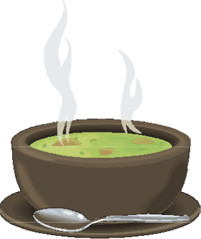
LAKSA LEMAK (CHICKEN AND PRAWN SOUP)
Serves 8-10
Chicken (1½ kg)
Water (1½ litres)
Salt to taste
Prawns (500 g — shelled and deveined — reserve shells)
Oil (2 tbsp)
Rice vermicelli (250 g — use rice noodles, rice sticks or Chinese egg noodles if not available)
Thick coconut milk (600 ml)
Black pepper (freshly ground)
Grind to a paste
Fresh red chillies (3 large — seeded and chopped)
Almonds (5 — blanched and chopped)
Ginger (1” piece — chopped)
Shallots (3 — chopped)
Garlic (3 cloves — chopped)
Coriander powder (1 tbsp)
Tamarind water (2 tbsp)
Garnish
Bean sprouts (125 g)
Spring onions (3-4 tbsp — sliced finely, diagonally)
Red chilli (1 — seeded and finely chopped)
Place chicken in a pan with water and salt. Bring to boil and simmer for 20 minutes. Remove scum as it forms. Rub a little salt onto the prawns and refrigerate. Remove chicken from the stock. Cool, remove skin and debone. Cut the flesh into small pieces and refrigerate. Return skin and bones to the stock and simmer for 20 minutes. Add prawn shells and simmer for 10 minutes further. Strain stock and keep aside. Heat oil in a large pan and fry the ground paste for about 3-4 minutes. Stir in stock and keep aside. Add rice noodles to boiling water and cover for 3-4 minutes. If using egg noodles, cook in boiling water for 3-4 minutes. Transfer noodles to a colander, drain and rinse under running water until cool. Drain and keep aside. Bring strained stock to a boil, add coconut milk and simmer for 5 minutes. Add prawns and chicken, and simmer for 3-4 minutes. Remove from heat and season with salt and pepper. Place the noodles into bowls, sprinkle garnishes, pour in the soup with the chicken and prawns on top and serve.
Note: You may sprinkle crisp-fried onions over the soup, if you desire.
Cambodia and Laos
Cambodia, Laos and Vietnam were at one time combined together and called Indo China — typical superior western attitude! How different is the Indian culture from that of the Chinese, including the cuisine! Even as a child, I wondered why it was called so.
They were under French rule for almost a century, and the French influence is seen in a few restaurants and the French bread, still sold locally, but the two cuisines are considered as separate entities.
Fish sauce, coconut milk, lemon grass and the famous kaffir lime leaves are the most commonly used ingredients.
PAD SOM MOO (PORK WITH COCONUT MILK AND PICKLED ONIONS)
Serves 4
Pork chops (8 large — boneless. You may use lamb chops, but increase the quantity, as they are smaller than pork chops.)
Fat from chops (1” piece — cubed. Use kidney fat if using lamb chops)
Garlic (12 cloves — chopped)
White pepper powder (2 tsp)
Salt (2 tsp)
Thick coconut milk (120 ml)
Baby onions (½ kg — peeled)
Limes (3 — juiced)
Sugar (2 tbsp)
Water (8-10 tbsp)
Fish sauce (2 tbsp)
Spring onions (4 tbsp — chopped green part)
Coriander leaves (8 tbsp — chopped)
Cut meat into ½” cubes. Heat a large frying pan and add fat pieces. Lower heat and allow the fat to melt a little. Add meat and garlic and stir-fry for about 5 minutes. Remove fat and add pepper and half the salt. Mix well. Add coconut milk, bring to boil, lower heat and simmer for about 30-40 minutes, until the coconut milk is thick. Add remaining ingredients except spring onions and coriander leaves and cook until the onions are brown. Add spring onions and coriander leaves and serve.
NUOC CHAM (A DIPPING SAUCE FROM VIETNAM AND LAOS)
Fish sauce (8 tbsp)
Lime juice (4 tbsp)
Sugar (4 tsp)
Fresh red chillies (4-5 — finely chopped)
Garlic (2-4 cloves — crushed)
Carrot (1 — finely grated)
Coriander leaves (4 tsp — chopped)
Combine all ingredients except carrots and coriander leaves and refrigerate. Stir in carrots and coriander leaves 2-3 hours before serving and keep refrigerated.
Note: This sauce can be adjusted to your taste for sweetness, sourness and salt.

Bhicoo J. Manekshaw, a graduate of the prestigious Cordon Bleu School of Cookery, London and author of Traditional Recipes of India and Parsi Food and Customs, has been associated with many haute cuisine organizations in the country.
◆ ◆ ◆
From the archive