
Readers' Forum
The dedicated doctor
Dr Farokh B. Dhondy became a doctor in 1947 when he was 22 years old, thus fulfilling his father’s dream of having a doctor in the family. His first step as a doctor was to go to the fire-temple and take the Hippocratic Oath. He had graduated from the Grant Medical College, whose dean was Colonel S. C. Bhatia, and the late surgeon Dr Kersi Dastur was his batch mate and a lifelong friend.
For the next 35 years the good doctor practised at Kemp’s Corner and looked after the health of not only the common man, but his patients included several well-known Europeans, like found-ers of Larsen and Toubro, the famous engineering and cement company. One European who was proceeding on leave to England asked the doctor whether he could bring him some medicines or instruments. The doctor replied that his good wishes are what he required. When the patient came back from England, he brought with him a car that he presented to the doctor who used it for the next 20 years! At last the doctor had to retire and settle down. On the last day before the doctor retired there was a crowd of about 200 persons assembled around his dispensary, looking sad and gloomy. The doctor told them that he was grateful to all of them, that he was just going away from Kemp’s Corner and settling at his cottage at Bandra’s Land End. He was not leaving this world so there was no occasion for any sadness. When someone from the crowd said in Gujarati that their father was leaving them, the good old doctor replied that God is our Father who merely used him to treat his patients!
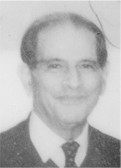
Dhondy: philanthropic medical man
Today at 84 years of age and being the last surviving member of his family, the doctor has decided that after him his bungalow would be used as a dispensary or for medical research.
Such is this doctor, when comes such another?
This reminds me of another incident a few years ago when I was asked to get a checkup from a cardiologist. A famous cardiologist near Bandra took my cardiogram, examined me for about 45 minutes and charged me Rs 800. He further suggested a follow-up after six months. As I could not afford to spend Rs 800 for the follow-up, I went to the Holy Family Hospital, Bandra, where this doctor also comes once a week in the morning. The doctor examined me for two minutes, then he put his stethoscope just once on my chest and immediately removed it. I was shocked at the difference in the two examinations. A doctor who does not get any remuneration to examine outdoor patients, is never forced to come to any hospital. The hospitals favor the doctors by giving them wide opportunity to examine a variety of patients. Why misuse such facilities?
NOSHIR M. LAM
◆ ◆ ◆
From the archive