
Books
Prayerful prescriptions
"Here in this small book I have made a humble attempt to show how, when, where and for what purpose our manthravani (Avestavani) should be recited...It is explained how certain Yasht, Nyaish, Nirang, etc should be chanted to remove certain mental as well as physical ills and thereby live a blissful life. These Avesta kalams or manthras are like jadibuttis (elixir or panacea to live a true Zoroastrian life. Which remedy (prayer) should be used by us depends on our own discretion and judgment,” writes the author Rusi F. Besania in Zoroastrian Manthric Elixir To Lead a True Zoroastrian Life which was released at Cusrow Baug’s Karani Agiary on Dastur Kookadaru’s 171st birth anniversary on April 15, 2002. Besania’s Gujarati book Jarthosti Jindagi Jivvani Jadibuttio (see "Prayerful prescriptions,” Books, Parsiana, March 2002) which was first released in September 2001 has now been translated into English by Prof Firoze Mistry, a highly qualified educationist in Gujarat.
Manthra, explains the author, is a combination of a few specific words to bring about certain scientific effects. As the medicine prescribed by a doctor enables us to do away with our diseases, the definite manthravani helps us remove our difficulties and ailments. Only with the help of mithra — a meditated strong thought — can a manthra be successful, the author clarifies.
"All these prayers and facts given in the following chapters are found scattered in our different Zoroastrian scriptures. I have made an attempt to give them here in a nutshell,” writes Besania. The 183-page book, covering 51 topics, contains a list of the different prayers that can eradicate problems, physical, emotional or mental, whether at home, in the office or in the outer world. Specific prayers to be recited on different days of the year are listed for those interested. The scientific basis of the Zoroastrian religion is reiterated with Besania pointing out that even though many believe Galileo was the first to observe that the earth revolves around the sun, in the Gathas it had already been described as a moving planet (geush ajyao).
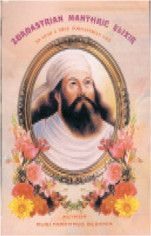
Yatha Ahu Vairyo, Ashem Vohu and Yengehe Hatam are the three talismans of the Zoroastrian religion, notes the author. "The holy vibrations of all these three sacred manthras build a protective shield...before which even Satan becomes helpless...These three manthras can be chanted any time, any where...They are free manthras.” The number of Yathas and Ashems to be prayed at the beginning or on completion of different acts or when unable to recite the recommended Nyaish/Yasht are all listed here. The evolved saints who worshipped the different yazatas are also introduced.
This religious compendium published by the WZO (World Zoroastrian Organisation) Trust bears testimony to the fact that the WZO has been wrongly labelled as reformist and unorthodox, commented WZO India president Dadi Engineer at the book launch. "As long as we keep the faith, we shall be assured of continued ascent,” noted Dinshaw Tamboly who released the book. Thanks to the WZO support, 1,500 copies of the book were available for free distribution, according to a press release issued by Godrej Dotivala, public relations officer of the Bombay Parsi Punchayet. "It remains the fond hope of WZO that this book will play a positive and vibrant role in shaping the thought process of all those who read it,” adds the write-up. For enquiries regarding the book, write to the author at 2, Sava Sadi Sadan, Bhavanagari Street, Vanki Bordi, Surat 395003, tel: 7410651.
S. J. P.
◆ ◆ ◆
From the archive