
Events & Personalities
Costly deaths
Would the Zoroastrian community in Bombay be fortified or mortified to learn that the annual deficit incurred by the Bombay Parsi Punchayet (BPP) in maintaining the Doongerwadi property is Rs 92 lakhs? While the recurring deficits would be in the region of Rs 25 lakhs, the capital expenditure incurred on installing the solar panels and ozone ducts added to the deficit, explains Dinshaw Tamboly, BPP trustee who oversees the Doongerwadi affairs.
To sustain the dakhmenashini tradition in the absence of vultures is proving frightfully expensive to the BPP. The Punchayet has installed four solar panels at the Sethna dakhma which are now operational after the initial hitch. Since the ozone ducts introduced at the Anjuman dakhma necessitate a monthly maintenance cost of Rs 60,000, the BPP is planning to dismantle the equipment and install three more solar panels after the monsoons, mentions Tamboly.
Although initially the BPP trustees had even indicated a willingness to bear the high cost of an experimental aviary project to breed vultures in captivity, an escalation in the figures quoted has forced the trustees to stipulate an upper limit which the Punchayet can afford.
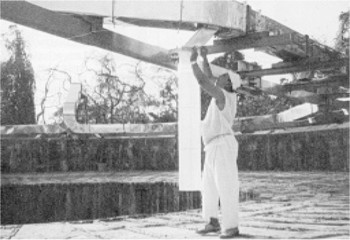
Above: Ozone ducts at Bombay’s Anjuman dakhma
Assuming that on an average there are 1,000 bodies consigned to Bombay’s dakhmas in a year, a deficit of Rs 92 lakhs means that the Punchayet expended nearly Rs 10,000 on every dead body brought to the Doongerwadi last year, a cost not passed on to the bereaved family. The family of the deceased is expected to pay for the use of the bungli, the different services rendered by the Punchayet staff and the priests reciting the prayers.
The practice of soliciting donations at uthamna time earns the Punchayet around Rs 12,000 a month. The amount is low primarily because the four-day prayers of only one-third of those consigned at the dakhmas are said there. The majority opt to continue the prayers at their agiary after the geh sarna at Doongerwadi. Additionally, the administrative machinery too needs to be better geared to collect donations, acknowledges Tamboly.
◆ ◆ ◆
From the archive