
Books
Being Bhabha - VI
At Cambridge Dr Homi Bhabha had the opportunity to explore ideas not only about science, industry and the arts but also freedom and democracy
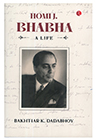
This extract from Homi J. Bhabha: A Life by Bakhtiar K. Dadabhoy (Rupa Publications, 2023) has been reprinted in Parsiana with permission from the author and the publishers.
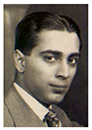 Did Dr Homi Bhabha also flirt with communist philosophy? An acquaintance recalled that Bhabha told him in an unguarded moment that while at Cambridge he had the choice of becoming a communist, an artist or a scientist. Soviet double agents like Guy Burgess, Kim Philby and others were at Cambridge at the same time as Bhabha. They were in Trinity College, as was E. Herbert Norman who was born and raised in Japan and went on to become a successful Canadian diplomat. Tragically, Norman committed suicide after he was accused of being a communist in the 1950s. What was a fact, however, was that Norman recruited students from the Commonwealth for the Communist Party under the influence of Rupert John Cornford (one of the great-grandsons of Charles Darwin) who was an alumnus of both King’s College and Trinity College. Bhabha and Norman, who were the same age, must have met in Cambridge at some stage.
There is no evidence to suggest that Bhabha was ever an active communist, but he did join the Socialist Club and was influenced by John Desmond Bernal, the noted crystallographer (a scientist who studies and works with crystals) who propagated the doctrine of the social function of science. Bernal was an active communist and a member of the Communist Party of Great Britain. He held that science was rooted in society and molded by it. He believed that modern science had the potential to not only solve the problems of poverty and unemployment but could also bring untold benefits to humanity if scientific development was consciously planned for the entire society. This influence was apparent in Bhabha’s future career and the role he played in building science and technology in independent India. Cambridge was the crucible that allowed Bhabha to explore ideas not only about science, industry and the arts but also freedom and democracy.
After he returned to India, Bhabha moved in intellectual circles that had socialist leanings in Bangalore and Bombay. When P. C. Joshi was the general secretary of the Communist Party of India there was a liberal phase in which a number of intellectuals, writers and artists were associated with the Party. Bhabha was associated with the Friends of the Soviet Union and for a time was considered a communist sympathizer. He used to subscribe to the party paper People’s War.
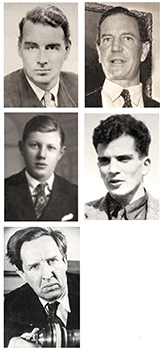
Top: Dr Homi Bhabha;
clockwise from above left: Guy Burgess, Kim Philby; Rupert John Cornford;
John Desmond Bernal; E. Herbert Norman
Photos: Wikipedia
Theoretical physics
beckons
Soon after his arrival in Cambridge, Bhabha wrote to his father about his growing interest in physics. His lack of interest in mechanical engineering and overindulgence in extracurricular activities took their toll. When the results were announced at the end of the first part of his degree, Bhabha found that he had got a third class. This distressed his father greatly, and he gave his first born an ultimatum: he was to redeem himself by getting a first class in the second part or be recalled to India. Bhabha managed to negotiate even from a position of weakness — he would oblige with a first class if his father agreed to finance him for two more years to do the Mathematical Tripos.
His father was well aware of his son’s growing obsession with mathematics and physics, having received letters from him expressing strong dissatisfaction with engineering. In one such impassioned letter dated August 8, 1928, Bhabha wrote: "I seriously say to you that business or a job as an engineer is not the thing for me. It is totally foreign to my nature and radically opposed to my temperament and opinions. Physics is my line… I am burning with a desire to do physics… I have no desire to be a ‘successful’ man or the head of a big firm. There are other intelligent people who like that and let them do it… I, therefore, earnestly implore you to let me do physics.”
 It is obvious that he thought engineering was beneath him. He had strong views and was not afraid to air them. A common thread in all his letters is that engineering required average intelligence and that he would be wasted on something so monotonous, indeed, pedestrian. Just before his examination Bhabha wrote to his father and made a statement that remains applicable to this day. "No exam was ever a test of original or creative ability in anybody. However, don’t let that disturb you; you shall get the results you want.” Bhabha kept his promise by securing a first class in his Mechanical Tripos in 1930.
 His father kept his part of the deal and Bhabha was admitted to the Mathematical Tripos at Cambridge. Bhabha’s eagerness to pursue mathematics is understandable in the context of the great influence that the subject wielded on the development of mathematical physics in England at the time. In fact, physics was first taught at Cambridge as part of the Mathematical Tripos. The path to theoretical physics was through mathematics and the young Bhabha looked forward to sharing a platform with the great creative minds of the West. Physics was the medium for him to channel his true passions. Unlike mechanical engineering, with its earthly aspirations, physics allowed Bhabha to ruminate on what he might have seen as the greater mysteries of existence. It was through this final switch to physics that the young aristocrat found his professional niche. It was this Bhabha that returned to India in 1930: an artist-scientist with a distinctly occidental aesthetic. Concluded
◆ ◆ ◆
From the archive