
Business
Port, Parsis and chikoos
When Prime Minister Narendra Modi pressed the symbolic switch to flag off the prestigious Vadhvan Port project which has the potential of being the largest multipurpose port in India, few would recall that 26 years ago the Australian company P&O’s port business had won the rights to construct and manage this port. But the project had to be abandoned due to objections from environmentalists.
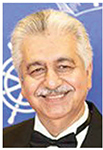 Capt Jimmy Sarbh is an Australian national originally from Bombay. He was appointed as regional director, South Asia and Middle East Region of P&O Ports. He pushed for privatization of ports in India. "It is vital for India,” he told The Maritime Standard, a fortnightly industry e-newsletter, in March 2020. "We need to create an alternative to facilities at Jawaharlal Nehru Port, which will run out of capacity within the next decade, and to reduce environmental pressures on Bombay.”
 Strangely, the Parsi connections to the then Vadhvan Port project were uncanny. Sarbh built the P&O ports business to USD 1.3 billion (Rs 10814 crore) in the subcontinent in eight years consistently delivering annual profits between GBP 33 million (Rs 350 crore) to GBP 45 million (Rs 478 crore). "India teaches you persistence and patience,” Sarbh had told Parsiana in 1999 ("four years and eight days” after relocating to India), referring to his breakthrough in convincing the authorities to accept private players in the industry (see "The challenging port-folio,” Parsiana, May 1999). Over two decades later, Sarbh was inducted into The Maritime Standard Hall of Fame — Middle East and Indian subcontinent, on November 22, 2021 (see "Accolades for Sarbh,” Business, Parsiana, December 21, 2021-January 6, 2022).
Sarbh had bagged the bid to build the Vadhavan International Port (VIP) in 1997. P&O appointed various agencies to carry out comprehensive studies and design the layout for the multipurpose port. Expert agencies from London were appointed to carry out design and simulation studies. Several other Indian agencies were appointed to undertake soil investigation studies, cargo flows, and critical social impact studies with emphasis on sorting out the grievances of villagers and locals.
P&O spent nearly USD two million (Rs 16.64 crore) on these studies. However, from day one, the locals, mainly led by Irani chikoo farmers Nargis Irani and Danesh Irani of Dahanu, challenged the creation of VIP in what they termed as an environmentally sensitive area before the special committee headed by Justice Dharmadhikari of the Dahanu Taluka Environmental Protection Authority and prayed that the port development be stopped.
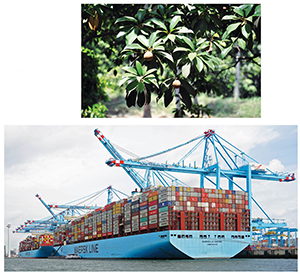
Top: Capt Jimmy Sarbh; center: chikoo orchard; above: port terminal
Photo from Wikipedia for representational purpose
In the litigation which followed, senior counsel Navroz Seervai appeared for P&O ports, instructed by legal firm J. Sagar Associates’ then managing partner Berjis Desai. The auditors of the project, KPMG were led by Yezdi Nagporewala, who now heads KPMG in India. The bank to arrange debt finance for VIP was HSBC helmed by Zarir Cama, all Parsi Zoroastrians. Ultimately, even a doughty fighter like Sarbh was frustrated and had to give up.
The Rs 75,000 crore project continues to face opposition. The chikoo farmers fear that their crops may be damaged, while fisherfolk fear their livelihoods will be affected. More than 8,000 people — mostly fishermen, farmers and other residents from Bombay to village Zai in Maharashtra, gathered at the Vadhvan coast in September 2023 to protest against the setting up of the Port. Vadhvan Bander Virodhi Sangharsh Samiti that includes local residents, fisherfolk, farmers and tribals from Dahanu and 14 other non-political institutions organized the protest seeking cancellation of the government approval of the project (The Free Press Journal, September 3, 2023).
"It’s going to be disastrous to say the least,” Phiroza Tafti, co-convenor of the Dahanu chapter of INTACH told Parsiana on October 30, 2023. According to her, locals are sceptical of the communications from the authorities that "there will be only progress due to the Port.” She stated that "to circumvent the ecologically fragile status (of Dahanu) they strategically want to locate the port kilometers away so it does not fall into the economically fragile zone (which could be damaged) by colossal landfills, destroying marine life for kilometers around… What about the whiplash effect?... Water finds its own level... It will erode existing coast lines... Even building kilometers of breakwater walls will have disastrous consequences on the water quality.” Stating that fisherfolk are up in arms and not allowing surveys by boat, "the authorities are using drones.”
Interested organizations have had two huge rallies so far and highway blockades to create awareness, she stated. "(Environmentalist) Debi Goenka is trying very hard...but he is struggling... There are too many lawyers who know the loopholes and legal strategies,” stated Tafti. Goenka who has "10 days ago” filed a public interest litigation against the Port told Parsiana on December 8 that Dahanu taluka was declared an eco-sensitive area as far back as 1991. "I find that quite strange… Why build a port of this magnitude here in this area where there is so much marine bio-diversity?”
Long-time Dahanu resident Farzan Mazda told Parsiana that farmers in what is generally known as the chikoo bowl of the country "feel let down as on one side major turnkey projects such as the Port, the bullet train line, the dedicated freight corridor and the Mumbai Ahmedabad Expressway are being commissioned while on the other, current notification does not allow change in land use (from agricultural to non-agricultural) for these farmers.” According to him, this "arbitrary injustice is leading to farming becoming more and more unviable — considering the dearth of labor (who travel to industrialized Umargam and Boisar for work), pollution generated from these projects and escalating land prices.”
◆ ◆ ◆
From the archive