
The Occasional Piece
The ultimate ritual
It is nearing 1 a.m. in Bombay’s oldest fire temple, the Banaji Limji Agiary, tucked away in a narrow, nondescript lane in the Fort area. The fifth and last gah, the Ushahin, is heralded by the priest entering the sanctum sanctorum to tend the holy fire that has been burning bright for over 314 years. The priest strikes the gong nine times to shatter the silence as the six devotees present stand still, heads bowed in reverence. They are here at this unearthly hour to witness the completion of the ultimate Zoroastrian ritual — the nirangdin — being performed in the inner sanctum by two highly accomplished priests.
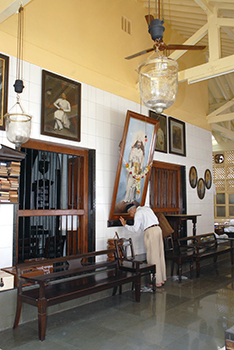
Banaji Limji Agiary
Room where higher liturgical ceremonies are performed;
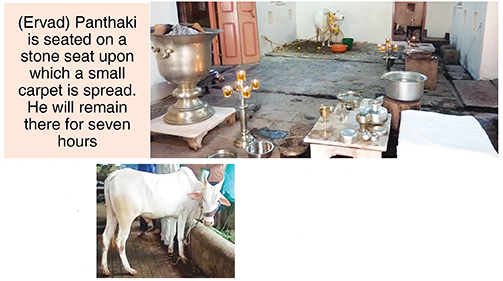
varasyaji (l) Photos for representational purposes only
This is the 17th day of the ritual to consecrate the urine of an uncastrated white bull without any blemish and a pink tongue with no spots. Called varasyaji, he is highly prized and has been brought to the Agiary for the ceremony. In the portico of the Banaji Agiary, a little black goat eyes the gorgeous looking bull enviously as he is being fed some of the choicest temple food. The bull’s consecrated urine (after its transformation from taro to nirang) is a potent weapon against the forces of evil and is used for multiple liturgical purposes. When the bull dies, his consecrated urine will be discarded as the life force will no longer permeate it.
Ervad Hoshedar Panthaki, 42, head priest of Banaji Limji, has performed 70 nirangdins so far; his companion priest, Ervad Khushru Kanga, in his late 30s, is a veteran as well. Both have undergone the purificatory nahn or bareshnum, secluding themselves in the Agiary for nine days of prayer and abstinence. Nocturnal pollution of either priest during those nine days would invalidate the nahn, writes Ervad (Dr) Jivanji J. Modi in his authoritative work, The Religious Ceremonies and Customs of the Parsees.
Dastur (Dr) Firoze Kotwal, high priest of the H. B. Wadia Atash Behram, and the most authoritative scholar on Zoroastrian rituals, in an essay penned on the subject, states that "in higher liturgy, three strands of hair from the tail of a consecrated white bull are entwined and tied with a reef knot on a silver or gold ring and placed on a nine holed saucer through which the hom juice or hom water (a cocktail of goat milk, well water, stem of pomegranate tree and twigs of Homa tree imported from Iran is consecrated for 14 months) is strained and filtered.”
Kotwal graphically describes each step of this ultimate ritual involving seven metallic cups, pincers, scissors, beakers, date palm leaf and pomegranate twigs, metal wires, goat’s milk and a plentiful supply of well water. Very reminiscent of ancient Egyptian temple rituals and modern day Rosicrucians (an ancient mystical order of Christianity with esoteric beliefs) in what can be described as white magic, to bring about beneficent changes in nature and fight the malevolent forces of evil.
We sit on a wooden bench for the all-night vigil alongside an octogenarian lady avidly watching the ritual. Panthaki is seated on a stone seat upon which a small carpet is spread. He will remain there for seven hours without back support or bio break with the exception of occasionally standing on the stone seat when ritualistically required to do so. Kanga moves around a bit more — arranging and rearranging the ritual implements, wiping his heavily perspiring brow and, in general, assisting Panthaki. The latter vigorously recites the Vendidad at great speed, mostly from memory, with the right emphasis (though, towards the start in the early morning, he had recited from a book in the dim light generated by a petromax lantern). The critical part of the ritual is completed by 3.30 a.m., the brahma muhurat of the Hindus; and resumed after what seems like a brief hiatus.
The atmosphere is so electrified by the nonstop incantations in Avestan (which not surprisingly sounds so much like its sister language, Vedic Sanskrit) that we neither doze off nor feel tired, despite having come after a full day’s work. The Ashem Vohu prayer sounds magical when Panthaki elongates the words vohoooo and asheeeem as ritualistic incantations. Another priest joins in during a lull and recites aloud the names of the deceased for the progress of whose souls in the other world the nirangdin has been sponsored. He repeats this exercise to make the sponsor feel good.
The prior evening, the priests had ceremoniously held up the tail of the white bull and, in several carefully synchronized steps, cut the number of hairs required for use in the ritual. No deviation is permissible and every act has to follow a set pattern. The same ritual rigor is displayed during the all-night ceremony and one marvels at the endurance of these priests. Finally, the ritual is completed and the mouths of the metal pots containing the nirang and the consecrated water are tied with white muslin cloth by Panthaki.
Six days prior to the nocturnal ritual, Panthaki and Kanga performed the yajashne prayers in the morning after which devotees partook of the consecrated bread called daroon and took a sip of the hom water without touching the vessel to the lips. After the nirang ritual was completed, at around eight in the morning, the yajashne was repeated. The truly committed devotees also sipped the freshly consecrated nirang and were given white threads (similar to what Hindus wear at the wrist) to commemorate the ceremony.
A thoroughly exhausted Panthaki left the Agiary after 18 days to go home and attend to his ailing mother. By the time you read this piece, Panthaki would have commenced yet another nirangdin, the 72nd of his young career.
Kotwal notes that with the advent of Parsis in Bombay in the 17th century, the first panthaky of an agiary was one Ervad Darab (1660 CE), the fire temple being none other than the Banaji Limji Agiary. Of course, the Navsari headquarters did not permit the nirangdin to be performed outside Navsari until 1791 in which year the Bombay Parsi Punchayet was finally allowed to perform the ceremony at the Manekji Seth Agiary in Bombay.
Berjis Desai, lawyer and author of Oh! Those Parsis and Towers of Silence, is a chronicler of the community.
◆ ◆ ◆
From the archive