
Events & Personalities
Shrinking vulture numbers
From a count of 254 in 2001, the vulture population of Ahmedabad shrank to five in 2018 and to zero in the December 2022 census, reported India Today (IT) on January 2, 2023. The Gujarat forest department conducted the vulture census after a gap of four years, owing to the coronavirus pandemic. Numbers in the state of Gujarat have also shown a decline: from 2,647 in 2005 to 820 in 2018. "The final tally of 2022 is still being prepared, but officials and nature conservationists who were a part of the enumeration exercise claimed the total number has reduced significantly,” stated the newsweekly.
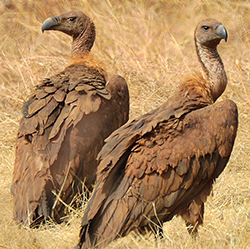 The primary reason for the decline in the raptors’ numbers is diclofenac, the anti-inflammatory drug used to treat livestock. The carcasses of such cattle, when consumed by vultures, prove to be fatal for the birds. "Though use of diclofenac for pain relief among cattle is banned, it is administered since the drug is cheap,” noted the news magazine.
The primary reason for the decline in the raptors’ numbers is diclofenac, the anti-inflammatory drug used to treat livestock. The carcasses of such cattle, when consumed by vultures, prove to be fatal for the birds. "Though use of diclofenac for pain relief among cattle is banned, it is administered since the drug is cheap,” noted the news magazine. Another reason cited is the loss of vulture habitat due to urbanization. Kartik Shastri, member of the International Union for Conservation of Nature’s Vulture Specialist Group and part of enumeration exercises in Ahmedabad for over two decades, told IT: "Because of the redevelopment happening at the Indian Institute of Management Ahmedabad campus, the area has lost some green cover… Vultures are extremely sensitive. The scavenger birds, usually seen on other college campuses, were also not seen this time. However, we did spot quite a few near Viramgam, which is in Ahmedabad district.” Shastri believes the birds have not necessarily perished but may have flown to other regions. Vultures were sighted at Virpur Panjrapole in Viramgam and Tarapur in Kheda during the census.
Ervad (Dr) Khushru Ghadiali from the Ahmedabad’s Anjuman Vakil Adraian told IT that earlier "with vultures, the bodies (in the dakhmas) would be disposed of within a few hours. Now, the decomposition takes two or three days. The workers then come and pour limestone (quicklime) over the bones to (help) degeneration. It is a natural incinerator and a hygienic process that does not create stench or discomfort to neighbors.”
Anticipating the crisis, a vulture breeding center was started in Junagadh in 2009 — one of five such centers in the country, noted IT. Shastri told the news magazine that the breeding center has had limited success owing to the long mating and breeding process and an ultra-sensitive incubation process resulting from inclement weather conditions. Vulture chicks get dehydrated in temperatures over 40 degrees, which would account for around nine months of a year in Gujarat. However, there is hope that though the White-rumped and Egyptian vulture populations are on the decline, the Indian vulture numbers have improved, noted IT.
Ervad (Dr) Khushru Ghadiali from the Ahmedabad’s Anjuman Vakil Adraian told IT that earlier "with vultures, the bodies (in the dakhmas) would be disposed of within a few hours. Now, the decomposition takes two or three days. The workers then come and pour limestone (quicklime) over the bones to (help) degeneration. It is a natural incinerator and a hygienic process that does not create stench or discomfort to neighbors.”
Anticipating the crisis, a vulture breeding center was started in Junagadh in 2009 — one of five such centers in the country, noted IT. Shastri told the news magazine that the breeding center has had limited success owing to the long mating and breeding process and an ultra-sensitive incubation process resulting from inclement weather conditions. Vulture chicks get dehydrated in temperatures over 40 degrees, which would account for around nine months of a year in Gujarat. However, there is hope that though the White-rumped and Egyptian vulture populations are on the decline, the Indian vulture numbers have improved, noted IT.
◆ ◆ ◆
From the archive