
Institutions
Masina’s momentum
By continuously upgrading and modernizing their medical facilities and services, the charitable Masina Hospital has managed to level income and expenditure
"Masina Hospital is financially breaking even,” announced Homi Katgara, the managing trustee of the 120-year-old, 270-bed, cosmopolitan, charitable institution, addressing a gathering of donors, well-wishers and others at the inauguration of the modernized K. M. C. (Kharas Medical Centre) Hospital Building, on December 3, 2022. "More revenues are flowing in,” he added. The chief guest, Shapoor Mistry, chairman of the Shapoorji Pallonji (SP) Group and chairman of the Masina Hospital Trust (MHT) was unable to attend due to "preoccupation with personal matters,” noted the Hospital’s joint chief executive officer, Khushrow Major.
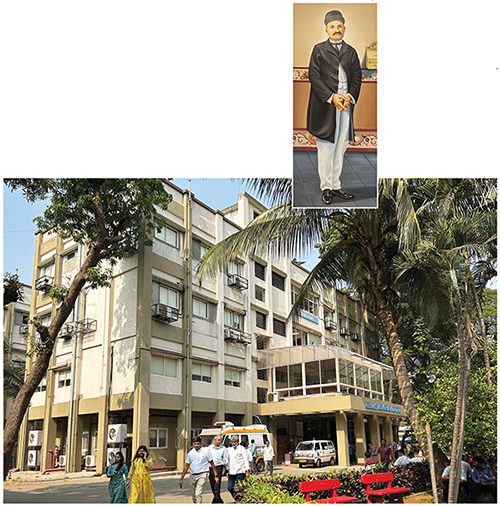
Modernized Kharas Medical Centre Hospital Building; inset: portrait of Dr Hormusji Manekji Masina
Over the past several years the Hospital has been upgrading the facilities and services on its eight-acre property located at Byculla. (A 14-bed renal dialysis center funded by SP Investment Advisors Private Limited was opened this March 3.) Reputed conservation architect Vikas Dilawari has been assigned to oversee the restoration of the heritage property for which Rs 20 crore (USD 2,415,532) rupees has been earmarked, said Katgara. More honorary doctors have been added. Following the trend abroad, a day care center is being set up where patients who are to be operated on for smaller procedures can arrive in the morning and leave the same evening. "It’s a game changer,” Katgara said.
After the unveiling of plaques on the first, second and third floors of the KMC Building, guests shifted to the Centenary Hall in the central Heritage Building for the speeches and a Parsi lunch. The structure with its grand wrought iron staircase, the imposing portrait of Jerbai Masina, wife of the founder Dr Hormusji Manekji Masina, and below that the coat of arms of the former owners of the building and property, Sir David Sassoon’s family evoke the past legacy.
On the governance front Keki Mistry, who is due to retire as vice chairman and chief operating officer of the Housing Development Finance Corporation, and Ashish Gupta, who last month resigned as head of the Credit Suisse equity research for India, have joined the MHT board of advisers. Noted vascular surgeon Dr Gustad Davar, medical director and head of the department of surgery at the Sir H. N. Reliance Foundation Hospital is also on the MHT board of trustees. Other MHT trustees include noted solicitor Burjor Antia and Jimmy Parakh.
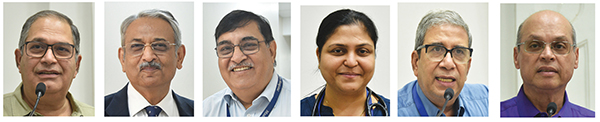
From l: trustees Homi Katgara and Dr Gustad Davar, medical director
Satyendra Nath Mehra, assistant medical director Dr Kavita Prabhakar Pai,
chief executive officer (CEO), Dr Vispi Jokhi and joint CEO Khushrow Major
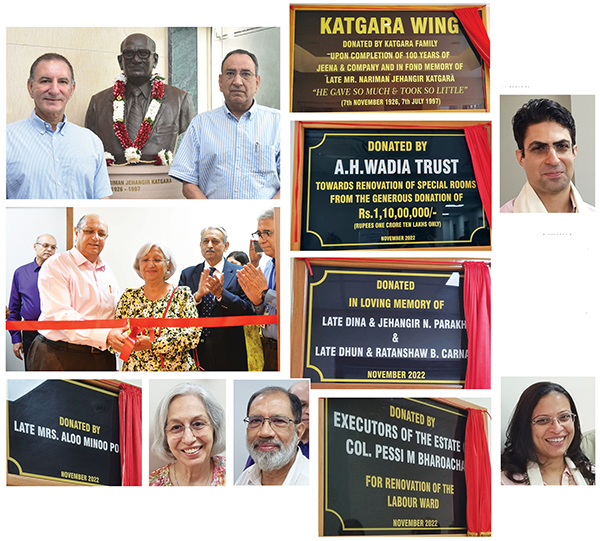
From l, 1st row: Sam and Jehangir Katgara; Adil Wadia representing A. H. Wadia Trust
2nd row: Jimmy and Veera Parakh, (in background): Khushrow Major, Drs Gustad Davar and Vispi Jokhi;
3rd row: Jeroo and Phiroze Vajifdar; Farzana Doctor representing Bharoacha Trust
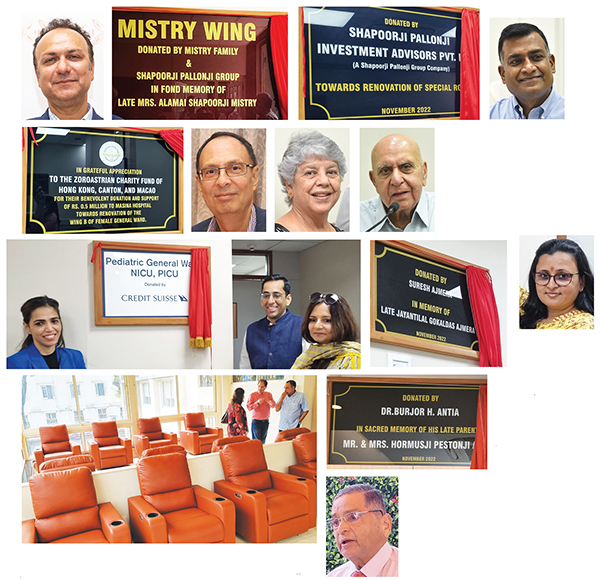
From l, 1st row: Shapoor Mistry and Rajesh Agarwal,
2nd row: Neville Shroff of the Zoroastrian Charity Funds of Hongkong,
Canton and Macao, Bachi and Dinshaw Tamboly
of the World Zoroastrian Organisation Trust Fund
3rd row: Sharmeen Kutky, Ashish Gupta and Zahabiya Officewala;
Nehal Ajmera representing the Ajmeras;
4th row: waiting room for relatives of ICU patients;
Burjor Antia; below: Behram Khodaiji
A new chief financial officer is slated to join the Hospital in January, said Katgara. This should make the financial controls tighter. "Much has already been done” on the financial front, noted the trustee who is a partner in the reputed, 120-year-old logistics firm, Jeena and Company, one of India’s largest freight forwarders.
Parakh, a former director in SP who is credited by many for helping the Hospital turn the financial corner, said during his four-year
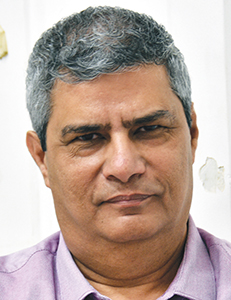 association with the medical institution it had "undergone a sea change…We’ve still not reached where we want to be. (But) we’ve made tremendous progress.” The Hospital treated around 120 patients at a time during the Covid pandemic with "a very good success ratio.” There was "confidence that Masina can deliver,” Parakh said.
In the past, charitable hospitals were dependent on donations and/or a large corpus to fund the institutions. But, he believes, "It’s important to have a self-sustaining model.” If "quality service to the patient” is assured, "revenues will follow.” The profits earned could then be ploughed back to benefit patients. Noting that non-governmental organizations are keen to give funds for general wards but not individual rooms, he felt it was essential "to have executive suites and single rooms to attract the more affluent clientele.” Two new luxurious suites have been added, one funded by Parakh and his wife, Veera, in memory of his parents and the other by Pushpa Singhal, mother-in-law of Rajesh Agarwal, the managing director of SP Investment Advisors.
As the Hospital’s chief executive officer (CEO) Dr Vispi Jokhi mentioned in his vote of thanks, Jimmy "not only donated the amount but ensured a first for Masina in terms of hospitality.” As Jimmy explained, "The basic health care facilities remain the same for all…They are affordable…The frills (cost) extra.” He pointed to the new, well-lit waiting room with reclining chairs for relatives and others who attend to the non-medical well-being of patients in the intensive care units (ICU). Each ICU bed is assigned a chair. "Infrastructure and ambience matter,” he observed. An executive health program is also envisioned. Even 100-year-old firms like Jeena and SP "know when to change.”
Major, a former longtime employee of Jeena, said the Hospital had embarked on "a relentless pursuit of excellence.” Sixteen areas of upgradation that he termed "quadrants,” had commenced prior to the pandemic. The utmost attention was given to the operating theaters where Davar’s inputs were critical. Major termed Davar "the driving force behind the success of the project.” Pointing out that as "the highest infections are carried through air,” filters were installed to minimize that risk. The number of ICU beds had been increased from nine to 25. Patients in the ICU who require dialysis can avail of the facility right there without being shifted.
The Hospital "wants to stop outsourcing,” where possible. "This is an integral aspect of monitoring quality.” Major commended the work put in by the Hospital’s former joint CEO Behram Khodaiji who now heads the Ruby Hall Clinic group of hospitals in and around Poona.
Amongst the donors mentioned by Jokhi are the A. H. Wadia Trust, Agarwal, Singhal, Smt Premlata Vanjara Charities, Jeroo Vajifdar, Aspy Gotla, Credit Suisse, The Zoroastrian Charity Funds of Hongkong, Canton and Macao, World Zoroastrian Organisation Trust Fund, the Col Pessi M. Bharoacha estate and Antia.
Masina’s legacy
The small sapling of health care planted by devoted and dedicated Dr Hormasji Manekji Masina more than 120 years ago has grown into a huge tree providing a wide range of medical facilities under its sheltering umbrella. Thousands of people benefit from receiving treatment here irrespective of caste, creed or religion. Masina was the third Indian doctor to obtain fellowship of the Royal College of Surgeons in 1898. He dreamt of setting up an institution where the weaker sections of society could be treated and in 1902 started a small hospital with four patients in a building at Clare Road, Byculla. Within five years, two adjacent buildings were acquired to accommodate over 100 patients. Later, Masina found it advisable to form a trust with prominent persons on board for the proper application and administration of funds donated by the general public. On September 8, 1907, he created a trust with donations received from various individuals and trustees such as Sir Shapurji Burjorji Bharucha, Jehangir Novroji Gamadia and Merwanji Nusserwanji Wadia.
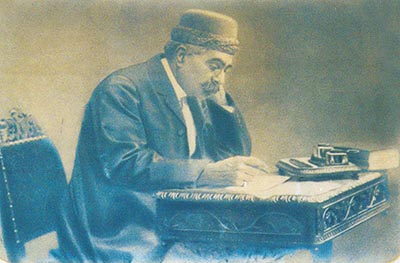
Dr Hormusji Manekji Masina
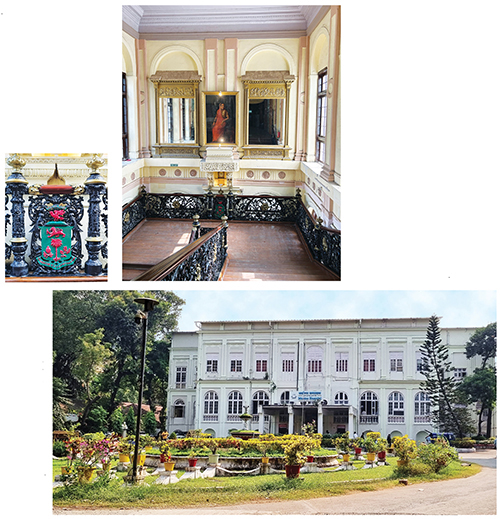
Top l: Sassoon coat of arms, Top r: wrought iron staircase with portrait of Jerbai Masina; above: Heritage Building
The history of hospitals in the city of Bombay reveals that Masina Hospital, established in 1902, is among the first private medical institutions. In 1907 the founder acquired the building Sans Souci (meaning, without a care) with its sprawling grounds from the Sassoon family for the Hospital. The building has now been declared a heritage structure.
A number of stalwarts have been associated with Masina Hospital. Among the leading lights were Dr Rustomji Billimoria, a renowned physician, Dr Bomi Billimoria, a pioneer in thoracic surgery, Dr Ardeshir Kohiyar, senior consultant in general medicine, Col Daly Bharucha, Dr Murzban Motashaw, Dr S. Balse and Dr Dinyar Gamadia, cardiologist. The first open mitral valvotomy (to increase opening of narrowed valves) in Bombay was performed at Masina. The first neonatal care unit in the city was started at Masina by Dr Jer Master who was later joined by Dr Mahrukh Joshi.
Masina Hospital is the only private health care institute in the city which has worked throughout two pandemics, the Spanish flu in 1918 and Covid-19 a century later. Through these difficult times the Hospital provided quality care to all, including the Parsi community.
Masina Hospital is credited with a surgery for patent ductus arteriosus (opening between two blood vessels leading from the heart), the first cardiac surgery in Bombay. And on December 10, 2020, history was created when the first heart transplant surgery was performed on a very critical patient suffering from heart failure.
Thanks to the generous donations by trustees, consultants and the public, in its 100th years Masina Hospital was able to build a new building where most of the requirements of a modern institution are met. The journey of upgrading continues. (The Hospital) owes gratitude to Hormasji and Jerbai Masina.
Source: Masina Hospital Trust website www.masinahospital.com
◆ ◆ ◆
From the archive