
The Tata trajectory
THE STORY OF TATA: 1868 to 2021 by Peter Casey. Published in 2021 by Penguin Random House India Pvt Ltd, 4th Floor, Capital Tower 1, M. G. Road, Gurugram, 122002. Pp: xx + 207. Price: Rs 699 (hardback)
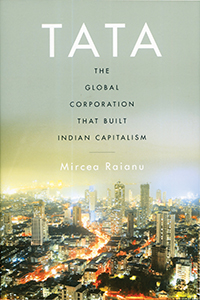
TATA: The Global Corporation That Built Indian Capitalism by Mircea Raianu. Published in 2021 by Harvard University Press, Cambridge Massachusetts. Pp: 291. Price: Rs 699, US $ 39.95.
There must be many, both among readers of this journal and in the wider world, whose admiration for the House of Tatas may have dimmed in recent years. While there are multiple reasons why this is so, it is a safe bet that at the top of the list must be a perception — strongly felt among those who have known, watched and grown up with the Tatas — that some of the ethical sparkle  which made this remarkable entity stand out in the Indian business firmament began to wear off after the departure of J. R. D. Tata nearly three decades ago. The ensuing period also saw a marked transformation in the management style of the Tatas, with the old patrician ways yielding to a more corporate approach, marked by, among other things, the adoption of brasher methods of doing business. Some of these developments were, of course, the result of a changing business environment, especially at the global level where the Tatas have become a formidable presence since India shook off its oppressive regulatory yoke in the early 1990s. Whether the changes were for the good will remain a matter of debate for a long time to come, but few can deny that recent ructions, especially over leadership of the group and the odd scandal, have only raised troubling questions.
Against that backdrop, the Tatas have attracted considerable public scrutiny and comment in recent years. In addition to extensive coverage in the press and electronic news media on a scale unimaginable even a generation ago, the group has been the subject of many books, some of which were published in the aftermath of the Cyrus Mistry saga, three of which have been reviewed in these columns (see "Triad of takes on Tata,” Books, Parsiana, November 21-December 6, 2020). Two further tomes have made their appearance more recently, both taking a more historical view of the group, albeit from different angles and with significant variations in the perspectives they bring to bear on the treatment of the subject.
The first is by Peter Casey (pictured), an Irish-American businessman who came into the limelight when he (unsuccessfully) contested the presidential election in his native Ireland in 2018. It starts off with a potted history of the Tata group, with the obligatory nod to the visionary qualities of Jamsetji Tata and so on, but the bulk of the book is a thinly disguised panegyric on Ratan Tata and an unabashed defence of his side in the messy skirmish with Mistry. This is hardly surprising given that the book has been described, in its dust jacket, as an "authorized” work. Casey talks about the "many wonderful hours” he spent with Ratan who, he notes, "very graciously allowed me to record (those conversations)” — language which may not sit well with the author’s real or perceived independence and objectivity. No less tellingly, the list of people interviewed for the book has a notable absentee: Mistry who, Casey observes in a footnote, "declined to be interviewed for this book” (there is also a conspicuous lack of names on the list of people who may be seen as sympathetic to the Mistry cause, although Casey notes that some of his interviewees preferred to remain anonymous).
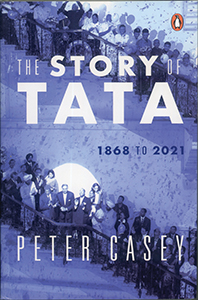 On the fight itself, there are no prizes for guessing on whose side Casey’s sympathies lie. Which is, by itself, not necessarily a reason to censure him, although astute readers will probably be justified in expecting a more rigorous approach to commenting on such complex tussles. Consequently, the following declamation, inserted by Casey at the beginning of the book, is likely to raise a hollow laugh in many who manage to wade through its contents: "The purpose of this book is not to ‘knock’ or criticize any particular party. The purpose is to give a deeper understanding of the events that led to one of the most amazing days in Indian business the day Mistry was dismissed as chairman of Tata Sons. Most of the books and articles written so far have been very one-sided, presenting Cyrus’s version of events.”
Unsurprisingly, there is much in the book in the way of praise for the ethos and the ethical moorings of the Tata group, including references to the impact of religion ("Zoroastrian altruism”) on the group’s evolution. There are also repeated allusions to the "Tata flame” lit in 1868 by Jamsetji Tata; that flame, says Casey pointedly, had eight "key protectors” in the entire history of the group who cherished and "passed it on undiminished.” And then comes the following statement which leaves little doubt about Casey’s estimation of Mistry: "Although Cyrus Mistry was on the Tata board for a total of 11 years — six as a member, one as vice chairman and four as chairman — it is unlikely that he would qualify as a protector of the flame.”
The book does offer some insights into both the evolution of the Tatas over the decades and the character of key players who shaped its destiny — but the treatment is neither particularly rigorous nor outstandingly comprehensive (those looking, for example, for a discussion on the Tatas’ involvement in the opium trade with the Far East towards the end of the 19th century will look in vain). On the presentational side, the lack of a back index — a perennial failing in Indian book publishing — makes the book less than reader friendly. But the book is likely to please many in Bombay House, especially as it comes from someone outside India.
By contrast, the second book, by Mircea Raianu (pictured), a young historian working in an American university is a more substantial and less partisan piece of work. It has the disadvantage of being written in an academic style which may put off some readers, but the writing is far from stodgy. A more serious limitation of the book, however, is that, temporally, it only covers the period up to the late-1970s, which means that none of the developments and the controversies of recent years (or even decades)  feature in it, except briefly in an epilog. The rationale offered by Raianu for this arbitrary cut-off has to do with a seminal event of the time: "(T)he Emergency declared by Prime Minister Indira Gandhi brought the overt conflict between big business and the state to an abrupt end, sacrificing regulation on the altar of boosting productivity. The Emergency also broke apart the alliance between big business and oppositional socialist politics, paving the way for market reforms and reglobalization” in the 1990s.
The book relies quite heavily, as academic works often do, on archival material. Raianu is, generally speaking, quite complimentary about the Tata Archives (based in Poona and Jamshedpur), but not effusively so. On the plus side, he acknowledges that "(u)nlike many state archives in India, its holdings are meticulously preserved and made accessible to researchers with minimal bureaucratic hassle.” But he also notes that "some key sources, including the personal papers of founder Jamsetji Tata and his sons, have been lost, destroyed or deliberately concealed to preserve the group’s reputation.” (A question that can legitimately be asked to counter the last-mentioned comment is: how can Raianu be as sure about the concealment as he seems to be?)
Structurally, Raianu’s commentary is arranged largely chronologically. The six chapters which comprise the book are broken up into two parts, the first covering nearly a century before World War II and the second some three decades following the end of that War. There is also a thematic aspect to the structure, which he explains thus: "Chapters 1 and 4 tell the political and economic story of Tata’s expansion, with an emphasis on transnational financial connections with East Asia and the United States. Chapters 2 and 5, centered on Jamshedpur, explore shifting modes of corporate governance, from legal struggles to secure sovereign control over land to the interplay of paternalism and scientific management in labor control. Chapters 3 and 6 trace the institutionalization of philanthropy, the networks of expertise it generated, and its eventual mobilization against the state through the political language of ‘corporate social responsibility.’”
The analysis of these matters is as competent as it is illuminating. But Raianu’s canvas is spread wider. While tracing the fortunes of the expanding Tata empire, he also throws enough light on the political and economic forces which were at play during the decades under discussion as to give the reader more than a flavor of the challenges and opportunities that successive stewards of the group were faced with. To that extent, the book offers a window into Indian history, no less, in the period leading up to, and immediately following, independence from British rule.
 Along the way, there are interesting vignettes about institutions and personalities who influenced, or attempted to influence, the course of political and economic thinking: the Forum of Free Enterprise, the Indian Committee of the Congress for Cultural Freedom, the Fair Trade Practices Association, and people like Jayaprakash Narayan, Minoo Masani, and A. D. Shroff — names which are now largely forgotten. Raianu captures the atmosphere and tenor of those times well, including the reluctance of capitalists themselves to stick their necks out in the cause of economic freedom [he quotes Shroff bemoaning the "moral cowardice of the businessmen of India” and notes that even J. R. D. Tata was unwilling to speak up too loudly in case that "jeopardize(d) his relationship with (Jawaharlal) Nehru”].
The book ends with a brief but revealing recapitulation of the tumult which surrounded the Emergency imposed by the late Prime Minister Indira Gandhi, including J. R. D.’s controversial support for it which stood in sharp contrast to the very public and vigorous opposition from another leading light of the Tatas, Nani Palkhivala. The period immediately following the lifting of the Emergency did not augur well for the Tatas, with, among other things, the patriarch of the group coming in for sharp criticism from one of the senior ministers in the government which replaced Gandhi’s.
The epilog provides Raianu’s thoughts on more recent events, including the impact of India’s economic liberalization on the Tatas; the criticisms that followed the group’s successive acquisitions of the Anglo-Dutch steel giant Corus and British carmaker Jaguar Land Rover; the Nano car fiasco; and l’affaire Cyrus Mistry (of the last, Raianu’s verdict is: "The ensuing public scandal severely tarnished the group’s reputation, while bringing its history into sharp focus”). The book is extremely well produced and, unlike the Casey volume, has a handy back index. VENKAT IYER
Iyer is a UK-based barrister and legal academic.