
Cover Story
Tata at the top
Jamsetji Tata’s largesse, continued by succeeding generations, earns the industrialist the epithet of the most generous individual of the last century
Editors’ note: Since the naming of Jamsetji Tata as the highest ranking Philanthropist of the Century coincided with the 90th death anniversary of his daughter-in-law Lady Meherbai Tata in June 2021, both are featured in this write-up.
Whilst American and European philanthropists may have dominated the thinking of philanthropy over the last century, Jamsetji Tata, founder of India’s Tata group, is the world’s biggest philanthropist.” With Tata’s largesse value estimated at USD 102.4 bn (Rs 7,60,778 crore), he was at the top of the Philanthropists of the Century ranking by EdelGive Foundation and Hurun Research released on June 23, 2021. His contribution comprised nearly 12% of the USD 832 bn (Rs 61,81,260 crore) donated by the top 50 billionaires.
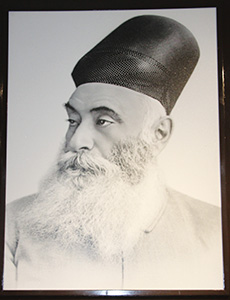
Jamsetji Tata Photo: Jasmine D. Driver
.jpg)
From far l: Jamsetji, Sir Dorabji and Lady Meherbai Tata Photo: Tata Central Archives
Bill and Melinda Gates whose total donations amounted to USD 74.6 bn (Rs 5,54,273 crore) and Henry Wellcome with USD 56.7 bn (Rs 4,21,246 crore) were ranked second and third in the list. The ranking is based on Total Philanthropic Value (TPV), calculated as the current value of the assets and distributions, adjusted for inflation. The world’s 50 most generous individuals in the last century came from six countries, led by the US with 39, followed by the UK with five, China with three, India with two (the second one being Azim Premji, ranked 12th) and one each from Portugal and Switzerland. Education and healthcare, followed by social welfare, were the most popular causes they supported.
Guesstimating that there must be 7,500 billionaires in the world today, Hurun Research surveyed and referred to the annual reports of many of the world’s largest foundations as well as some of the world’s most generous individual philanthropists, including those from the Hurun Global Rich List, the Hurun China and India Philanthropy List, and meticulously cross-checked the facts. EdelGive Foundation has been helping build and expand philanthropy in India by funding and supporting the growth of high-caliber, small to mid-sized nongovernmental organizations committed to empowering vulnerable children, women and communities.
Nearly 66% of the top 50 philanthropic institutions are managed by founders or founding family members. Twenty percent of foundations featured in the list were established over one hundred years ago. The oldest foundation, J. N. Tata Endowment for higher education (1892), was followed by the Carnegie Corporation of New York (1911) and Rockefeller Foundation (1913).
"Jamsetji Tata made his fortune in the 1870s after floating Central India Spinning Weaving and Manufacturing Company,” according to the report. The TPV of Tata is made up of 66% of Tata Sons. A firm advocate of pathbreaking and not patchwork philanthropy, Jamsetji believed, "What advances a nation or a community is not so much to prop up its weakest and most helpless members, but to lift up the best and the most gifted so as to make them of the greatest service to the country.”
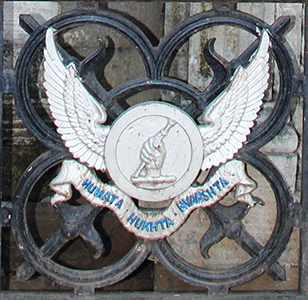
Emblem at Esplanade House where the Tata family resided Photo: Jasmine D. Driver
.jpg)
Above 1st row, from l: renovated Park in Jamshedpur;
newly installed statue of Meherbai; bottom: diamond pavilion Photo: Tata Central Archives
.jpg)
Top: Dorabji and Meherbai after their wedding;
above: Meherbai with tennis racket (Dr J. J. Bhabha collection) Photos: Tata Central Archives
.jpg)
Meherbai and Dorabji Tata Photo: Tata Central Archives
Jawaharlal Nehru, India’s first prime minister, often alluded to Tata as the "One Man Planning Commission.” Just as he built the iconic Taj Mahal Hotel in Bombay, Tata, the trailblazer, laid the groundwork for many avant-garde projects: a hydro-electric plant to help Bombay become a "smokeless city;” an iron and steel industry; an institute of higher learning.
Inspired by a speech by Lord Reay who was then governor of Bombay, Tata decided to set up a university that would give impetus to research and learning. In 1898 he set aside 14 buildings and four landed properties to create an endowment for this purpose, the founder’s largesse was reflected in an exhibition at the Tata Central Archives. His donation was worth Rs 30 lakhs which was half of his wealth. The other half he had left to his two sons. The Indian Institute of Science, the first of its kind in Asia, finally opened in 1911, seven years after Tata’s demise in 1904.
The credit for bringing to fruition the illustrious patriarch’s projects goes to the drive and enthusiasm of his elder son Dorabji, the resolve of his younger son Ratan and the support of their cousin R. D. Tata [father of J. R. D. (JRD) Tata]. Acknowledging Jamsetji’s pioneering spirit, Dorabji had noted, "Kind fate has prompted me to help in bringing to completion his inestimable legacy of service to the country.”
The legacy immortalized
At the time of Jamsetji’s death, the Tata enterprises comprised three textile mills and the Taj Mahal Hotel. Under Dorabji, who was knighted in 1910, the business had flourished to include an integrated steel plant, three electric power companies, an edible oil and soap company, two cement companies, an insurance company and an aviation unit pioneered by JRD.
A particularly challenging time for Dorabji was in 1924 when he had embarked on an ambitious expansion plan for Tata Steel not expecting post-War difficulties in the West and an earthquake in Japan to lead to a fall in the price of steel. Insufficient funds to pay wages to the labor compelled Dorabji and R. D. Tata to visit the Imperial Bank where Dorabji pledged his entire personal fortune, including his wife’s 245.35 carat Jubilee Diamond, ranked as one of the world’s largest diamonds — twice as large as the Kohinoor — to obtain a loan. The crisis was averted when Tata Steel got a firm order for steel rails over the coming years.
Through "a resplendent steel tubular structure and a pavilion … the legacy of the famous Jubilee Diamond has been immortalized” at the renovated Sir Dorabji Tata Park in Jamshedpur, noted a report in The Telegraph (TT). On the occasion of the Park’s silver jubilee and Meherbai’s birth anniversary last October, her statue was unveiled at the southern end, directly facing her husband’s.
Designed by architect Nuru Karim, the diamond structure and the pavilion form an integral part of the overall redesign of the two-and-a-half-acre Park. "Spanning 16m by 12m… weighing 45 metric tons, the structure rests on the proverbial ‘diamond’ tip, rising outward from the ground to meet the sky,” stated the report. "The Jubilee Diamond structure also houses a central amphitheater. This space allows visitors to experience the brilliance of the diamond pavilion from within its interior.”
"The pavilion and Lady Meherbai’s statue are thoughtful additions…The Park… is a veritable salute to Sir Dorabji and Lady Meherbai for their contributions and sacrifices that helped in creating the inimitable legacy of Tata group, Tata Steel and our city of Jamshedpur,” Dr Jamshed Irani, former managing director of Tata Steel was quoted by TT.
A book #Tata Stories by author and Tata Group corporate executive Harish Bhat, released in June, coincided with Meherbai’s 90th death anniversary. It reveals some lesser-known stories about her and other group executives and family members. An earlier incisive book was Lady Tata, A Book of Remembrance. Compiled by K. Natarajan and published on her first death anniversary, it included reminiscences of her friends and admirers (see "Grace and graciousness,” Parsiana, September 1996).
Dorabji Tata was fortunate that he had "always at his side a wife who was as staunch in the pursuit of these filial and patriotic duties as himself,” credits Sir Stanley Reed, editor of The Times of India, in his Foreword to Lady Tata. Despite the 20-year age difference between Dorabji and Meherbai (née Bhabha), Jamsetji who had played a role in bringing them together was convinced they would make a good match.
At the time of Jamsetji’s death, the Tata enterprises comprised three textile mills and the Taj Mahal Hotel. Under Dorabji, who was knighted in 1910, the business had flourished to include an integrated steel plant, three electric power companies, an edible oil and soap company, two cement companies, an insurance company and an aviation unit pioneered by JRD.
A particularly challenging time for Dorabji was in 1924 when he had embarked on an ambitious expansion plan for Tata Steel not expecting post-War difficulties in the West and an earthquake in Japan to lead to a fall in the price of steel. Insufficient funds to pay wages to the labor compelled Dorabji and R. D. Tata to visit the Imperial Bank where Dorabji pledged his entire personal fortune, including his wife’s 245.35 carat Jubilee Diamond, ranked as one of the world’s largest diamonds — twice as large as the Kohinoor — to obtain a loan. The crisis was averted when Tata Steel got a firm order for steel rails over the coming years.
Through "a resplendent steel tubular structure and a pavilion … the legacy of the famous Jubilee Diamond has been immortalized” at the renovated Sir Dorabji Tata Park in Jamshedpur, noted a report in The Telegraph (TT). On the occasion of the Park’s silver jubilee and Meherbai’s birth anniversary last October, her statue was unveiled at the southern end, directly facing her husband’s.
Designed by architect Nuru Karim, the diamond structure and the pavilion form an integral part of the overall redesign of the two-and-a-half-acre Park. "Spanning 16m by 12m… weighing 45 metric tons, the structure rests on the proverbial ‘diamond’ tip, rising outward from the ground to meet the sky,” stated the report. "The Jubilee Diamond structure also houses a central amphitheater. This space allows visitors to experience the brilliance of the diamond pavilion from within its interior.”
"The pavilion and Lady Meherbai’s statue are thoughtful additions…The Park… is a veritable salute to Sir Dorabji and Lady Meherbai for their contributions and sacrifices that helped in creating the inimitable legacy of Tata group, Tata Steel and our city of Jamshedpur,” Dr Jamshed Irani, former managing director of Tata Steel was quoted by TT.
A book #Tata Stories by author and Tata Group corporate executive Harish Bhat, released in June, coincided with Meherbai’s 90th death anniversary. It reveals some lesser-known stories about her and other group executives and family members. An earlier incisive book was Lady Tata, A Book of Remembrance. Compiled by K. Natarajan and published on her first death anniversary, it included reminiscences of her friends and admirers (see "Grace and graciousness,” Parsiana, September 1996).
Dorabji Tata was fortunate that he had "always at his side a wife who was as staunch in the pursuit of these filial and patriotic duties as himself,” credits Sir Stanley Reed, editor of The Times of India, in his Foreword to Lady Tata. Despite the 20-year age difference between Dorabji and Meherbai (née Bhabha), Jamsetji who had played a role in bringing them together was convinced they would make a good match.
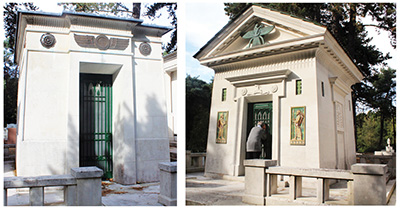
Mausoleums of Meherbai and Dorabji (r), and Jamsetji at Brookwood cemetery Photo: Parinaz Gandhi
Before Meherbai succumbed to leukemia in Wales in 1931 she had specified that her ashes be interred in the cemetery at Brookwood in London, on a plot of land next to the resting place of Jamsetji. Within a year of Meherbai’s demise, Dorabji died. But not before he decided to put his wealth, estimated at one crore rupees into a trust for secular use for the advancement of learning and research, the relief of distress and other charitable purposes. This was the beginning of the Sir Dorabji Tata Trust which later financed the setting up of the Tata Memorial Hospital. Dorabji also endowed the Lady Tata Memorial Trust with a corpus of Rs 25,00,000 for research into leukemia, and the Lady Meherbai D. Tata Education Trust (partly from public donations) for the training of women in hygiene, health and social welfare, noted Tata group biographer Rusi Lala in The Heartbeat of a Trust.
Giving freely
"Blessed are those that give…more blessed are those that give wisely, generously and selflessly,” believed Meherbai. Considering Parsi charities "ridiculous” and "foolish” for adopting the dole system, in a letter to one Serenbai Cursetjee, she wrote, "There is not only indolence in our Parsi poor but also a sense of false pride and snobbishness in refusing to take up any work or profession which should be severely knocked out of them… Where necessity must and there is no choice left, one has to make the best of things and to undergo any hardship in order to earn an honest living rather than be dependent on relations and friends or receive doles from any charitable concern or individual.”
Education was yet another cause dear to Meherbai. "An education which does not affect character but merely imparts information is not education in the true sense,” she realized. The two greatest needs in India, according to her, were the need to educate men to the idea that women could achieve great heights; and the need to educate both men and women in the science of rearing children with sound character.
During the Bombay riots in 1929, the National Council of Women of which Meherbai was "the life and soul” offered to sell food at cost price to residents of Byculla who were unable to procure provisions. The mayor of Bombay insisted, "My volunteers would not consider it graceful for ladies to sell food.” Undeterred Meherbai responded, "We ladies did not come here to be graceful. We came here to be useful.” A resolute Meherbai and the team continued with their plans and donated the monies collected to the Red Cross, hospitals and to soldiers and sepoys posted in the disturbed areas. Earlier, her active work to raise contributions during the War years had earned her a CBE [Commander of (the Order of) the British Empire].
The role of women in nation-building was a cause dear to the Tata daughter-in-law. In a letter to Rameshwari Nehru, chairman of the Women’s Committee of the Commonwealth of India League, Meherbai wrote, "I have always held that when the women of a country take their just share in the affairs of their country, that country must rise to be one of the great countries of the world. And so it will now be with our beloved India… I have no words to express my admiration of (Indian women’s) courage, their steadfastness and determination… and their noble example to stand by their cause unflinchingly and untiringly.”
As president of the Bombay Presidency Women’s Council, Meherbai exhorted, "Give of your best, and give freely whether it be money or service... It is not an easy matter… service for others requires human understanding and sympathy, tolerance, tact, the ever-constant desire to serve and to help others, and the setting aside of one’s self in the performance of this labor of love.”
◆ ◆ ◆
From the archive