
Events & Personalities
“Not out of choice”
Should a Parsi who succumbs to the Covid-19 virus and whose body has by law to be cremated, be denied the geh sarna prayers at Doongerwadi? Dastur (Dr) Firoze Kotwal opines that even if the corpse is not present, priests at Doongerwadi may recite the geh sarna prayer facing the dakhmas. So when Bombay Parsi Punchayet (BPP) trustee Noshir Dadrawala received a call from Ervad Harvesp Madon of the S. F. Jokhi Agiary at Godrej Baug on June 27, 2020 inquiring if the procedure outlined by Kotwal could be followed for Godrej Baug resident Percy Elavia, he assented. "It was neither the desire of the deceased to be cremated nor was it the wish of his bereaved survivors,” the trustee explained in a WhatsApp message the next day.
"In the Zoroastrian religion there is the concept of Shayest Ne-Shayesht (Proper and Improper). The general principle is: do the best you can in the worst of times. Meaning, if perforce and not out of choice, a Parsi Zoroastrian is buried or cremated, the ceremony can and should be performed and it would be ‘proper’ to do that...Dasturji Kotwal had told many of us that this used to be the custom in ancient times, especially during times of war and such calamities,” the trustee noted. But as all the trustees did not approve of the custom, the prayers were not recited at Doongerwadi. "I have already apologized to the bereaved family...and the priest...I hang my head in shame,” stated Dadrawala (see "Paidusts in the pandemic,” Editorial Viewpoint, pg 4).
Earlier London-based Dastur (Dr) Jamasp JamaspAsa in an email dated June 5 to other priests and the BPP trustees noted, "It is imperative that all the four pillars of the dakhmenashini system be followed — sachkar and sagdid, geh sarna, dakhmenashini and the sarosh ni kriyas if the deceased is to be consigned to the dakhma and all the prayers performed at the bunglis there.”
He believed a justification could be made out for permitting Covid infected corpses to be consigned to the dakhmas: "There is no evidence of persons having become infected from an exposure to the bodies of persons who died from Covid-19,” the surgeon averred, citing from the World Health Organization (WHO) findings and statements from a Bombay Municipal Corporation (BMC) official.
"In the Zoroastrian religion there is the concept of Shayest Ne-Shayesht (Proper and Improper). The general principle is: do the best you can in the worst of times. Meaning, if perforce and not out of choice, a Parsi Zoroastrian is buried or cremated, the ceremony can and should be performed and it would be ‘proper’ to do that...Dasturji Kotwal had told many of us that this used to be the custom in ancient times, especially during times of war and such calamities,” the trustee noted. But as all the trustees did not approve of the custom, the prayers were not recited at Doongerwadi. "I have already apologized to the bereaved family...and the priest...I hang my head in shame,” stated Dadrawala (see "Paidusts in the pandemic,” Editorial Viewpoint, pg 4).
Earlier London-based Dastur (Dr) Jamasp JamaspAsa in an email dated June 5 to other priests and the BPP trustees noted, "It is imperative that all the four pillars of the dakhmenashini system be followed — sachkar and sagdid, geh sarna, dakhmenashini and the sarosh ni kriyas if the deceased is to be consigned to the dakhma and all the prayers performed at the bunglis there.”
He believed a justification could be made out for permitting Covid infected corpses to be consigned to the dakhmas: "There is no evidence of persons having become infected from an exposure to the bodies of persons who died from Covid-19,” the surgeon averred, citing from the World Health Organization (WHO) findings and statements from a Bombay Municipal Corporation (BMC) official.
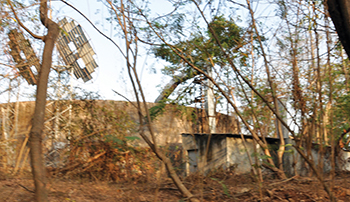
Covid-19 victim denied geh sarna prayers at
Bombay’s Doongerwadi (representational image)
"We could still continue to use our dakhmenashini system for disposal of the dead bodies if we take the requisite precautions and adhere to the guidance drawn out by the WHO and the GoI (Government of India) Guidelines. The staff at the Doongerwadi must ensure that the number of people attending the paidust and other prayer ceremonies should be as per the numbers prescribed... to maintain social distancing.”
The pallbearers would have to be trained to don the PPE (personal protective equipment) suits. Noting the sachkar ceremony requires a family member to cleanse the body with taro and perform the kusti for the deceased, he stated full PPE suits will "need to be provided for the family member. It is the absolute prerogative of the family member whether they wish to partake in this ritual or not.”
In the "unfortunate event that one of the (pallbearers)/members of staff test positive for Covid-19, Doongerwadi (will have to be) quarantined for a 15-day period thereby diverting all the paidusts elsewhere,” he cautioned.
Traditionalist bloggers The Parsee Voice opposed the recitation of prayers for those cremated on account of the Covid-19 virus. They claimed the practice referred to by Kotwal was "suggested almost 200 years ago… with different circumstances and not for those cremated or buried... One more frightful consequence that could arise in future is that this practice could be turned into a rule by a future set of trustees in all cases of cremation or burial.”
◆ ◆ ◆
From the archive