
Zoroastrians Abroad
Botany at Bhabha’s
The Department of Botany of the newly constituted Dr Homi Bhabha State University (HBSU) in Bombay was inaugurated by Dr Ardeshir Damania of California on February 12, 2020. HBSU is the first cluster university in Maharashtra bringing together The Institute of Science (formerly Royal Institute of Science that was Damania’s alma mater), Elphinstone College, Secondary Training College and Sydenham College. The Institute of Science which is the lead institute of the University is the youngest among the constituent colleges, being 99 years old, while the Elphinstone College that is the oldest was established in 1835, according to the website of The Institute of Science, iscm.ac.in. Bhabha was also an alumnus of this Institute, noted a write-up by Ardeshir’s brother Minocheher Damania.
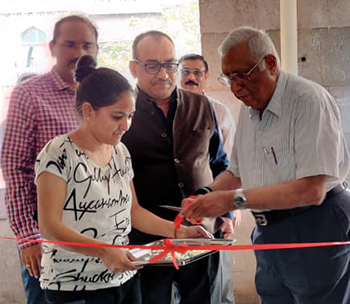
Dr Ardeshir Damania (right) inaugurating the Department of
Botany at the Dr Homi Bhabha State University
The purpose of this cluster university is to offer students "optimum use of resources of the constituent colleges… (with) wide options of learning with flexibility and to assist them with (a) student friendly support system… The choice based credit system (CBCS) will adopt a cafeteria approach where the students will be given freedom to select some courses as per their preferences…across the constituent colleges,” according to the website.
Presently working as a research associate geneticist in the Department of Plant Sciences at the University of California at Davis, Ardeshir was invited by the Institute of Science from where he had completed his Master’s in ecology and plant geography in 1972 to address the current students of botany on his career as a plant collector. A plaque and cash purse was presented to Ardeshir on the occasion.
Crop plant scientists have been drawing the attention of governments to the growing threat caused by the disappearance of the genetic resources of major crops which are staple food to billions, stressed Ardeshir in his speech. Seed samples stored at subzero temperatures are of little value to researchers and plant breeders who are constantly striving to improve crops, find a cure or resistance to plant diseases or pests, and survive adverse environmental factors thrown up by climate change and global warming, he added.
He stressed the importance of three types of "selection,” as explained by Charles Darwin in 1868, for survival of plants and animals. In methodical (or conscious) selection, there is a systematic attempt to modify according to some preset standard. In unconscious selection, the most suitable or valued individuals are retained and the rest destroyed without any thought to altering the breed. This process eventually leads to great changes. In natural selection, the individuals most adaptable to complex and changing environments survive and procreate, thus increasing the proportion of the fittest in a population.
Ardeshir recalled the lines from American poet Edgar A. Guest (1881-1959) who after buying some seeds from a nursery for his garden equated the purchase to "a miracle of life” in his well-known poem A Package of Seeds: "The seeds were worth only a dime/ but possessed a power no man could create,/ a dime’s worth of mystery, destiny, and fate.
◆ ◆ ◆
From the archive