
The “golden” years?
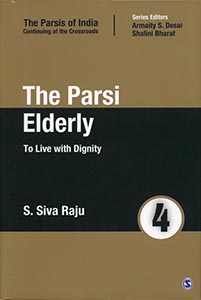
The Parsi Elderly: To Live with Dignity by S. Siva Raju. Volume 4 of the series The Parsis of India: Continuing at the Crossroads by Armaity Desai and Shalini Bharat. Published in 2017 by SAGE Publications India Private Limited, B-1/I-1 Mohan Cooperative Industrial Area, Mathura Road, New Delhi 110044; website: www.sagepub.in. Pp: xlvi + 364. Price: Rs 9,900 (for the four-volume set).
Thirty-one percent of Parsis are "elderly.” Japan, the country with the oldest population, has only 23%. S. Siva Raju’s (pictured) 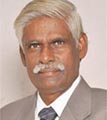 The Parsi Elderly, the fourth and last volume of the Tata Institute of Social Sciences’ (TISS) study The Parsis of India, is an overdue study on our aged community. It is a treasure trove of data, collected through the survey method. Ten percent of Parsis identified by the 2001 census as 60+ were chosen at random and 40% responded. In addition to this group of 835, 51 residents of old age homes were also surveyed.
Sadly, the data is not current. Surveys were administered in 2005-6 and no explanation is offered for why it only got published recently. The average age of respondents was 72 then. On average they were born in 1933 but the range around this year is large. The oldest would have just missed World War I and the youngest would have just missed being one of Midnight’s Children.
To say that this book tells the story of this generation would be an overstatement. It tabulates their responses in 134 tables and carefully interprets these according to gender and location (Bombay, rest of Maharashtra, Gujarat, and rest of India). Like the volumes preceding it, this one dispels some myths. It establishes, for instance, that the Parsi elderly in Bombay, despite proximity to more bounteous philanthropy, are worse off than Parsis in the rest of India on virtually every parameter — income, housing, health and loneliness. It dispels the myth of inadequate housing being a cause of late marriage. And it dispels the myth — at least for this generation — of Parsi affluence. Indeed, the data succeeds in capturing the "bleak and lonely existence” of their sunset years, and their strained finances.
But the elderly surveyed remain objects of study rather than subjects with a voice. The sole exception is one chapter out of 13 which provides case vignettes. And unlike the promise of the preface it does not succeed in "deepening the understanding of the Parsi worldview.” For that, or for shedding light on the Parsi-Indian’s hyphenated identity, one would have to turn to Rohinton Mistry’s novels or anthropologist Tanya Luhrmann’s The Good Parsi.
Since tables of numbers do not tell their own story the reviewers will try to do so here. The reviewers owe it to a generation that performed all its duties but did not get its due from its own children (the book is persuasive here) and (though the book is silent here) found itself on the wrong side of historical change. It found itself caught between a dying world and a world yet to be born, reaping the advantages of neither tradition nor modernity, of neither imperial preference nor liberalization.
 Surprisingly poor
The survey reminds that this generation inhabited a different world. The average respondent would have turned 58 (and usually retired) in India’s year of new beginnings — 1991. The modal male job was that of a bank clerk followed, interestingly, by "government service.” Parsis had shed their blue collar millwork in the previous generation but the professions of medicine, engineering and law, let alone management, were still uncommon. (And, as has been spoken of by other scholars, Parsi merchant-entrepreneurship declined after the end of imperial preference.) Women were usually homemakers, and, if they worked, they were typically teachers.
These economic facts would also allow us to understand a phenomenon the book documents well but does not explain — their poverty in old age. Forty percent said they had no assets and "60% said they had just enough finances to meet their basic needs.” And 14% had not enough, or no income! (For those in old age homes the situation was even worse.) The survey did not ask, and hence the book could not answer, the question of why. For that one would have needed to discuss the stagflation of the ’70s and India’s sorry experiment with socialism and statism. While the next generation had its mid-career coincide with the economic boom of the 2000s, this generation had its pensions and future provident funds eroded in mid-career. While the buying power of savings halved, improved healthcare sent life expectancy soaring from less than 70 to over 80, unexpectedly doubling the length of their post-retirement years. It is necessary for good social science not just to document but to explain. It is necessary for good social science to draw attention to this changing context, and not leave it to historians.
Abandonment and isolation
Unlike Parsis who had already moved to nuclear families, the elderly in other communities felt the economic hit less because of the continued prevalence of the joint family system, with younger earning members. And while other middle class communities from western India migrated, this generation of Parsis did not (only 31% had migrated even within India for work or marriage). And the migration of a number of their children overseas made things worse for this generation, not better. Particularly poignant is the vignette offered of a Mrs M who "advised her son to broaden his horizons abroad” but now languishes in an old age home, dependent on the kindness of strangers.
Raju also misses an opportunity to draw attention to numbers that point to a deep generational chasm, if not a war. What else can we call it when only 16% of the elderly said children were a "source of help;” when 78% do not want to share their financial details with their children; 38% do not want to bequeath their assets to their children, and less than two percent have made a will? Even a fact that sounds positive — that 62% of the elderly worried about their family problems "rarely or never” — really indicates deep alienation and isolation from one’s family and one’s children.
It should be noted that the problem is not one of couples from this generation not having had enough children. While easily available contraception had made families of six and eight kids now rare, couples from this generation did their "demographic duty.” Married women had an average of 1.9 conceptions, close to the replacement rate of 2.1. Nor was late marriage yet a big problem, with the first conception being, on average, at the age of 27. So the question arises, why then did the much noted Parsi population decline of 10% per decade begin in this generation’s child-bearing years, beginning with the census of 1961?
The answer to this lies in the high proportion of Parsi men and women who stayed single — 20%. Raju’s survey probes reasons for this issue well. He refutes the popular stereotype of Parsis remaining unmarried because of inadequate housing. Nor was it because they felt they could not afford it — both together account for less than 10% of responses. The two main reasons, each highlighted by 30% of unmarried respondents, were: "Did not want to find one” and "could not find a suitable partner.” Again, it helps to see this generation as caught between the old and new, and being on the receiving end of both. The decline of extended families and kajwali-bais (matchmakers) reduced opportunities on one hand, while the fact that only 40% of Parsi women of this generation ever worked, meant that opportunities to find Parsi mates at work were also few. We say Parsi mates because this was a generation that did not look outside the community. The survey reveals (incredibly!) that as many as 98% of those who married, married within the community! (Around 1986 the percentage of interfaith marriages was 14% or so. In 2019 the figure was 45% — editors)
The unmarried suffered severe consequences as they aged — greater feelings of isolation and abandonment leading to higher rates of self-admission into old age homes. The case vignette of Ms P, 79, an unmarried ex-nurse, who has lived in an old age home since the age of 44, after her mother’s death, typifies this tragedy.
Proposed reforms
Where Raju loses his reluctance to go beyond numbers is in his prescriptions for Parsi philanthropic practice. While some are whimsical (e.g. "Institutions, particularly in Bombay, need to consider having Parsi medical specialists visit these homes.” Why such parochialism?) most are spot on. He argues against "sinking money in brick and mortar” and instead stresses the need for providing direct services and subsidies to the elderly. Help at home for upkeep, personal care, nursing and meals on wheels, provided by reliable carers are sorely required. He argues that Parsis, once the leaders in enlightened philanthropy, need to adapt to new demographic and other realities; to move beyond "good heart and large pocket” to "good head.”
This advice makes a lot of sense. But the book as a whole leaves us asking more questions than it answers, because it is less interested in explaining than in providing data for others to interpret. Nor did it follow up its interesting survey findings with focus groups and interviews that could have sought to understand the dynamics of cause and of change. Nor does Raju even attempt to draw any connection with findings from the previously published TISS studies, though they are only sold as a four-volume collection.
This work describes itself as "socio-psycho-anthropological.” One cannot help but feel that this lost generation has lost out again; and that a historian, with skill and heart, would have done its sad story more justice before it went "gentle into that good night.”
Dr CYRUS and ROHAN VAKIL
Dr Cyrus has a doctorate in history from Yale University and is currently the principal of Bombay International School. Rohan studies social sciences at Skidmore College, New York.