
Events & Personalities
Of Jessavala and Kipling
The state owned Punjab National Bank is in the news recently for loans made to defiantly absconding merchant Nirav Modi and others. The founding board in the late 19th century, "had a common objective of providing... a truly national bank which would truly further the economic interest of the country,” notes the Bank’s website. Opened for business in April 1895, Lahore based merchant Edulji Cawasji Jessavala was among the first seven directors that included social reformer Sardar Dayal Singh Majithia, and businessman Lala Harkishen Lal among others. The Bank had its genesis in a letter written by freedom fighter Lala Lajpat Rai to a group of friends "insisting on an Indian joint stock bank as the first step in constructive Swadeshi [political movement that encouraged the boycott of foreign goods (and services) as a step toward home rule],” notes their website.
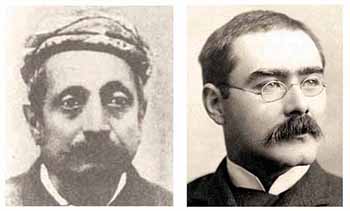
Edulji Jessavala (l) Photo: Hindustan Timesand Rudyard Kipling Photo: Wikipedia
There is little or no information on Jessavala on the Internet, but when Parsiana queried poet Adil Jussawala, he noted that Edulji was his "great-grandfather on the paternal side (who) managed the Lahore shop in the Jessavala chain of shops which specialized in foreign goods... They were called Europe shops (and were) spread across two or three cities in North India... He is buried, along with other Parsi stalwarts, in the grounds of an agiary (Avabai Ardeshir Cooper and Ardeshir Behramji Limboowalla Daremeher) in Lahore.” When Parsiana asked Adil if his parents talked about Edulji, he replied, "No, and except for my mother, not even about his (Edulji’s) only son Merwanji, my father’s father.”
Edulji was also a Freemason, added Adil. "He held a post in Lahore’s Lodge of Hope and Perseverance, of which (author) Rudyard Kipling was also a member, the youngest... (Edulji) must have held the post of secretary, as he signed and probably drafted the Lodge’s farewell letter to Kipling, wishing him Godspeed (they probably meant ‘good riddance’) when he left Lahore for Allahabad.” The poet stated that in his novel Kim, Kipling referred to the Lodge as "the big blue and white Jadoo Ghar (Magic House).”
◆ ◆ ◆
From the archive