
Events & Personalities
Pioneer Meheribai
"A faithful reproduction of the first photograph taken of an Indian lady” Meheribai Hormusjee Shroff which appeared in a 1911 book titled The story of my life written by her daughter Dosebai Cowasjee Jessawalla was shown on a walking tour that culminated at a photographic exhibition "Portrait of a nation, a nation in portraits” at Bombay’s Pundole Gallery on February 3, 2018. "Photography (was) in those days a profound mystery to a Parsi woman’s mind,” notes Jessawalla. "Meheribai is here represented in her widow’s weeds, which are always by us retained during widowhood. The likeness is so excellent that those who knew her in her lifetime will doubtless readily recognize her,” according to Jessawalla. The photograph, shown by city historian and blogger Dr Simin Patel who curated the walking tour, was taken in 1846, barely a decade after French artist and pioneering photographer Louis Daguerre took the earliest known image of a human in Paris. Meheribai’s husband was the brother of the founder of Alexandra Girls English Institution, Manockjee Cursetjee (Shroff).
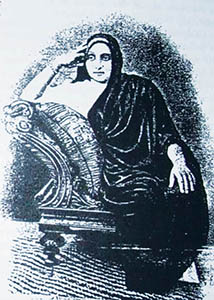
Meheribai Hormusjee Shroff: first known
photograph of an Indian woman
Photo courtesy: The story of my life
Quoting extracts from the book, Patel informed Parsiana that Jessawalla was among the first Indian women to be taught English by a tutor named Ms Ward, on Meheribai Shroff ’s insistence, at a school which was situated in that part of the Fort exclusively inhabited by Europeans, "a quarter scrupulously avoided by native ladies.” Jessawalla noted in her 297-page book that Patel shared with Parsiana that this created a scandal amongst the Parsis: the Jam-e-Jamshed and Chabook commented on Meheribai’s unorthodox actions.
"Some of these Parsi lordlings had decided to excommunicate Meheribai,” notes Jessawalla, but the intrepid woman "wrote to the instigator begging him to make his decision public, in order that she might claim the right to provide for herself and her family with a separate Tower of Silence for the reception of their bodies after death.”
◆ ◆ ◆
From the archive