
Comment
The sound of music
Anyone can learn to appreciate western classical music
When I was in my mid-20s, our group of Parsi friends would visit French Bank Building, situated on Homji Street, for the eagerly awaited weekly Saturday evening European classical music listening session of the Bombay Gramophone Society (BGS). We were around eight to 10 men and women, boys and girls, all around the same age or slightly younger, among an audience that numbered about 30 people on an average. The rest were elderly — a motley crowd of women and men, including our beloved old ‘Conductor Uncle’ — as one of us aptly christened him. And it was not for nothing that he had earned this sobriquet, for he sat  bolt upright, right in front and listened intently to the music, evidently soaking in every delightful, ravishing and thunderous aural nuance. But whither his tendency to direct? — he was always waving his arms about, with unmistakable authority and delightful recognition as one sound wave after another rolled gently onto the sandy beach or crashed with terrifying purpose against the weather-beaten granite rocks.
We were all so different, and yet had two things in common — a sort of unity in our diversity. We were all avid music-lovers, and we were all Parsis.
But what of that? Haven’t we always known that many Parsis have always passionately loved and enthusiastically promoted European classical music? I can almost hear you saying scornfully: "Tell us something we don’t know for a change.”
Ok, but tarry a moment, would you please? Fully one-third of us were young, considerably younger than the rest. Let us now compare this ratio with the corresponding average figure in present-day concerts at, say, the Tata, Jamshed Bhabha and Experimental Theatres of the National Centre for the Performing Arts — every Indian’s abiding pride and joy.
Well, these days, I daresay that the number of younger attendees barely make up five percent of the audience. And this is not an isolated phenomenon. This writer and several others have noticed the trend with dismay, as we are convinced, not out of maudlin sentiment but rather because of our own experiences over the years, that classical music is truly ageless. It brings about a gradual and more or less permanent beneficial change in the personality of serious, regular and enthusiastic listeners.
It is disheartening to see that in today’s Parsi youth the desire to expose oneself to serious music has all but evaporated and dissipated, to be rudely supplanted with the immediate and often nerve-racking excitement that the loud, raucous and often incomprehensible musical forms of today offer.
bolt upright, right in front and listened intently to the music, evidently soaking in every delightful, ravishing and thunderous aural nuance. But whither his tendency to direct? — he was always waving his arms about, with unmistakable authority and delightful recognition as one sound wave after another rolled gently onto the sandy beach or crashed with terrifying purpose against the weather-beaten granite rocks.We were all so different, and yet had two things in common — a sort of unity in our diversity. We were all avid music-lovers, and we were all Parsis.
But what of that? Haven’t we always known that many Parsis have always passionately loved and enthusiastically promoted European classical music? I can almost hear you saying scornfully: "Tell us something we don’t know for a change.”
Ok, but tarry a moment, would you please? Fully one-third of us were young, considerably younger than the rest. Let us now compare this ratio with the corresponding average figure in present-day concerts at, say, the Tata, Jamshed Bhabha and
Experimental Theatres of the National Centre for the Performing Arts — every Indian’s abiding pride and joy. Well, these days, I daresay that the number of younger attendees barely make up five percent of the audience. And this is not an isolated phenomenon. This writer and several others have noticed the trend with dismay, as we are convinced, not out of maudlin sentiment but rather because of our own experiences over the years, that classical music is truly ageless. It brings about a gradual and more or less permanent beneficial change in the personality of serious, regular and enthusiastic listeners.
It is disheartening to see that in today’s Parsi youth the desire to expose oneself to serious music has all but evaporated and dissipated, to be rudely supplanted with the immediate and often nerve-racking excitement that the loud, raucous and often incomprehensible musical forms of today offer.
.jpg)
A classical musical concert: youth show little interest to expose themselves to soulful music
Photo courtesy: National Centre for the Performing Arts
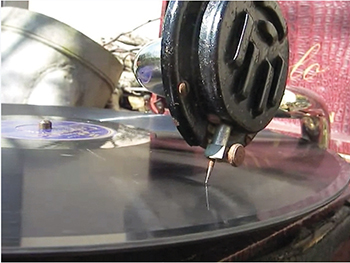
Gramophone record: valued by music lovers Photo: Wikipedia
If the communion with classical music is an expression of the higher nature that all of us possess why are our young Parsis afraid to approach it? Do they realize that nothing worthwhile comes easy? And if it’s easy, it may not be meritorious?
If our young brethren listen and try to remember themes and thereby derive enjoyment when they recognize them on their reappearance, they will be well rewarded. This is far better than complaining that they do not "understand” classical music.
Why? Because, if you sit back and listen, you allow the music to fulfil its purpose, that of establishing a direct connection with your innermost being. This is truly a wonderful experience, for great music forges a communication link with you that is uniquely your very own. You can misunderstand or misinterpret words, but this can never happen with great music. And you are breaking down the massive edifice of sound by taking it "one little tune at a time”, and so you are "understanding” the whole a little better, step by step.
A practical way forward would be for experienced and knowledgeable music-lovers to select compositions which have short themes that can be easily remembered, learnt and recognized by beginners. If such melodies are memorable, these listeners will take to them readily. Do not start with music that has long and rambling tunes for beginners will forget the beginning and middle as they approach the conclusion. In time, regular and patient listening will help to gradually expand the memory so as to enable the enjoyment of long melodies as well.
You have entirely at your disposal the Internet, that astonishing marvel of information and communications technology. There is YouTube and other sites, like Classical Music Online and Classical Archives. With a little help from senior friends you can browse the websites and explore to your hearts’ content. You can buy compact discs (CDs), or digital video discs (DVDs) and download and save music to put together a great collection in time. This would be the worthy modern analogue of the glorious tradition that many old-timers used to proudly belong to, and doubtless still are a part of — the collection of highly treasured 78 and 33 r.p.m. (round per minute) gramophone record albums of great European classical music, performed by legendary soloists and orchestras, with their often-beautiful cover designs and perceptively, knowledgeably written sleeve notes.
To help initiate this revival, come forward and start listening, persevere. There is a fair chance you may like it and then come to love it. Give it a try. Hear and see classical music recitals and concerts. You will grow. Trust me.
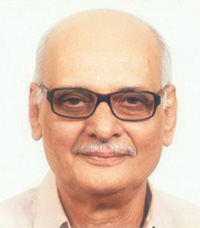 Born in a family of doctors, Hoshang Dastoor used to present weekly programs of recorded selections of European classical instrumental music at the Sri Aurobindo Society and similar monthly programs at the National Centre for the Performing Arts. Holding a masters degree in management studies and an associate member of the Institute of Cost and Works Accountants of India, Dastoor worked with the Tata group and Sharp and Tannan.
◆ ◆ ◆
From the archive