
Zoroastrians Abroad
Fanning FIRES
The FEZANA Information, Research and Education System showcased its rare collection at the 30th anniversary celebrations
Prior to the FEZANA (Federation of Zoroastrian Associations of North America) annual general meeting (AGM), on the evening of April 27 Aban Rustomji, who has led the creation and nurtured the development of the FEZANA Information, Research and Education System (FIRES), hosted and organized "An Evening with FIRES.” The AGM in Houston allowed Aban to showcase the FIRES collection in the Zoroastrian Association of Houston (ZAH) Library. Also inaugurated was the new Purvez S. Rustomji Room, in memory of her husband, at the ZAH premises in Houston.
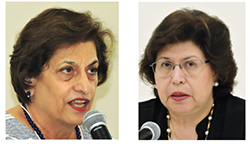
Aban Rustomji (left) and Aban Marker Kabraji
The ribbon cutting was done by Aban, son Arish, daughter Nerina and her grandson Aaryan. Children from ZAH walked in with a framed photograph of Purvez followed by traditional artifacts like ses, jhabla, gara, a replica of the Cyrus Cylinder, a hand painted picture of Parsi celebrations in India, a silver sword presented to a Parsi during World War 1 and many other items. After an endearing rendering of Khan Ashem Vohu by the children, Aban welcomed the gathering saying that "from a small collection of 45 books, the FIRES project has grown to 1400+ books and is growing.” The exquisite exhibition of books and cultural artifacts included two rare hand-painted versions of the Shahnameh, with pages etched in gold, commissioned by the Shah of Iran as gifts during the 2000th celebration in Iran, a large silver "paro” from a wedding ses with Chinese engravings on it, an old gold pocket watch, gold chhera necklaces, medals and a wall full of old pictures in sepia tones, of Parsi families in their regal Parsi outfits.
For Aban, the FIRES library that is building a collection in print and electronic form "is a house of knowledge and imagination.” It sustains "our intellectual and emotional selves. It is for our grandchildren and their grandchildren. It is a compendium of research beyond Google and Wikipedia although it encompasses them too.”
Aban Marker Kabraji, regional director of the International Union for the Conservation of Nature (IUCN) in Bangkok, Thailand, applauded the FIRES collection as it would "allow youth here to connect through memories shared, while giving them an opportunity to read about the history and cultural traditions of their religion.” The First Dastoor Meherjirana Library in Navsari has one of the best resources for Zoroastrian literature, she said, and hoped that Zarathushti children here would be helped by the FIRES library in finding their identity and being able to satisfy their sense of belonging.
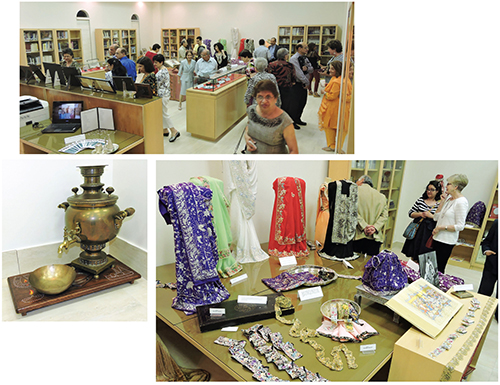
FIRES memorabilia on display Photos: Yezdi Engineer
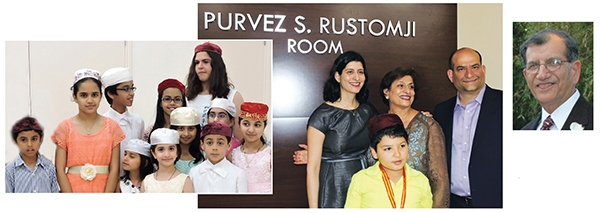
(From left) ZAH children; Nerina, Aaryan, Aban, Arish, Purvez Rustomji
As the keynote speaker sharing her thoughts on "Memory and Identity,” she mentioned that "while I grew up in Quetta, we had a sense of security of time and place. We were where we wanted to be, but as my children grew up and decided to settle in the West, I worried as to what would become of them and their sense of identity. I don’t remember growing up with such a strong Zoroastrian identity. At that time, it was more a nationalistic identity: you were from India, Pakistan or Iran.” She went on to address how the world had changed post 9/11 and the resurgence of Islam with a great number of religions questioning their validity in the social fabric. She noted that "the young population of Zoroastrians in North America were looking more to understanding who they were than belonging to the place their ancestors came from...
"Unlike other religions in history,” she said, "Zoroastrians were the only community not looking for a home, a place, a territory. For us, our sense of belonging was in our ability to adapt to our host country. It goes back to the images we have of the milk and sugar symbolic gesture that our forefathers who left the shores of Iran and arrived in India demonstrated to the local king.”
She went on to explain that "in order to belong, you must know the country, be visible, recognized and embraced by the entity to which you belong. Our youth today have assimilated into their new diaspora, they want to be connected with each other to feel a sense of belonging.” In a way, she said the Return to Roots (RTR) program, of which she is co-chairperson, ensured that youth "return, reconnect and revive.” This was especially important since we no longer lived in baugs and colonies which naturally allowed one to belong. RTR has also created an alumni of those who have availed of this program to experience the social, cultural and religious fabric of the community in India. The next RTR program has been scheduled for December 2017.
The evening ended with a sumptuous dinner of dhan dar and shrimp patia with lagan nu custard which was enjoyed by all.
Behroze Clubwala is an active member of the Zoroastrian Association of Greater New York and its fund-raising team. She retired from the United Nations Development Programme in 2012 after a long career as human resources manager for their global Policy Group.
◆ ◆ ◆
From the archive