
Business
Brand Barjorji
The Bodhanwallas of Balasore in Orissa who own and manage a petrol pump, a hotel and two restaurants have resided and prospered there for five generations
"We are, most likely, the only Parsi family residing permanently in the state of Orissa, comprising of 10 adults and four children who are now the fifth generation living here,” says Sarosh Bodhanwalla, the 45-year-old managing director of Barjorjis Hotels Private Limited. With a 26-room hotel in Balasore, a town of about 4,00,000 people, 200 km from the capital Bhubaneshwar, the family also runs two restaurants, one each in Balasore and in the state capital. The company is looking to set up a resort at Chandipore, 16 km from their current base. "That seaside town is unique because during low tide, the sea water recedes by five to seven km from the beach and one can actually walk on the sea bed,” notes Bodhanwalla.
Narrating details of his family’s ties with Balasore over telephone calls with Parsiana on November 15 and 16, 2016, Bodhanwalla harks back to the early 1920s. Bhikaji Barjorji, his grandfather’s maternal uncle was working in a Parsi firm called Billimoria’s, a stationery business in Cuttack, and moved to Balasore to start his own soda manufacturing unit. "He would sell this soda using hand carts,” he reminisces. Later, the senior gentleman started merchandising oil in one gallon tins. This was the precursor to the petrol pump which Barjorji started in 1940. In those days, there were only three cars in Balasore, Bodhanwalla narrates from stories heard from his parents: "One belonging to the superintendent of police, one belonging to the collector and one to a Marwari businessman!”
Narrating details of his family’s ties with Balasore over telephone calls with Parsiana on November 15 and 16, 2016, Bodhanwalla harks back to the early 1920s. Bhikaji Barjorji, his grandfather’s maternal uncle was working in a Parsi firm called Billimoria’s, a stationery business in Cuttack, and moved to Balasore to start his own soda manufacturing unit. "He would sell this soda using hand carts,” he reminisces. Later, the senior gentleman started merchandising oil in one gallon tins. This was the precursor to the petrol pump which Barjorji started in 1940. In those days, there were only three cars in Balasore, Bodhanwalla narrates from stories heard from his parents: "One belonging to the superintendent of police, one belonging to the collector and one to a Marwari businessman!”
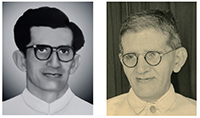
Left: Manchershaw Bodhanwalla; right: Bhikaji Barjorji
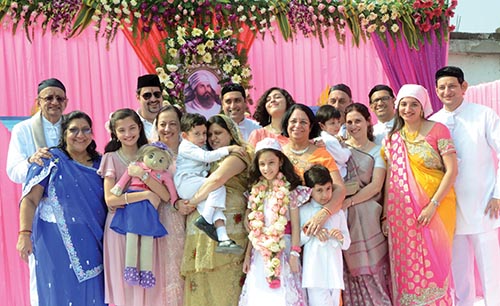
A navjote in the family at Rooftop Garden, Hotel Barjorjis Banjara;
Sarosh Bodhanwalla in cap and dark glasses
Sarosh’s grandfather Manchershaw was sent by his widowed mother from the Navsari orphanage to Balasore "at the age of 13 in 1926, to help Barjorji with his business,” he continues. The business expanded into a general store and was one of the first few in the state to get a licence to sell Indian made foreign liquor. When Barjorji decided to leave Balasore in 1969 and settle in Bombay with his immediate family, Manchershaw bought off his assets and carried on the business in the name of M/s B. Barjorji’s. The store was wound up in the late 1970s. "My dad Hosie and his brother Malcolm continued with the petrol pump as dealers for Hindustan Petroleum.” The dealership is now "among the highest selling outlets in the state,” reveals Sarosh.
In 2004, the family diversified into hospitality with a 70-seater multi-cuisine restaurant, Barjorjis Bhojan, along with a banquet hall for 100 people. "I have always wanted to be in the food industry,” says Sarosh, who joined the family business in 1996 after a stint in the merchant navy. Pleased with the success of the venture they "constructed rooms on the next two floors of the building and made it into a full-fledged hotel” called Hotel Barjorjis Banjara in January 2007. Explaining the use of the ancestor’s name and the alliteration in all businesses ("Bhojan”, "Banjara”), Sarosh states that "Barjorji” is a well known name in his town, thanks to the petrol dealership, and they wanted to capitalize on the nomenclature.
Occupancy at the Hotel varies between 60 and 70%, states the managing director. Other directors in the company include Hosie, Malcolm, brother Zubin and cousin Astad. Zubin handles financial matters, whereas Astad manages operations with Sarosh. Hosie and Malcolm concentrate on managing the petrol pump.
Tariffs at Banjara range from Rs 2,000 to Rs 4,000 per night, inclusive of breakfast. While the clientele comprises mostly business people, Sarosh states that "we do get foreign guests who mainly come down for defence purposes.” Balasore is home to the Indian Army’s Integrated Test Range at Chandipore which is approximately 15 km from town.” This is where missiles like Agni and Prithvi are tested, he elaborates.
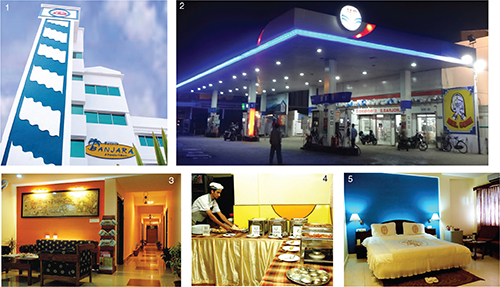
1) A view of the Hotel; 2) Petrol pump; 3) The Hotel lobby; 4) Buffet display,
Barjorjis Bhojan; 5) Executive deluxe room at the Hotel;
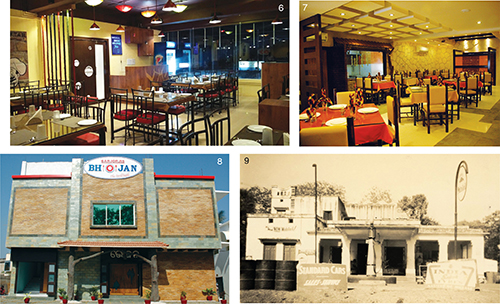
6) Bhojan Express; 7) Barjorji Bhojan - The Traditional - Inside view; 8) Barjorjis Bhojan -
The Traditional - Frontage; 9) The petrol station-cum-shop-circa 1940
The company expanded to a residential-cum-commercial area of Balasore in 2010, with a 70-seater fine dining restaurant, including a banquet hall which can accommodate up to 300 people. Barjorjis Bhojan — The Traditional specializes in Mughlai and Oriya cuisine. Sarosh describes the latter as "simple, with a lot of mutton, fish and rice...
"We wanted to expand our business to other cities so we started with Bhubaneshwar. We set up a 30-seater restaurant in a mall in 2014, serving Calcutta street food along with Indian and Chinese delicacies,” shares Sarosh. The mall was located in Old Bhubaneshwar, where footfalls were low. The company then decided to move to the Patia locality in Bhubaneshwar. The new 70-seater restaurant Barjorjis Bhojan Express is popular with students and office goers in the area where ventures like Infosys and the National Institute of Fashion Technology are located, states Sarosh. He travels to Bhubaneshwar at least once a week. The outlet there serves Calcutta-style biryani and Calcutta kathi rolls (skewer-roasted kebabs wrapped in Indian flat bread) from a live counter. No alcohol is served in any of the establishments, he states. Seventy percent of the 100-odd staff members at all the three establishments have been with them since they started off in the hospitality business.
While they rarely get Zoroastrian clientele, Sarosh adds that they "do get people coming from major metros asking us to serve Parsi food. The chefs who have been guided by the ladies of the family in making Parsi bhonu (meals)” can whip up patra ni machhi, dhansak, sali marghi and mora dal chaval with fish patio on request. "Navjotes of three children in our family and a wedding reception (of Astad) have all been performed in our Hotel with authentic Parsi cuisine,” states the businessman, reiterating that the mobeds were from Calcutta and Jamshedpur (see "Bodhanwallas of Balasore,” Events and Personalities, Parsiana, May 7, 2009).
Community connect for the Bodhanwallas is limited, with a smattering of the extended family in Calcutta and Jamshedpur, each about 200 km from Balasore. Married to Benaifer (née Tarapore) of Jamshedpur, the couple have two children, Sanaya (15) and Anaisha (12), both of whom are schooling in Balasore. Stating that the family firmly believes in the tenets of Zoroastrianism, Sarosh makes it a point to worship at the fire temples in Calcutta and Jamshedpur when he is there to visit family or for business purposes. His brother, sister and cousin are all married to Zoroastrians. Not against interfaith marriages per se, "as long as it suits both families,” he is unsure of what lies in the future for Gen Next of Bodhanwallas in terms of life partners.
Never having lived in cities with large Parsi populations, Sarosh feels that "it would have been nice” if there were more community members around them. The thought of resettling in a city with a large Parsi population "has never occurred to them,” and he jokes that "we are more Oriya than Parsi.”
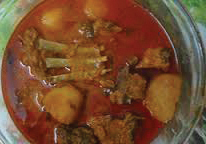
MUTTON CURRY ORIYA HOME STYLE
Potatoes (2 medium sized — cut into 2-3 chunks each)
Mustard oil (5 tbsp)
Sugar (1 tsp)
Bay leaf (1)
Cinnamon sticks (2)
Cloves (3)
Black pepper (4)
Onion (1 small — sliced)
Onion, garlic, ginger (OGG) paste
Onions (2)
Garlic (7 cloves)
Ginger (1”)
Green cardamoms (3 — roughly crushed)
Ginger-garlic paste (1 tsp)
Turmeric powder (½ tsp)
Chilli powder (½ tsp)
Cinnamon powder (½ tsp)
Salt (to taste)
Tomato (1 small – chopped)
Mutton (½ kg)
Raw papaya (few chunky pieces — optional)
Cabbage (optional)
Wash two medium sized potatoes with jacket (skin) and chop into 2-3 chunks each. Heat 1-2 tbsp of mustard oil in the body of a pressure cooker (in which the curry will be prepared). Fry the potato chunks well covering with the lid in between. Keep aside the fried potatoes.
Add 2-3 tbsp more of mustard oil to the cooker. Add sugar, bay leaf, cinnamon sticks, cloves and whole black peppers. Add onion, green cardamoms roughly crushed and fry till brown. Add OGG paste. Saute a bit and add turmeric powder, red chilli powder, cinnamon powder and salt. Saute for 4-5 min on medium to low fire. Take care not to burn. Add chopped tomato and fry on low to medium fire till oil separates and it leaves a nice aroma. Keep sprinkling drops of water as masala gets fried to prevent burning. After masala is sautéd brown for about 10-15 mins, add mutton. Sprinkle a few drops of water, if needed, and sauté well intermittently covering the lid for about 15 mins. When mutton is half-cooked and the whole mix looks reddish brown, add 2-3 cups of water and the fried potatoes. Close the lid of the pressure cooker and cook on high flame for one whistle, then simmer for 12 mins after closing the lid. Switch off gas and allow cooker to cool normally.
Open the lid and put back on burner. Let it boil a bit; adjust water and salt as needed for gravy. Switch off. Flavor with a dash of cinnamon powder and cardamom powder (or a freshly made paste of cinnamon, green cardamom, cloves and a few peppers). Cover. Serve hot with rice/roti.
Note: Just to give it a little Parsi touch add 1 tsp coriander powder, 1 tsp cumin powder and ½ tsp garam masala powder to the OGG paste when the oil starts separating.
Along with potato, large chunky pieces of raw papaya or quarters of cabbage can also be added.
Instead of fried potato, raw potato halves can be used while adding water for gravy. Tastes as good.
MACHA TARKARI (ORIYA STYLE ROHU FISH CURRY)
Rohu fish (500 g)
Potatoes (2 medium sized)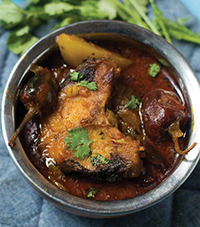
For the masala
Onion (1 medium sized)
Tomato (1 small)
Ginger-garlic paste (1 tsp)
Red chillies (2)
Cumin powder (½ tsp roasted)
Coriander powder (1 tsp roasted)
Garam masala (¼ tsp)
Turmeric powder (1 tsp)
Red chilli powder (½ tsp)
Bay leaf (1)
Cinnamon stick (1” piece)
Green cardamoms (2)
Salt (to taste)
Mustard oil, for shallow frying
Wash the fish. Apply turmeric and salt. Marinate and keep aside for 15 minutes.
Chop the onions and tomatoes fine. Peel and cut the potatoes into medium size wedges and apply turmeric and salt.
Pour some mustard oil and heat it to smoking point. Slowly add the fish pieces one by one and shallow fry them in batches. Take out the fish and place it on a kitchen towel.
Add the potatoes and shallow fry them in the same oil and keep aside.
Add bay leaf, cinnamon, green cardamom to the oil and when it starts to release its aroma, put a pinch of panch phoran (cumin, fenugreek, nigella, brown mustard and fennel).
Next add the onion and fry till it turns a little brown. Add ginger garlic paste to the oil. Stir and fry the masala till the masala is cooked and there is no raw smell.
Add chopped tomato, potatoes, turmeric, cumin powder, coriander powder, chili powder and salt. Cook for few more minutes till the masala starts to leave oil at the sides.
Add a cup of warm water, cover and let the curry simmer on medium heat till potatoes get soft. Add fish and cook for 2 to 3 minutes on slow heat. Remove from heat and add the garam masala powder and chopped coriander leaves on top to garnish.
Serve hot with plain rice.
Rohu fish (500 g)
Potatoes (2 medium sized)
For the masala
Onion (1 medium sized)
Tomato (1 small)
Ginger-garlic paste (1 tsp)
Red chillies (2)
Cumin powder (½ tsp roasted)
Coriander powder (1 tsp roasted)
Garam masala (¼ tsp)
Turmeric powder (1 tsp)
Red chilli powder (½ tsp)
Bay leaf (1)
Cinnamon stick (1” piece)
Green cardamoms (2)
Salt (to taste)
Mustard oil, for shallow frying
Wash the fish. Apply turmeric and salt. Marinate and keep aside for 15 minutes.
Chop the onions and tomatoes fine. Peel and cut the potatoes into medium size wedges and apply turmeric and salt.
Pour some mustard oil and heat it to smoking point. Slowly add the fish pieces one by one and shallow fry them in batches. Take out the fish and place it on a kitchen towel.
Add the potatoes and shallow fry them in the same oil and keep aside.
Add bay leaf, cinnamon, green cardamom to the oil and when it starts to release its aroma, put a pinch of panch phoran (cumin, fenugreek, nigella, brown mustard and fennel).
Next add the onion and fry till it turns a little brown. Add ginger garlic paste to the oil. Stir and fry the masala till the masala is cooked and there is no raw smell.
Add chopped tomato, potatoes, turmeric, cumin powder, coriander powder, chili powder and salt. Cook for few more minutes till the masala starts to leave oil at the sides.
Add a cup of warm water, cover and let the curry simmer on medium heat till potatoes get soft. Add fish and cook for 2 to 3 minutes on slow heat. Remove from heat and add the garam masala powder and chopped coriander leaves on top to garnish.
Serve hot with plain rice.
Recapturing Balasore
"I was a raw young man,” the pioneering Barjorji wrote, about the early days in eastern India. "They were hard times, in a strange place ... no one to associate with. There were two or three Parsi families at Kharagpur ...It was tough to make ends meet ... after the war (World War II) we became the leading business house in Orissa, known for honesty and respectability.” Over tea at her airy Colaba home, Behroze Barjorji, tells us, "I am so proud of my father-in-law,” as she reads out from a diary maintained by her father-in-law Bhikaji Barjorji.
Calcutta resident Behroze lived in Balasore from 1955 to 1957 after her marriage to Barjorji’s son Sam. Residing in Bombay since 1958, she remembers the Oriya town as a sleepy, peaceful place: "There was nothing to do... we made friends with Methodist missionaries who had set up a hospital there.” Recalling cycling trips to Chandipore and stays in the dak bungalow there, she talks about going on fishing expeditions at a lake adjacent to her home with mother-in-law "Hilla Mumma.” She adds that Hilla ("a real back up to Barjorji”) baked and introduced bread to that town! "There was "one tin-shed of a movie house” that played Hindi films, with screenings disrupted periodically when the electricity failed.
B. Barjorji’s, the store, sold everything from the proverbial pin to an elephant, the sprightly, eightyish Behroze remembers. "Petrol, motor accessories, Kodak products, sewing machines, gramophones, asbestos sheets and Philip’s radios,” we gather from Barjorji’s memoirs. Behroze helped out at the store only occasionally, "as my father-in-law did not like interference.” The store was open for long hours as "Oriyas like to go shopping after dinner,” she recalls.
Calcutta resident Behroze lived in Balasore from 1955 to 1957 after her marriage to Barjorji’s son Sam. Residing in Bombay since 1958, she remembers the Oriya town as a sleepy, peaceful place: "There was nothing to do... we made friends with Methodist missionaries who had set up a hospital there.” Recalling cycling trips to Chandipore and stays in the dak bungalow there, she talks about going on fishing expeditions at a lake adjacent to her home with mother-in-law "Hilla Mumma.” She adds that Hilla ("a real back up to Barjorji”) baked and introduced bread to that town! "There was "one tin-shed of a movie house” that played Hindi films, with screenings disrupted periodically when the electricity failed.
B. Barjorji’s, the store, sold everything from the proverbial pin to an elephant, the sprightly, eightyish Behroze remembers. "Petrol, motor accessories, Kodak products, sewing machines, gramophones, asbestos sheets and Philip’s radios,” we gather from Barjorji’s memoirs. Behroze helped out at the store only occasionally, "as my father-in-law did not like interference.” The store was open for long hours as "Oriyas like to go shopping after dinner,” she recalls.

◆ ◆ ◆
From the archive