
Vintage viands
A selection of recipes from a bygone era when food was cooked over wood stoves
Eight types of akuri, 76 varieties of pickles (including nine versions of gor-keri alone), 36 flavors of ice cream, 60 ways to cook eggs, 15 ways to make omelettes and 32 for cutlets; 27 kinds of custards, 57 cakes, not including 17 cheesecakes: Those are only a partial listing from the two-part cookbook with 2,180 recipes Vividh Vani (Assorted dishes) written by Meherbai Wadia who compiled the recipes, but died prematurely at 31 in 1897 of the plague. The voluminous compilation was first published at the turn of the 20th century by her mother Piroja.
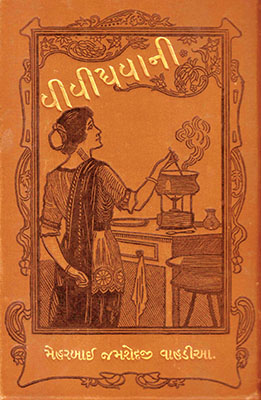 The recipes were written in an era where all cooking was done on wood stoves, probably without running water and most certainly no refrigeration. The unique book offers an in-depth look at the possibly hard life of a Zoroastrian home-maker of those times.
A fulsome dedication by Piroja to the doctor who treated Meherbai — Dr Kaikhusroo Bahadurji of the Parsi Fever Hospital (see "Angry young man," Parsiana, March 21, 2016) — reads "a man of truly angelic disposition, righteous and gladly bearing the suffering of others, who … gave patient and compassionate treatment to my most beloved, one and only child, late Bai Meherbai Jamshedji Nusserwanji Wadia, in the Parsi Fever Hospital, during the bubonic plague, up to her last minute."
A three-page preface in the book explains the weights and measures used during that period. Tips include explanation of ‘English’ terms like isinglass and gelatin, and how to cook safely ("Do not use only one spoon when turning over a large item frying in ghee. Use two, to prevent getting splattered by hot oil").
Parsiana carries a translation of select recipes from the first volume of the fourth edition published in 1926. Original weights and measures have been retained in the recipes that follow. A ‘conversion table’ is given below:
1 tola (Indian system) = 11.66 g (Metric system)
1 seer (Indian system) = 0.93 kg (Metric system)
1 maund (40 ser) (Indian system) = 37.32 kg (Metric system)
Source of table: Wikipedia: Government of India definitions under the Standards of Weights and Measures Act, 1956.
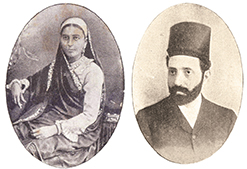
Prolific recipes’ compiler Meherbai Wadia (left) and Dr Kaikhusroo Bahadurji
PICKLED LADY’S FINGERS
Lady’s fingers (2 seer — long, tender and thick, without too many seeds)
Salt (7 tolas)
Goa or any other dried red chillies (3/4th tola)
Vinegar (1 ¼ bottle, any pungent brand)
Wash and wipe the lady’s fingers with a dry, clean cloth. Do not remove the ends from the vegetable. Store in a barni (glass jar) with the salt for 24 hours. Remove and dry in bright sunlight for two days. Dry the chillies in bright sunlight for a few hours and grind coarsely. In a kallai ni tapéli (copper utensil with tinned interior) mix the vinegar and the coarsely ground chillies and heat till it comes to a boil. Remove from the flame.
Arrange the lady’s fingers vertically in a glass jar. Top with the vinegar. Tie a clean cloth over the lid of the jar. Shake the bottle every few days. The pickle will be ready to eat in a month’s time.
If it is wished to add mustard to the pickle, add two tolas of beaten mustard seeds to the vinegar after cooling it.
EGG ON GRATED COCONUT
Onions (¼ seer)
Ghee (¼ seer)
Coconut flesh (5 tola — finely grated)
Ginger (3/4th tola)
Garlic (¼th tola)
Sugar (2 heaped tsp)
Salt (½ tsp)
Eggs (3)
Peel the ginger and garlic and cut into very fine pieces. Peel the onions and chop finely. Fry in ghee. Before it turns light brown, add ginger and garlic. Continue frying till it turns light brown. Do not let it turn reddish. Remove the onions, ginger and garlic from the vessel and add the grated coconut to the ghee and fry till it is a rich almond color. Return the onions, ginger and garlic to the vessel with the sugar and salt. Add 1/8th seer of water and leave on the flame. Spread the mixture about half an inch thick in a langri (shallow round utensil). Pour the egg whites only over the mixture. Make shallow depressions in the vegetable and the egg whites, using the broad end of an egg. Add the egg yolks into the depressions. Gently, cook the eggs over a low flame. Cover the vessel with an inverted kallai nu dhaaknu (lid) and peep into the vessel frequently till the yolks are cooked to your satisfaction.
If the yolks and the whites are poured together, the white will be as hard as a cooked liver.
DAAL "MADRASI"
Toor daal ( ½ tipri or jam tin measure)
Potatoes (½ seer)
Brinjals (½ seer)
Onions (¼ seer)
Ghee (5 tolas)
Tamarind (one medium ball)
Mustard seeds (1 tola)
Jeera (3/4 tola)
Salt (½ tola)
Turmeric (1 heaped tsp, ground)
Garlic (9 peeled cloves)
Curry leaves (15)
Dried chillies (4 or 5)
Wash the tamarind and drain the water from inside. Peel garlic. Take half the quantity of onions and cut them into large pieces. Wash the daal and put in a large vessel. Add the garlic and onions. Pour the required quantity of water and cook over a low flame.
Peel the brinjals and onions, cut into 1½ inch pieces and soak in cold water. Clean the mustard seeds and jeera. Mix both. Take half of the mixture and grind it with the chillies and turmeric into a fine paste. Make a ball out of this paste. Grind the tamarind into a similar paste and leave aside in a korri-nu-vasan (enamel vessel)
While the daal is cooking, on another medium flame, cook the potatoes and brinjals in ¾ seer of water. Add half of the remaining mustard seeds and jeera. Cover the vessel and cook till the potatoes and brinjals are soft. Remove excess water. Remove potatoes. Mash the brinjals with the mustard seeds and jeera.
Remove daal from the flame when cooked. Remove the excess water in a separate vessel. Grind the daal with the onions and the garlic. Put the mixture back into the vessel. Add the mashed brinjals, salt and the spice-ball. Mix well. Replace the water removed from the cooked daal. Add the washed curry leaves and the cooked potatoes. Cover and cook on a low flame. Stir to avoid burning.
COFFEE JELLY
Milk (1 seer)
Coffee (freshly ground — 7½ tolas)
Sugar (5 tolas)
Gelatin (3¾ tolas)
Egg yolks (2)
Cinnamon (1" piece)
Rose essence (3 to 4 drops)
Take half of the milk and bring to a boil. In a large bowl add the coffee and the boiled milk. Set aside for 3 to 4 minutes. Strain through a clean muslin cloth. To the remaining milk add the gelatin, sugar and cinnamon. Cook till the gelatin dissolves, stirring continuously.
When the coffee has cooled, beat the egg yolks with a fork and add to the coffee along with the melted gelatin mixture and rose essence. Pour into wet molds. Leave to set for 24 hours in a cool place. If you would like to eat it before that, place the molds over ice.
Translated from the Gujarati e-book by Farrokh Jijina.