
Zoroastrians Abroad
Ekhtiyari reelected
The Zoroastrian representative in the Iranian Parliament, or Majles, will continue to be Dr Esfandiar Ekhtiyari who was reelected to a second four-year term on March 2, 2016. Assistant professor in the department of textile engineering at Yazd University, Ekhtiyari secured 4,959 votes out of a total 6,660, with the other two candidates Koorush Azargoshaasbi and Dr Farshid Akhtari garnering 1,177 and 466 votes respectively, according to berasad.com
Of the 290 seats in the Iranian Parliament, five are assigned to religious minorities: North Armenian Christians, South Armenian Christians, Assyrian and Chaldean Christians, Jews and Zoroastrians. "Iran’s largest religious minority, Baha’is, (are) not officially recognized and granted a seat,” according to the website of Brookings, a nonprofit, research oriented, public policy organization based in Washington.
Of the 290 seats in the Iranian Parliament, five are assigned to religious minorities: North Armenian Christians, South Armenian Christians, Assyrian and Chaldean Christians, Jews and Zoroastrians. "Iran’s largest religious minority, Baha’is, (are) not officially recognized and granted a seat,” according to the website of Brookings, a nonprofit, research oriented, public policy organization based in Washington.
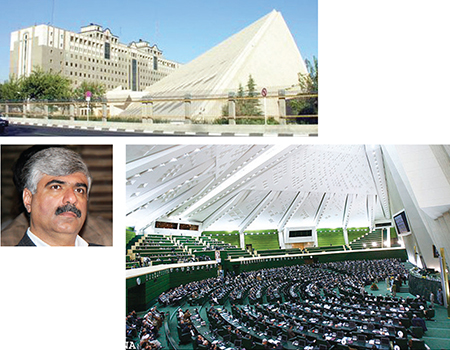
Dr Esfandiar Ekhtiyari; the exterior of the Iranian Parliament
Photo: Wikipedia; and the Parliament in session Photo: ISNA/Amir Pourmand
The Zoroastrian population stood at 25,271 as per the 2012 census in Iran. Migration, out-marriage and low birth rate have been cited as the reasons for the decline in community numbers in the country. At the 10th World Zoroastrian Congress in Bombay in December 2013, Ekhtiyari had stressed that the youth should have a good understanding of the Zoroastrian religion to be able to withstand the "wrong cultural influences.”
"On paper, the Majles is endowed with broad prerogatives including drafting legislation, ratifying international treaties, approving state-of-emergency declarations, foreign loans and the annual budget, investigating all national affairs, approving a cabinet request for proclamation of martial law, removing cabinet ministers from office, recommending to the supreme leader that the president should be removed on the basis of political incompetence,” explains Wikipedia. In practice, however, the role of the Majles is restricted to "examining the yearly budget, approving proposed candidates to head various ministries and questioning cabinet ministers. The ninth (outgoing) Majles, for instance, has rejected several of (the President of Iran Dr Hassan) Rouhani’s proposed ministerial candidates, has grilled his ministers…and impeached and removed his minister of sciences, research and technology.”
◆ ◆ ◆
From the archive