
Food
Dhansak in the desert
The Contractors’ no-frills eatery Kebab Bistro serves authentic Parsi bhonu in Dubai
Kebab Bistro was a restaurant run by two Pakistani women until Oofrish Contractor stepped in and converted it into Dubai’s first eatery serving Parsi bhonu. That was back in August 2012. Three years and a zillion dhansaks later, the eatery is a popular choice for all those hungry mouths dying to savor a cuisine they cannot get easily in this city.
Contractor bought over the Bistro, retrained the staff, modified a few of the dishes to her taste and added a substantial Parsi menu. Tucked away in a nondescript locale in Jumeirah, the no-frills, down-to-earth restaurant may be limited on ambience but is big on food. There is something here for everyone.
Contractor bought over the Bistro, retrained the staff, modified a few of the dishes to her taste and added a substantial Parsi menu. Tucked away in a nondescript locale in Jumeirah, the no-frills, down-to-earth restaurant may be limited on ambience but is big on food. There is something here for everyone.
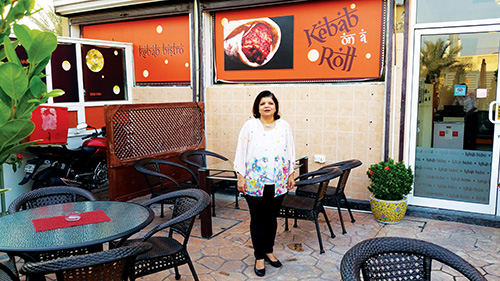
Oofrish Contractor outside Kebab Bistro
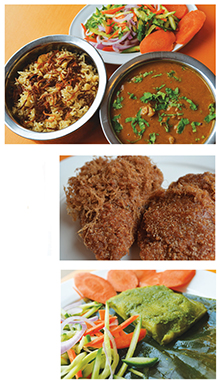
Parsi staples of dhansak,
chicken farcha and patra ni machhi
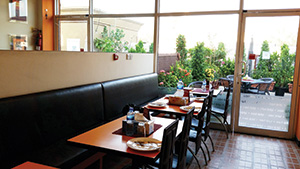
Inside the restaurant
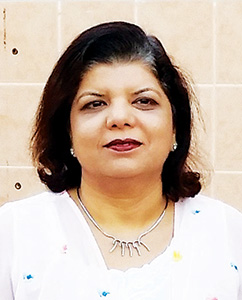
Oofrish Contractor
Its main clientele is non-Parsis from Gujarat and Bombay, says Contractor, "those who know Parsi food but only get to experience it at navjotes and lagans.” Every weekend, the outlet arranges a ‘Parsi buffet,’ which is geared around the lagan nu bhonu — sali boti, farcha, patra ni machhi, dhansak and lagan nu custard. Why dhansak? "For a non-Parsi, pulao dar doesn’t mean anything. For them, dhansak is Parsi food.” On special rozs or auspicious occasions like the Parsi New Year, the offering is changed as per tradition to pulao dar or dhan dar patio.
The marketing professional inherited a mainly Pakistani staff which had no clue about Parsi cuisine. "More than the food, we had to train them regarding Parsi culture… how do dishes like dhansak and sali boti get served? When do you eat dhansak, dhan dar, pulao dar?” she explains, adding, "In the beginning, they used to serve kachubar with dhan dar too!”
The Bistro takes pride in cooking everything from scratch. A wall announcement at the entrance says, "We don’t precook anything. Every single dish...is prepared fresh after you place the order…Because we believe ‘fresh’ has a succulent flavor of its very own that nothing can beat.” She points out that "even for dhansak, only my dar and mutton are boiled and kept.” This also perhaps makes sound economic sense, given that the restaurant’s capacity is only 28, dwindling to16 in the summer as the outdoors become unusable in the desert’s scorching heat.
Contractor and her husband, who has a culinary background, strive to serve the original Parsi taste to their customers. Their rice dishes range from Dh 30 (Rs 522) for mutton specialities like dhansak to Dh 33 (Rs 574) for the prawn menu. The main dishes range from Dh 18 (Rs 313) for vegetable stew to Dh 28 (Rs 487) for sali boti, mutton and papeta ma gosh; with side dishes from Dh 5 (Rs 87) for an egg and chutney pattice to Dh 8 (Rs 139) per piece for patra ni machhi (not white pomfret) to Dh 60 (Rs 1,044) for chicken farcha. "Our tamota par eedu and kheema par eedu are killers and much in demand. Sali par eedu is not liked as they find it fikku (bland). I can make it spicy but I’d rather not change the authentic taste,” she observes. Their desserts include lagan nu custard, ravo, sev and malido.
True to its name, the Bistro’s speciality remains its much-sought-after, mouthwatering, straight-off-the-grill kebabs and tikkas. "They are my main seller, my identity,” she exclaims. The Contractors think that they offer very little vegetarian fare through their main menu, and are seeking to correct this anomaly in their new, larger restaurant which they plan to open this year. "The present kitchen size has its limitations. I have many vegetarians coming here and don’t have much to offer them. I’m planning to introduce a lot of vegetarian dishes and expand my veg kebab/barbecue range,” says Contractor.
Home deliveries and takeaways form roughly half of Bistro’s present business. Here is a restaurant which claims to cater or deliver everywhere in the country. "Besides the usual delivery arrangement, if need be, I deliver, my husband delivers, my son delivers. I can also get somebody from outside to do it. I try not to refuse any business because everything is possible for a cost. You pay me, I’ll cook,” she says matter-of-factly.
The couple continue to hold full-time jobs through this gastronomic journey, and only come to the restaurant in the evenings. Their dream was to have their own venture one day. "It has been a tough but enjoyable ride,” says the wife. "I would recommend this business to others provided you know what you’re getting into. Know the laws of the land beforehand and have at least six-12 months of running capital before you start. It took us more than two years to really see any money,” they say.
As both are not involved 24/7 in the running of the restaurant, there is a lot of business they have to forsake. "I can’t take on certain orders because I can’t allow my staff to handle these entirely on their own. So, there are limitations about how much we can grow.”
The husband and wife, who hail from Nowroz Baug in Bombay, consider themselves as having conservative religious views but believe "we have no choice except to change for the sake of our community’s survival.” Although not in favor of conversion, they have of late come around to the idea of "accepting children of mixed marriages or risk losing our own kids in the bargain. Let such parents have a choice — if they want their offspring to be Zoroastrian or not,” they say.
They rue that their children have not had enough avenues to mix with fellow Zoroastrians as there are not enough community members in their schools. Daughter Ashishvangh is currently studying inter-disciplinary performing arts in Canada while son Varjavand has just finished his class ten in Dubai. "We were brought up in Parsi colonies, surrounded by Parsis. Our children haven’t, so how do you expect them to live by Parsi traditions and customs? I only put on a straight face in front of my kids but in my heart of hearts I know kai pan nai kari sakai (nothing can be done).”
◆ ◆ ◆
From the archive