
Business
Gharda wins patents case
Dr Keki Hormusji Gharda has won a patent related battle in the Bombay High Court (BHC) against his nephew Darius Kavasmaneck. The latter had contended that his octogenarian scientist uncle, the chairman of Gharda Chemicals, should not be permitted to create any rights on the patents owned by him (Gharda) as most of these had been invented during the uncle’s tenure as managing director of the company, and hence as part of his official duty to the company, reported Mumbai Mirror (MM) on April 21, 2015. However, a division bench of Justices Naresh Patil and A. S. Gadkari dismissed Kavasmaneck’s plea in April 2015.
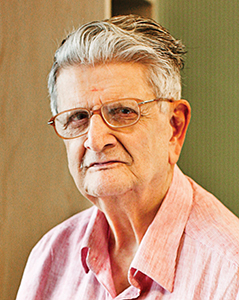
Dr Keki Gharda: scientist, researcher, entrepreneur
Gharda Chemicals manufactures and sells organic and inorganic chemicals, their by-products, perfumery chemicals, cement and other materials (see "The chemistry of Gharda,” Parsiana, July 7, 2011). As per information published by MM, the privately held company has a turnover of over Rs 1,200 crore and valuation of Rs 2,000 to Rs 3,000 crore. Kavasmaneck had filed the suit in his capacity as a "minority shareholder… in the interest of the company as the majority shareholders would not let him do so in the name of the company itself.” According to him, the patents registered in Gharda’s name had been invented in a facility where the company had spent over Rs 180 crore on research and development between 2001 and 2010 and that as head of the concern Gharda should have applied for the patents in the name of the company, reported MM. It was his apprehension that Gharda would transfer these patents to another company owned by him, Gharda Medical and Advanced Technologies Foundation (GMATF), and hence Kavasmaneck sought urgent restraining orders from the BHC to prevent this from happening.
GMATF, which holds 57% of the shares in Gharda Chemicals, is a charitable company in which Gharda and his wife hold a mere three percent of the shares. In addition to Gharda, GMATF has four other independent directors who are men of stature, the Court was told. Backed by his company’s management, Gharda informed the BHC that Kavasmaneck was a competitor for one of Gharda Chemicals’ products and had signed a memorandum of understanding with another competitor to sell his shares to that company along with his voting rights, which amounted to placing the patents at risk, the MM report said. Also, Gharda’s patents were being used by the company sans royalty and the money had been spent on them in order to "fine tune how economically the company can use those patents.”
Gharda and his wife together hold 12% shares in Gharda Chemicals, the same as Kavasmaneck does, the BHC was told. The BHC also took note of the fact that Kavasmaneck’s own relatives, who hold 13% of the shares, supported Ghard
◆ ◆ ◆
From the archive