
Bawa Musings
What is Polson, Mummy?
Parsi food brands of yesteryears evoke nostalgia
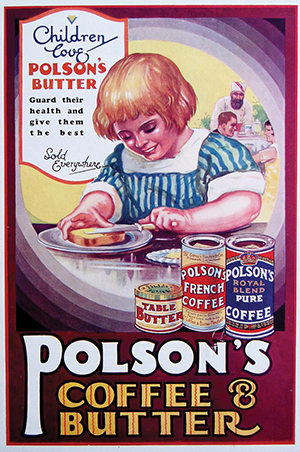
It floated merrily in the glass dish filled with water; golden yellow and salty. Refrigerators were not yet a feature in middle class homes and sliced bread was still a shy débutante on the breakfast table. When one went to the provision store, one asked for Polson, not butter. Don’t say ink, say Quink, advertised a fellow brand with global links. Polson required no advertising. It was wholesome, contained fat, tasted yummy, and it was Parsi. Honest and unadulterated. People wanted good butter and did not know about bad cholesterol. The Polson family was low profile and dignified. We will never break this monopoly, thought the lesser brands of butter.
 Then there was Parsi Dairy Farm (PDF) milk. A battalion of blue shirt clad bhaiyas (delivery men who hailed from Uttar Pradesh) carrying round metal containers of rich creamy milk (skimmed, then, meant watery) would spread out all over Bombay and the customers’ aluminum tapélis (utensils), placed under the container’s tap, frothed with pure milk. One had to use one’s connections to obtain Parsi Dairy coupons to be given in exchange for the milk. The somewhat rude manager would condescendingly look at the Johnny-come-lately aspiring to be on the elite list of those receiving that creamy elixir. In winter, the bhaiyas would bring doodh na puff (sweetened creamy whipped milk froth, left exposed overnight to cool in the morning dew). Countless Gujarati, Marwari and Bohri homes were also loyal customers. The brand was underwritten by community virtues. Decades later, the family litigated and fragmented.
 Our grandmother’s cousin, a smiling, portly lady, would visit every first Tuesday of the month and invariably bring for her a Dippy’s can containing the most divine pumpkin murabba (sweet preserve), bought from Swabal Stores outside the Cusrow Baug gate. Manning the counter for decades was a genial but expressionless man named Rustomji. The can would be opened using a mean looking, World War II vintage contraption. Dippy’s made canned dhansak, vindaloo, papri and other Parsi dishes as also jams, ketchup and fruit crushes. This was a partnership between Jiji Dastur and Noshir Pochkhanawala, son of the Central Bank’s founder, Sir Sorabji. Noshir was as English as they come and had a long happy marriage with Pini, daughter of Sir Nusserwanji Engineer. They used to host the most memorable sit-down dinners for guests who did not know each other which meant painfully labored conversations on inane topics, while gorging on some divine desserts. For a decade or so, Dippy’s was quite popular until it wound up reportedly due to fears that some bawajis may perish due to botulism (tin poisoning) while eating the pumpkin murabba, having regard to the suspect quality of Indian tin, unlike the good old British metal.
Pickles made with jaggery, mango and home ground spices; gharabh nu achaar (pickled fish roe); vinegar; mango chutney and murabbas; methia nu achaar (spicy, oil based, mango pickle); bafénoo (whole ripe mangoes pickled in spicy gravy, skin et al) and other such exotic stuff was produced, and even exported, by the Kolahs of Navsari. The founder of the clan, Edulji, was apparently an incurable romantic, according to the Navsari watchers in our family. The business was later split into concerns owned by Kersaasp, Jehangir and Rustom; the last selling a legendary homemade ice cream from shops near the atash behram (still existing) and Tarota bazaar. Until market forces compelled the introduction of exotic flavors, the ice cream was always pink and had a distinct aura about it. A visit to Navsari would be deemed incomplete without the "pink.” As children, we used to put half the money given to us as ashodaad (offerings before the holy fire) and use the remainder to buy "pink” or drink lemon (not lemonade) in thick glass bottles fitted with a marble which had to be pushed inside for the liquid to pour out. We were told that these bottles could be used as deadly missiles during a fracas. One of the Kolah branches sold sandalwood and frankincense too. Kolah nu achaar was a great brand and also witnessed some fratricidal wrangling between brothers over the trade name. We had occasion to visit a warehouse storing the delicious stuff in huge black vats. There were also vats of ultra strong vinegar whose smell opened up our sinuses.
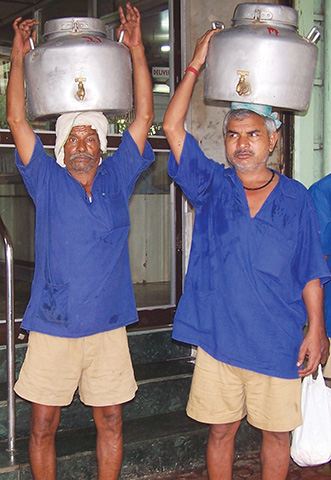
The Parsi Dairy Farm bhaiyas; (Above)An advertisement for Polson’s butter
OK Wafers was another Parsi brand started by the genial Keki Kotwal who used the best potatoes and oil and was quality conscious even five decades ago. A part-time bonesetter taught by the famous Manchershaw Madhiwalla, Kotwal served the populace, free of cost, kicking butts and backs into shape. Although a good and honest Samaritan, Kotwal was short-tempered and there is a story about how he roughed up a then famous gynecologist in the lobby of The B. D. Petit Parsee General Hospital.
These were Parsi brands which had an appeal beyond the community. Generations fondly relished these homespun brands of a community which was perceived as robust, honest and good natured. Polson now floats only as a pleasant memory; no tapéli goes under a PDF milk container; an office block has come up where once Dippy’s made pumpkin murabba; the OK Wafer company was sold long back and that pink ice cream has lost its aura.
Berjis M. Desai, managing partner of J. Sagar Associates, advocates and solicitors, is a writer and community activist.
◆ ◆ ◆
From the archive