
Events & Personalities
Bunglis’ utilization 18%
Bunglis’ utilization 18%
In the months of April and May this year the 11 bunglis at Doongerwadi were utilized for less than 20% of the time. In April 2014 only five bunglis were used (or six if both the Bhabha bunglis were utilized) while in May 2014 the figure was four (or five if both Bhabha bunglis used). Of the 57 deaths recorded at Bombay’s Doongerwadi in April, 17 opted to have the four-day ceremonies performed at Doongerwadi while 40 opted for agiaries. In May, of the 77 deaths, 24 opted for Doongerwadi and 53 for the fire temples. The bungli occupancy in April was 14%, assuming that a family used it for three days of prayers. For May the figure was 18%. Whilst some families may need a bungli for two days and some for four days, the percentage will not change sufficiently. Hence the bunglis were used less than one-fifth of the time.
Among the bunglis, most in demand was the Albless bungli (in April for five deaths and in May, seven). The Hodiwala bungli was second, being used for three deaths in April and eight in May. The bunglis that were utilized in April were Wadia (three deaths), Albless (five), Hodiwala (three), Bhabha (four) and Bennett (one). In May the figures are Albless (seven), Hodiwala (eight), Bhabha (five) and Wadia (three). (There is a slight discrepancy in the figures of those having the prayers at agiaries and those opting for the bunglis.) In both months there were three days each when no uthamnas were listed.
These figures are calculated from the free SMSs (small messaging services) of The Parsi Mobile Network of Yazdi Tantra sent to subscribers listing the name and age of the deceased as well as the venue of the uthamna.
According to Sapur Desai’s History of the Bombay Parsi Punchayet 1860-1960, "Up to 1915 all bodies had to be borne by corpse-bearers to Doongerwadi from the residence of Parsis after (the) geh sarna ceremony. There was, however, a resting place behind the Parukh Dharamshalla for bodies brought from long distances or from mofussil, but principally it came up during (the) bubonic plague of 1898. There were also facilities for bath(ing), etc for male mourners. But times began to change and better facilities were needed. The trustees got donations from charity-minded Parsis and started building bunglis, i.e. places where the bodies could be brought from residences and all ceremonies performed there before and after consignment. At first (the Bombay Parsi) Punchayet (BPP) built out of funds at its disposal a bungli at the lower level of the hill… and then a donor came forward to build another. These bunglis are only for the one day ceremony, i.e. only geh sarna before disposal of the body at the towers. From 1928 onwards the trustees built, from out of donations, bunglis at the upper level for four days’ ceremonies… The lower bunglis have just bare necessities for at best an overnight stay, the upper bunglis have all facilities for mourners.”
In the months of April and May this year the 11 bunglis at Doongerwadi were utilized for less than 20% of the time. In April 2014 only five bunglis were used (or six if both the Bhabha bunglis were utilized) while in May 2014 the figure was four (or five if both Bhabha bunglis used). Of the 57 deaths recorded at Bombay’s Doongerwadi in April, 17 opted to have the four-day ceremonies performed at Doongerwadi while 40 opted for agiaries. In May, of the 77 deaths, 24 opted for Doongerwadi and 53 for the fire temples. The bungli occupancy in April was 14%, assuming that a family used it for three days of prayers. For May the figure was 18%. Whilst some families may need a bungli for two days and some for four days, the percentage will not change sufficiently. Hence the bunglis were used less than one-fifth of the time.
Among the bunglis, most in demand was the Albless bungli (in April for five deaths and in May, seven). The Hodiwala bungli was second, being used for three deaths in April and eight in May. The bunglis that were utilized in April were Wadia (three deaths), Albless (five), Hodiwala (three), Bhabha (four) and Bennett (one). In May the figures are Albless (seven), Hodiwala (eight), Bhabha (five) and Wadia (three). (There is a slight discrepancy in the figures of those having the prayers at agiaries and those opting for the bunglis.) In both months there were three days each when no uthamnas were listed.
These figures are calculated from the free SMSs (small messaging services) of The Parsi Mobile Network of Yazdi Tantra sent to subscribers listing the name and age of the deceased as well as the venue of the uthamna.
According to Sapur Desai’s History of the Bombay Parsi Punchayet 1860-1960, "Up to 1915 all bodies had to be borne by corpse-bearers to Doongerwadi from the residence of Parsis after (the) geh sarna ceremony. There was, however, a resting place behind the Parukh Dharamshalla for bodies brought from long distances or from mofussil, but principally it came up during (the) bubonic plague of 1898. There were also facilities for bath(ing), etc for male mourners. But times began to change and better facilities were needed. The trustees got donations from charity-minded Parsis and started building bunglis, i.e. places where the bodies could be brought from residences and all ceremonies performed there before and after consignment. At first (the Bombay Parsi) Punchayet (BPP) built out of funds at its disposal a bungli at the lower level of the hill… and then a donor came forward to build another. These bunglis are only for the one day ceremony, i.e. only geh sarna before disposal of the body at the towers. From 1928 onwards the trustees built, from out of donations, bunglis at the upper level for four days’ ceremonies… The lower bunglis have just bare necessities for at best an overnight stay, the upper bunglis have all facilities for mourners.”
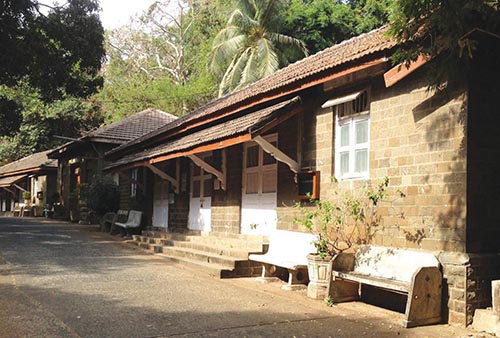
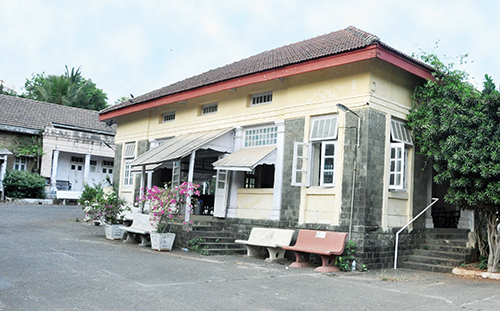
A view of Doongerwadi’s lower bunglis (top) and upper bunglis
The 11 bunglis are: Punchayet, subsequently named after Darvish Irani (1915), Tarachand (1921), Bhabha (1928), Wadia (1928), Bennett (1929), Hodiwala (1947) and Albless (1960). The Bhabha, Bennett, Irani and Tarachand are divided into two each. Of the four lower bunglis two have been unused over the last six years awaiting some repairs to the sewer system.
Despite around 80% of Bombay Parsis approving of the Doongerwadi bunglis being used by those who opt for disposal of the dead by means other than dakhmenashini, according to a survey by the reputed Hansa Research Group commissioned by Parsiana last year, the trustees persist in refusing to permit the bunglis to be used by those opting for cremation. This despite a legal opinion by their (BPP) counsel stating the bunglis can be so used (see "Succumbing to pressure,” Parsiana, June 7, 2014).
According to the BPP’s statement of accounts, Doongerwadi had an annual deficit of Rs 2.5 crores for the financial year April 1, 2012 to March 31, 2013. In addition, the Punchayet has spent close to three crore rupees in legal fees in attempting to bar two priests from praying at Doongerwadi because they perform religious ceremonies for those opting for cremation. The trustees lost in the Bombay High Court. The matter is now pending before the Supreme Court.
The trustees’ stubbornness has also resulted in the A. H. Wadia Trust having to spend Rs 1.80 crores for the construction of a facility being set up by The Prayer Hall Trust at the Worli crematorium of the Bombay Municipal Corporation. Preference will be given to Parsis for use of the hall for performance of funerary rites.
◆ ◆ ◆
From the archive