
Events & Personalities
Cooper’s concerns
The following extract from an obituary of the late Dr Rustom Cooper by S. V. Raju appeared in the Freedom First, August 2013 issue and is reproduced here with permission from the monthly. Raju is the publication’s editor and was involved with the formation of the Swatantra Party from its inception:
"Between the early sixties and the early seventies he was part of the national leadership of the Swatantra Party. And it is in this period I recall my close association with him insofar as his political work was concerned. He was literally conscripted into the Swatantra Party by Sir Homi Mody, himself a distinguished member of the Constituent Assembly, and who was among the party’s founders, to help him in his task as the party’s national treasurer. In 1969 when Minoo Masani succeeded Prof N. G. Ranga as the president of the Swatantra Party, Cooper was his choice for general secretary of the party.
"Between the early sixties and the early seventies he was part of the national leadership of the Swatantra Party. And it is in this period I recall my close association with him insofar as his political work was concerned. He was literally conscripted into the Swatantra Party by Sir Homi Mody, himself a distinguished member of the Constituent Assembly, and who was among the party’s founders, to help him in his task as the party’s national treasurer. In 1969 when Minoo Masani succeeded Prof N. G. Ranga as the president of the Swatantra Party, Cooper was his choice for general secretary of the party.
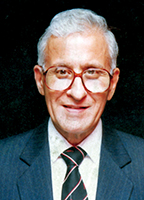
Dr Rustom Cooper: Parsis and politics
"The election of national office bearers of the party was held in 1969 in Bangalore. When Cooper was elected general secretary he was uncomfortable. He told me that with both the president and general secretary being Parsis, it would come to be known as a ‘Parsis party.’ He would therefore speak to Masani about his fears and persuade him to choose someone else who was not a Parsi as general secretary and he himself would be happy to continue as treasurer. I advised Cooper that before he spoke to Masani who had already made up his mind, he should meet Rajaji and share his misgivings with him. So that evening we met Rajaji at his residence. After hearing him out Rajaji wanted to know whether there was any other problem other than the fact that he and Masani were both Parsis that bothered Cooper? Was he confident that he would be able to discharge his duties as general secretary? Equally importantly would he have the time to give what the position demanded? When Cooper replied in the affirmative Rajaji dismissed his fears as baseless. He said that the Swatantra Party needed office bearers who were competent and men of personal integrity. His religion was of no concern though Rajaji said he had great respect for the teachings of Zarathushtra. I still remember the happy smile on Cooper’s face to hear what Rajaji had to tell him and even more when as we were leaving Rajaji blessed him for a successful tenure.
"Thereafter for the next two years Dr Cooper established a regular regimen to attend to his work as general secretary. Three days a week on an average he would walk down from his office (a 10-minute walk) to the party office with his sandwich box and we would deal with party matters. When this time was occasionally not enough he would find ways to create time for party work despite his numerous professional and social engagements. He was decisive, clear and revealed a complete understanding of party policy.
"After the Swatantra Party’s defeat in the 1971 elections, Masani resigned from the party’s presidentship. Cooper followed suit so that the incoming president would be free to choose his own team. He also decided to retire from active politics.
"But this did not end his interest in public affairs, particularly political developments that were very worrisome to all those who believed in liberal values and the need for good governance based on the rule of law. So as a private citizen he engaged in shooting off letters from time to time to the Prime Minister on a number of issues of national concern.”
◆ ◆ ◆
From the archive