
Supporting women’s rights
Eighteen prominent community members and others have filed their application to intervene on behalf of Goolrookh Gupta in the Supreme Court
Senior counsels Shyam Diwan and Anand Grover appeared for 18 interveners who filed their intervention applications before the Supreme Court supporting Gupta’s case. The intervening applicants are civil rights activist Maja Daruwala, Delhi Parsi Anjuman (DPA) trustee Ava Khullar, travel agent Roshni Maloo, Member of Parliament Anu Aga, Valsad resident Jesse Minocher Dastoor, DPA president Yezad Kapadia, industrialists Adi and Jamshyd Godrej, AIDS campaigner Parmeshwar Godrej, businessman Cyrus Guzder, crafts promoter Smita Godrej Crishna, former DPA president Dadi Mistry and his wife DPA supporter Nergish, former Tata Sons director Dr Jamshed J. Irani, a former head priest of the Parsi agiary in Valsad Ervad Gustadji Sorabji Sidhwa, former Bombay Parsi Punchayet trustee and World Zoroastrian Organisation Trust Funds trustee Dinshaw Tamboly, New Delhi theater personalities Feisal and Radhika Alkazi.
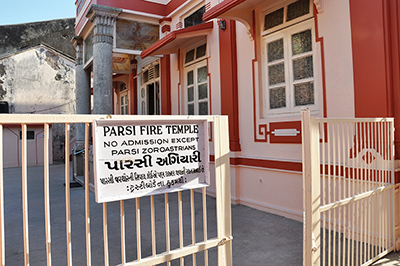
Agiary at Mota Parsiwad, Valsad
The interveners note that since a three-member bench at the Gujarat High Court order in the Gupta vs Pardiwala case stated that under the Special Marriage Act (SMA) a wife took on the husband’s religion, the judgment affected "all women in India married under SMA.” They alleged "the judgment acts as a clog on the constitutional right of women to practise their own religion and hinders a choice of whom to marry.”
They contend that women are entitled under law to practise their religion without any let or hindrance from anyone.
The case arose after the VPA allegedly passed a resolution barring Parsi women married to non-Parsis from entering the local fire temple and Doongerwadi. The ban applied even to women married under the SMA and continuing to profess the Zoroastrian faith.
"There is neither any custom nor any rule nor any practice in the Zoroastrian religion which forbids a Parsi Zoroastrian woman from marrying a non-Parsi and/or ostracising her only by virtue of her marriage to a non-Parsi,” notes Daruwala’s application for intervention.
The interveners alleged that the judgment would: "Create discrimination between men and women; create discrimination between women of different religions creating a particular disability for Parsi Zoroastrian women; give secular, social bodies such as the respondent trust an extra-legal jurisdiction over an Indian citizen; interfere most severely with the right to religion, family and privacy; and remove the purpose and efficacy of the SMA, 1954.”
The lawyers representing the two sides are: for petitioner senior counsel Harish Salve, Dr Abhishek Singhvi, Ravindra Srivastava, Shiraz Contractor- Patodia, Priyanka Sharma and Shikha. For interveners S. Udaya Kumar Sagar, Bina Madhavan, Praseena Joseph and Shivendra Singh for M/s Lawyer’s Knit and Company. For respondent(s) Mukul Rohatgi, Percy Ghandy, R. N. Karanjawala, Nandini Gore, Debmalya Banerjee, Kartik Bhatnagar, Dilpreet Singh, Manik Karanjawala for M/s Karanjawala and Company.
The lawyers appearing on behalf of Gupta and the interveners are all doing so pro bono.
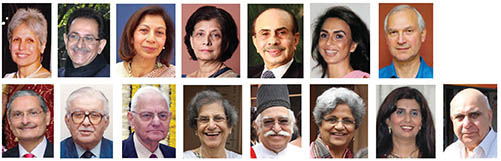
Dasturji Gustad Sidhwa:
"That the applicant, Dasturji Gustadji Sorabji Sidwa is a Parsi Zoroastrian male, born to Parsi Zoroastrian parents. The applicant was the head priest of Parsi agiary situated at Mota Parsiwad Valsad from the year 1987 to 2000, i.e. almost for 13 years. The applicant, at present, performs his duty as a priest at Iranshah, Atash Behram, Udvada, which is the highest fire temple of Parsi Zoroastrians in India.
"During the applicant’s tenure as the head priest of the Valsad agiary situated at Mota Parsiwad Valsad all the Parsi Zoroastrian women married to non-Parsis under the Special Marriage Act 1954 and who were continuing to follow their own Zoroastrian religion were allowed and permitted to attend the agiary at Mota Parsiwad Valsad and at the Tower of Silence Valsad. That the same was done with the knowledge and concurrence of the then trustees of the Valsad Parsi Anjuman. In fact in those days it was customary to perform all the last rites at home of the deceased person before finally taking the body to the Tower of Silence and Parsi Zoroastrian ladies (married to non-Parsis) were allowed to sit for all the religious ceremonies at home and also at the Tower of Silence Valsad…
"That during my tenure as the high priest of Valsad Parsi Agiary for almost 13 years, the Valsad Parsi (Anjuman) did not in any way discriminate against the intermarried ladies married under the Special Marriage Act 1954 and following their Zoroastrian religion from attending the agiaries at Valsad and the Tower of Silence at Valsad and offering their prayers as any other Parsi Zoroastrian.”
"The applicant, Mr Jesse Minocher Dastoor is a Parsi Zoroastrian male, born to Parsi Zoroastrian parents and married to a Parsi Zoroastrian. The applicant’s late mother’s maternal uncle late Mr Firozsha Rustomjee Shroff, and his sons late Mr Keki F. Shroff and late Mr Rusi F. Shroff all served as trustees of the Valsad Parsi Anjuman Trust for many years. The applicant states that Mr Firozsha R. Shroff was also the president, and Mr Rusi F. Shroff was the managing trustee of the Valsad Parsi Anjuman Trust for many years.
"The applicant further states that all my above mentioned relatives expired in Valsad in the years 1985, 1993 and 2004 respectively. At that time it was a practice that all last rites i.e. paidust ceremony and prayers were performed at the home of the deceased by dasturji sahebs. Accordingly the last rites and prayers were performed at their residence Aimai Mansion, Mota Parsiwad, Valsad and the dead body was thereafter taken to the Tower of Silence. The entire funeral ceremony (from home to the Tower of Silence) in the case of all three was attended not only by various Parsi Zoroastrian males and females but also persons professing and practising the Hindu religion (among others). The applicant’s family is a very well-known family in Valsad and all three were also the presidents of Valsad Municipality and therefore had many non-Parsi friends and well-wishers who attended the funeral ceremonies and paid their last homage and respect to all three departed souls. The applicant states that to the best of his knowledge there was no such restriction as such, that time, and all Zoroastrians and non-Zoroastrians were allowed to pay homage to the departed souls. Even today the last rites are performed at one’s residence in Navsari, Billimora, Vyara, etc as per the wishes of the deceased.”
Dinshaw Tamboly:
"That the applicant would like to state that during his tenure as the trustee of the Bombay Parsi Punchayet Trust, the applicant managed two agiaries (Godavara Agiary at Fort, Bombay and Shapurji F. Jokhi Agiary at Nepean Sea Road, Bombay) and the Tower of Silence/Doongerwadi where bodies of Parsi Zoroastrians are laid to rest.
"That during his tenure as the trustee thereat for almost 12 years, the Bombay Parsi Punchayet did not in any way discriminate against the intermarried ladies married under the Special Marriage Act 1954, from attending the said agiaries and the Tower of Silence and offering their prayers as any other Parsi Zoroastrian. All rights of entry into the religious institutions and participating in all religious ceremonies which are available to any other Parsis are also available to such intermarried ladies also.
"That to the best of the applicant’s knowledge, the above position continues even at present and such Parsi Zoroastrian ladies do go to the agiaries and also to the Tower of Silence to attend the funeral of their near and dear ones and perform their last rites as per the Parsi Zoroastrian religion.
"That also to the best of the applicant’s knowledge, most of the agiaries and atash behrams in Bombay do not prevent intermarried Parsi ladies from attending the agiaries/atash behrams.”
Maja Daruwala:
"The applicant wishes to state that the Parsi Zoroastrian religion is in fact an extremely forward-looking religion. Women are treated with utmost respect in our religion and enjoy all freedoms and rights as are available to their male counterparts. The Delhi Parsi Anjuman/Trust situated in Delhi, which the applicant regularly attends, does not at all discriminate between Zoroastrian women married to Zoroastrian men vs Zoroastrian women married to non-Zoroastrian men. In fact, the said anjuman permits all Parsi Zoroastrian women, irrespective of their marital status to visit the anjuman, attend the prayers at the agiary/fire temple and ceremonies held thereat.”
Ava Khullar:
"The applicant, Mrs Ava Khullar is a Parsi Zoroastrian woman, married to a non-Zoroastrian, Mr Raghuvansh Gopal Khullar who professes Hindu religion. Her marriage to Mr Khullar was solemnized on October 23, 1967 under the Special Marriage Act, 1954, which is an Act that enables two persons belonging to different religions to enter into marriage without either having to renounce his/her religion or convert to the religion of the other. The said Act in fact divorces religion from personal laws and provides for a special form of marriage… irrespective of the faith which either party to the marriage may profess. It is respectfully submitted that the applicant neither renounced her Zoroastrian religion at any time nor converted to another religion and continues to practice her Zoroastrian religion till date. The applicant regularly visits the Parsi Dar-e-Meher situated at New Delhi and attends Parsi Zoroastrian functions and ceremonies and is one of the longest serving trustees of the Delhi Parsi Anjuman.
"That per the impugned judgment, the Hon’ble High Court has held that the petitioner — a Parsi woman by birth and a Zoroastrian by religion — by contracting a civil marriage with a non-Zoroastrian under the Special Marriage Act, 1954, has ceased to be a Parsi-Zoroastrian and consequently, has relinquished her right to practice Zoroastrian religion by way of offering prayers in the fire temple, entering the Tower of Silence and participating in religious ceremonies held therein. The High Court’s skewed view is based in a self-created fiction that upon her marriage a woman is deemed to have merged into the religion of her husband, notwithstanding that she has neither formally converted to the same nor has any intention or requirement to do so.”
Roshni Maloo:
"It is respectfully submitted that the applicant neither renounced her Zoroastrian religion at any time nor converted to another religion and continues to practice her Zoroastrian religion till date. The applicant regularly visits the Parsi Agiary such as Mithaiwala, Batliwala, Sethna and atash behrams situated at Bombay and attends all Parsi Zoroastrian functions and ceremonies…
"It is respectfully submitted that the applicant herein, even after her marriage to a Catholic male — till date — continues to practice her Zoroastrian religion into which she has been initiated … In fact, the applicant’s children, Ms Zintara D’Souza and Mr Tushar D’Souza also follow Zoroastrian religion and their navjote was performed on April 16, 2010 by (Ervad) Jimmy Madon. The applicant and her children regularly visit Parsi agiary and atash behrams situated at Bombay and offer prayers in the manner that all Zoroastrians do. The applicant and her children attend all Zoroastrian ceremonies.
"Any Zoroastrian woman who has been initiated into the Zoroastrian religion through the performance of the navjote ceremony by an ordained priest, is entitled as a matter of law to practice her Zoroastrian religion, without any let or hindrance from anyone.”
Smita Godrej Crishna:
"The applicant, Mrs Smita Godrej Crishna is a Parsi Zoroastrian woman, married to Mr Vijay Crishna who is a protestant Christian. Her marriage to Mr Vijay Crishna was solemnized on December 5, 1976 under the Special Marriage Act, 1954, which is an Act that enables two persons belonging to different religions to enter into marriage without either having to renounce his/her religion or convert to the religion of the other… The applicant regularly visits the Parsi Agiary situated at Bombay and attends Parsi Zoroastrian functions and ceremonies.”
Parmeshwar Adi Godrej:
"The applicant is gravely affected by the impugned judgment which provides for automatic deemed conversion of a woman’s religion upon her marriage to a man professing a different religion than herself. The applicant is a Hindu woman married under the Special Marriage Act 1954 (‘the said act’) to a Parsi Zoroastrian, Mr Adi Godrej. If this principle of deemed conversion is accepted the applicant will have virtually no religious status as she would be deemed to have been converted, upon her marriage to Mr Adi Godrej, into Parsi Zoroastrian despite the fact that she is neither accepted nor recognized as a Parsi Zoroastrian.
"The applicant says that such a regressive interpretation of the said Act is arbitrary, discriminatory and completely opposed to the right of a woman to live equally, freely and with dignity as guaranteed by the Constitution of India. The applicant states that para 22 (page 105) of the dissenting judgment deals with this situation and reads as follows ‘Further there are many religions which do not recognize conversion. If the husband belongs to such a religion say for example, Parsi which religion does not accept conversion and his wife were to be a non Parsi, be Hindu, Muhammadan or Christian or anything in such a case what would be her status if we accept the principle of automatic deemed conversion into the religion of her husband upon her marriage to a Parsi gentleman under the act of 1954?’
"The applicant, Mrs Parmeshwar Adi Godrej is a Hindu woman, born to Hindu parents on July 17, 1945. On September 24, 1966 the applicant married Mr Adi Godrej, a Parsi Zoroastrian male under the said Act. The applicant has continued to follow her Hindu religion after her marriage while her husband Mr Adi Godrej follows his Zoroastrian religion…
"As such therefore, the impugned judgment encroaches upon a woman’s right to privacy, family, follow her own religion in a mixed marital union, and even the right of the couple in such marriage to bring up their children in either religion, both religions or in any other way they or the children wish to be brought up. Allowing the impugned judgement to stand will inter alia create discrimination between men and women, interfere most severely with the right to religion, family and privacy, remove the purpose and efficacy of the Special Marriage Act, 1954.”
Feisal and Radhika Alkazi:
The applicant No. 1 is an Indian citizen. He is a qualified master of social work. He is a noted theater director and also works in the fields of education and social work. He has authored several books for children. He had been a supervisor at the Sanjivini society for mental health for over 14 years. The applicant No. 1 is Muslim by religion. The applicant No. 2 is an Indian citizen. She has a masters degree in sociology and is a trained counsellor. She is the founder director, Aarth-Astha which is an NGO (nongovernmental organization) working in the field of disability in Delhi. The applicant No. 2 is Hindu by religion.
"The applicant No. 1 and applicant No. 2 were married under the Special Marriage Act 1954 on January 29, 1988 in New Delhi. Neither of the applicants changed their religion after marriage as the provisions of the Special Marriage Act, 1954 allows both partners to follow their respective religions.
"The applicants have two sons from the wedlock, Zain, aged 23 years and Armaan, aged 20 years. Both the children of the applicants fill up ‘atheist’ in forms that ask which religion they follow.
"The family of both the applicant husband and the applicant wife have examples of individuals who have entered inter-religious marriages. There are practicing Buddhists, Catholics, Protestants, Jews and Hindus in the extended family of the applicants, and the family is richer for it.
"The applicants are adversely affected by the impugned final order and judgment which holds that a Parsi Zoroastrian woman ceases to be a Parsi Zoroastrian by virtue of entering into a marriage with a Hindu man under the SMA, 1954. Though the judgment has been passed against an individual, it affects all women irrespective of their religion who are married or will get married under the Special Marriage Act, 1954…
"In 1868 the colonial state in India received a petition signed by a member of the Brahmo Samaj seeking legislation for marriages amongst their members such that they could freely marry as per their own rites. This petition initiated the introduction of a civil marriage law in India. The colonial state in India responded to this petition in the form of a Bill to regularize civil marriages. The Bill was revised three times and ultimately enacted as The Special Marriage Act (Special Marriage Act) III of 1872.
"The Special Marriage Act III of 1872 was an optional law initially made available to only those who did not profess any of the faith traditions of India. Hindus, Muslims, Christians, Sikhs, Buddhists and Parsis had to renounce whatever religion they were following in order to marry under this Act. This was a serious drawback in encouraging marriages under the Act. Therefore, in 1922 the Special Marriage Act was amended to make it available to Hindus, Sikhs, Buddhists and Jains to marry within these four communities without renouncing their religion. However, there was another drawback to this enactment, which was not addressed by the amendment. A marriage under the SMA resulted in a deemed severance whereby succession would be regulated by the Indian Succession Act of 1865.
"In 1954, the Special Marriage Act of 1872 was repealed. The Special Marriage Act of 1954 was enacted. As per the statement of objects and reasons it was enacted in order ‘to provide a special form of marriage which can be taken advantage of by any person in India and all Indian nationals in foreign countries irrespective of the faith which either party to the marriage may profess.’ The parties may observe any ceremonies for the solemnization of their marriage, but certain formalities are prescribed before the marriage can be registered by the marriage officers…
"The effect of the impugned judgment is essentially a prohibition on inter-religious marriages. Countries which prohibit inter-religious marriage specify this prohibition in legislation. For example, section 10 of the Islamic Family Laws Act 1984 of Malaysia prohibits the marriage of a Muslim man to a non Kitabiya woman, and the marriage of a Muslim woman to a non-Muslim. Civil marriages are an option only for non-Muslims.”