
Zoroastrians Abroad
Sanctifying the site
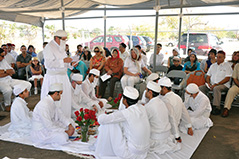
Over 150 Zarathushtis congregated to witness the inaugural jashan on the site selected for the proposed Mazda Yasni Zarathushti Dar-e-Meher (MYZD) in Houston on December 2, 2012. Conceived as a perpetually burning atash dadgah "to fulfill the spiritual void in our community and also (to)… experience the power, grandeur and beauty of our sublime faith like we all did in India, Pakistan and Iran,” construction on this project is expected to start this year, notes a report from Aspi Colah who with Noshir Challa and Affraz Boomla will be overseeing construction of the Dar-e-Meher. This traditional Dar-e-Meher will permit entry only to those of at least two generations of Zoroastrian lineage, mentions their website myzdgroup.org and as reported in "Sacred stairway” (Zoroastrians Abroad, Parsiana, February 21, 2011). With Kaemerz Dotiwala as president of the MYZD group and Tehemtan Aresh in charge of fund raising, the other key members are treasurer Barjor Dastur and accountant Kershaw Khumbatta.
 Whilst the first volunteer arrived at the gates of 9000 West Airport Boulevard before the sun came up, soon others followed to set up the tent, clean and purify the area, lay out the chairs, and position street signs directing traffic on the property. "Our very gracious executive committee at the Zoroastrian Association of Houston (ZAH) had given us permission to open up a segment on the fence on the rear driveway that MYZD shares with ZAH so our elders and families with young children could park and just walk over to the jashan site,” noted the press release.
Many had left their homes in the early morning fog but thankfully it turned out to be a warm, sunny day. As mentioned by Colah, weather forecast for December 2 was researched on weather channels, farmers’ almanac and other sources weeks before the jashan date.
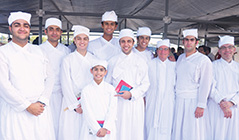
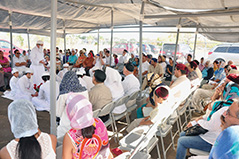 The jashan was performed by 10 priests led by Ervad Peshotan Unwalla, with the youngest barely 11 years old. After the jashan the gathering shared chasni and got an opportunity for fellowship. Those eager to join in the celebrations contributed in different ways: some volunteered with fruits, others with flowers, or by preparing malido, sev, ravo, lagan nu custard and other Parsi delicacies. Reiterated Colah, "There was an incredible show of support. People opened up their hearts, minds and their pocket books. Everyone wanted to help…many want to volunteer on the different aspects of the project and (they) will as soon as construction starts…and we start organizing subcommitees. It was so heart-warming and touching to see so many…that had gathered still have the fire burning quietly inside.” Although Colah did not respond to Parsiana’s queries regarding the cost of the project and whether it is legal to restrict entry to the Dar-e-Meher, he mentioned that they are "in negotiations with the City of Houston for building permits and other approval processes.”
The significance of MYZD, the acronym of the Dar-e-Meher, was explained by Colah: "The word myzd occurs many times in our litany and prayer rituals… more commonly in our Doa Tandorosti prayer when we recite ‘myzd roshan hame bersaad.’ The word myzd can be traced back to old Avesta, Pahlavi/Pazand and Sogdian scripts and means rewards or gifts and roshan means bright or brilliant. When we pray "Yazdaane minoan, yazdaane getian, haft Ameshaspandan, myzd roshan hame berasaad” we are beseeching the powers that be, the Yazatic forces and seven Ameshaspandan that have dominion over our physical and spiritual world to give brilliant rewards to the true followers of the Mazdayasni Zarathushti religion.”
Whilst the first volunteer arrived at the gates of 9000 West Airport Boulevard before the sun came up, soon others followed to set up the tent, clean and purify the area, lay out the chairs, and position street signs directing traffic on the property. "Our very gracious executive committee at the Zoroastrian Association of Houston (ZAH) had given us permission to open up a segment on the fence on the rear driveway that MYZD shares with ZAH so our elders and families with young children could park and just walk over to the jashan site,” noted the press release. Many had left their homes in the early morning fog but thankfully it turned out to be a warm, sunny day. As mentioned by Colah, weather forecast for December 2 was researched on weather channels, farmers’ almanac and other sources weeks before the jashan date.
The jashan was performed by 10 priests led by Ervad Peshotan Unwalla, with the youngest barely 11 years old. After the jashan the gathering shared chasni and got an opportunity for fellowship. Those eager to join in the celebrations contributed in different ways: some volunteered with fruits, others with flowers, or by preparing malido, sev, ravo, lagan nu custard and other Parsi delicacies. Reiterated Colah, "There was an incredible show of support. People opened up their hearts, minds and their pocket books. Everyone wanted to help…many want to volunteer on the different aspects of the project and (they) will as soon as construction starts…and we start organizing subcommitees. It was so heart-warming and touching to see so many…that had gathered still have the fire burning quietly inside.” Although Colah did not respond to Parsiana’s queries regarding the cost of the project and whether it is legal to restrict entry to the Dar-e-Meher, he mentioned that they are "in negotiations with the City of Houston for building permits and other approval processes.”The significance of MYZD, the acronym of the Dar-e-Meher, was explained by Colah: "The word myzd occurs many times in our litany and prayer rituals… more commonly in our Doa Tandorosti prayer when we recite ‘myzd roshan hame bersaad.’ The word myzd can be traced back to old Avesta, Pahlavi/Pazand and Sogdian scripts and means rewards or gifts and roshan means bright or brilliant. When we pray "Yazdaane minoan, yazdaane getian, haft Ameshaspandan, myzd roshan hame berasaad” we are beseeching the powers that be, the Yazatic forces and seven Ameshaspandan that have dominion over our physical and spiritual world to give brilliant rewards to the true followers of the Mazdayasni Zarathushti religion.”
◆ ◆ ◆
From the archive