
Readers' Forum
Tale of two women
Two historically noteworthy debates in the British Houses of Parliament, separated by 110 years, admired and acknowledged the efforts and achievements of two remarkable women born almost a century apart — Cornelia Sorabji and Zerbanoo Gifford. The first mentioned debate at Westminster, on India, took place on November 10, 1902 in reference to a detailed and unusually full page letter Sorabji had written to the London Times on September 26, 1902, proposing a scheme in India to appoint female advisors to safeguard the rights of orphans and widows in purdah, the purdahnishins.
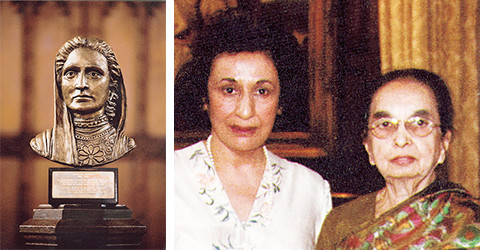
(From Left): Bust of Cornelia Sorabjee; Zerbanoo Gifford and Kusoom Vadgama
Though not mentioned by name, a question about Sorabji’s idea was put to the Secretary of State for India wherein his attention had been called to the disadvantages under which the purdahnishins "labor in India” and to consider the advisability of steps to be taken to protect them against the injustice by permitting competent women to qualify as their legal advisors. The Secretary responded by saying that he was aware of the situation and that the government did have under its consideration proposals allowing women to qualify as legal advisors. The very fact that Sorabji’s scheme was the subject of debate in the Parliament was a measure of her standing in the land as well as the seriousness of her recommendations.
The second debate, on the contributions made by the ethnic minority in Britain, took place in the House of Lords on May 24, 2012. While other ethnic minority speakers went on an ego trip to talk about themselves and their own achievements in Britain and one of them had to be asked to stop when he went on and on about his own bravado, only what Baroness Royall of Blaisdon had to say was of great significance. She spoke of one person, Gifford, who has actually done something that benefited society and not just talked about what should be done. I was sitting in the visitors’ gallery and the comments of the former leader of the House of Lords were received with great surprise and pleasure. She mentioned the Asha Centre founded by Gifford and admired the work it was doing.
I know of no other occasion when Indian women have been mentioned and their services to society appreciated in British Parliament as have been those of Sorabji and Gifford. Quite an achievement personally, and an honor for the women of India.
KUSOOM VADGAMA
London
◆ ◆ ◆
From the archive