
Readers' Forum
The asho farohar
Does the head of the Asho Farohar face towards the right or towards the left? I have seen it facing both ways and I wonder if there are any guidelines, rules or traditions as to whether it should face left or right. I have been told that in major fire temples as in palaces of kings, it faces right whereas in lesser temples for commoners, it faces left. Is this true? And if it is not, I will be highly obliged if you can enlighten me with the correct answer. I am not a Parsi.
TOFIQUE FATEHI
tofiquef@yahoo.com
Farrokh Vajifdar, Zoroastrian scholar responds:
In every case we are seeing the figure within the Farohar symbol in profile, and as such it does not make any difference whether it is right or left "facing.” What is important to know is what it represents for the viewer in its particular location. As far as the grade of fire temple is concerned, it has nothing to do with the profile’s direction — it depends on the artist and on who has commissioned it, and since these religious buildings are for all Mazda-worshippers, the direction matters even less.
The Farohar symbol has been adopted and adapted from Assyria and Ancient Egypt firstly by the Achemenian Darius I ("The Great”) after his conquests of both these lands.
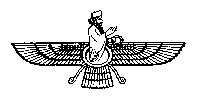
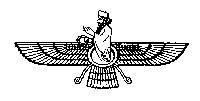
Which direction?
It might interest you to know that the early Achemenian emperors were keen to take on foreign ideas and conventions on their artistic reliefs. The Behistun relief is clearly based on that of the Lullubi king Anubanini of some 1,000 years before (it is in Kurdistan). Above that king is shown a floating winged goddess who leads naked prisoners before the king; they are linked to one another by rings pierced through their noses (rather like cattle!). The Darius winged figure is Mazda who is never cruel: Darius’ prisoners are led before him with rope around their necks. The Sasanians do not seem to have used this Farohar symbol on their reliefs — they believed their kings to be semi-divine anyway!
On the Assyrian reliefs the symbolism is certainly that of the king’s own guardian deity — it faces the same direction as the king in his hunting scenes (to and from). All of these have likenesses to the Farohar, but do not share the same significance.
◆ ◆ ◆
From the archive