
Events & Personalities
A RAW deal
On April 10, 1983 a Bombay newspaper printed a banner headline which read: "India’s top spy missing: Biggest escape since Philby. US suspected destination, panic in ruling party.” The newspaper’s New Delhi correspondent reported that Naushervan Framji Suntook, who headed the country’s secret service the Research and Analysis Wing (RAW), had "defected to an as yet unknown country with some super sensitive documents.” This incident was recalled by V. Balachandran, former special secretary, cabinet secretariat, Government of India in an article which appeared in the Sunday Guardian on April 24, 2011 and was reprinted in Freedom First of June 2011.
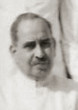
Naushervan F. Suntook: served with integrity
Quoting a senior intelligence officer, the newspaper mentioned that "Suntook’s defection” was "conclusive evidence of a major penetration of the country’s counter-intelligence” that "nothing like this in the cloak and dagger world had happened anywhere since the defection of British M1 6 double agent Kim Philby over two decades ago.” It stated that the passenger manifest listed Suntook and his wife were on a flight to the United States on March 30, 1983.
Balachandran then proceeds to debunk all this. Suntook, a former naval officer who joined the Indian Police Service after Independence, volunteered in the early 1950s to serve in the Andaman Islands which was an unpopular posting. There he did a commendable job in befriending the native Jarawa tribe instead of following the traditional hostile policy of the police. In 1957 he joined the Indian Frontier Administrative Service and worked in the troubled north-eastern states, learning the complexities of the region. In 1968 Suntook was chosen to head an important section of the newly formed RAW.
Then Prime Minister Morarji Desai handpicked Suntook to head RAW, where he served until 1983, being the second longest serving RAW chief. Taking advantage of the inexperienced Janata government, some elements in the foreign ministry had attempted to persuade them to sign the Nuclear Nonproliferation Treaty, which was against the country’s traditional stand. Suntook frustrated their machinations. When Indira Gandhi returned to power in 1980, she retained Suntook in his sensitive assignment even though he had worked closely with her political rivals. This is ample testimony to his service integrity and apolitical stance.
On the eve of Suntook’s retirement from service on March 31, 1983 Gandhi received an SOS from the head of a friendly government which feared a possible coup instigated by a foreign power and required very discreet advice on how to handle the situation, mentions Balachandran in his article. Unable to trust his own agencies, the said head of state turned to India for help in the grave situation. Gandhi thought Suntook would be the best person to render effective advice, so the RAW officer had to fly to that country at short notice. Fertile minds in the bureaucracy and the media chose to "impute motives” and when Suntook returned to the country on April 12 after successfully completing his assignment he was unaware of the storm that his hurried departure had caused in Parliament despite a statement by the then home minister that he was away on duty.
Balachandran writes that Suntook later admitted to him that he was pained that even leaders who knew him well had tried to make political capital out of the prime minister’s inability to reveal the truth. Confronting them on his return, he failed to get satisfactory responses, nor did the media apologize. "What a way to treat a patriot!” Balachandran exclaims.
In later years Suntook was appointed member of the Minorities Commission and was also involved in secret talks with Naga rebels on behalf of the government because of his deep knowledge of problems in the north-east.
◆ ◆ ◆
From the archive